A Night of Many Worlds
An astro-photo blog by Eustace
Welcome to my space where I share my astrophotography. I am a passionate microbiologist but I have no problem gazing at the night sky in awe. I tried pointing my camera and a humble little lens skyward to soak up a few photons earlier in 2019. I was hooked ever since.
I’m on a limited budget and tend to be thrifty with the amount of cash I spend on my astrophotography gear. So, I have chosen the used equipment, Vintage + DIY path for this rather expensive hobby. This is a rewarding hobby but it really tests your patience due to the fact that the learning curve in this is very steep. This is also a hobby that seamlessly traverses the interface between Art and Science. The amount of learning that you can do through this hobby is just tremendous. This isn’t a past-time for the faint hearted though. You will be under pitch dark skies, swatting swarms of mosquitoes and battling technical glitches for hours on end. Perseverance is the name of the game.
There are plenty of imperfections in my visual logs of heavenly wonders. But I know I have improved leaps and bounds in just three years of astrophotography. The greatest show on earth is free for everyone to see; If you know where to look. Enjoy!
High watermarks of my astrophotography
I reached the personal zenith of my astrophotography in the two years of 2021/2022. This is due to several years worth of cumulative experience in astrophotography and several equipment upgrades such as acquiring my Celestron Advanced VX computerized tracking mount, full-spectrum astro modification of my main camera and getting the refurbished Explore Scientific ED80 apochromatic telescope. Several images of my best astrophotography is shown below. These feature many hours of exposure raw data, often amounting to about 10 hours or more. Some of my best astro images to-date are featured below!
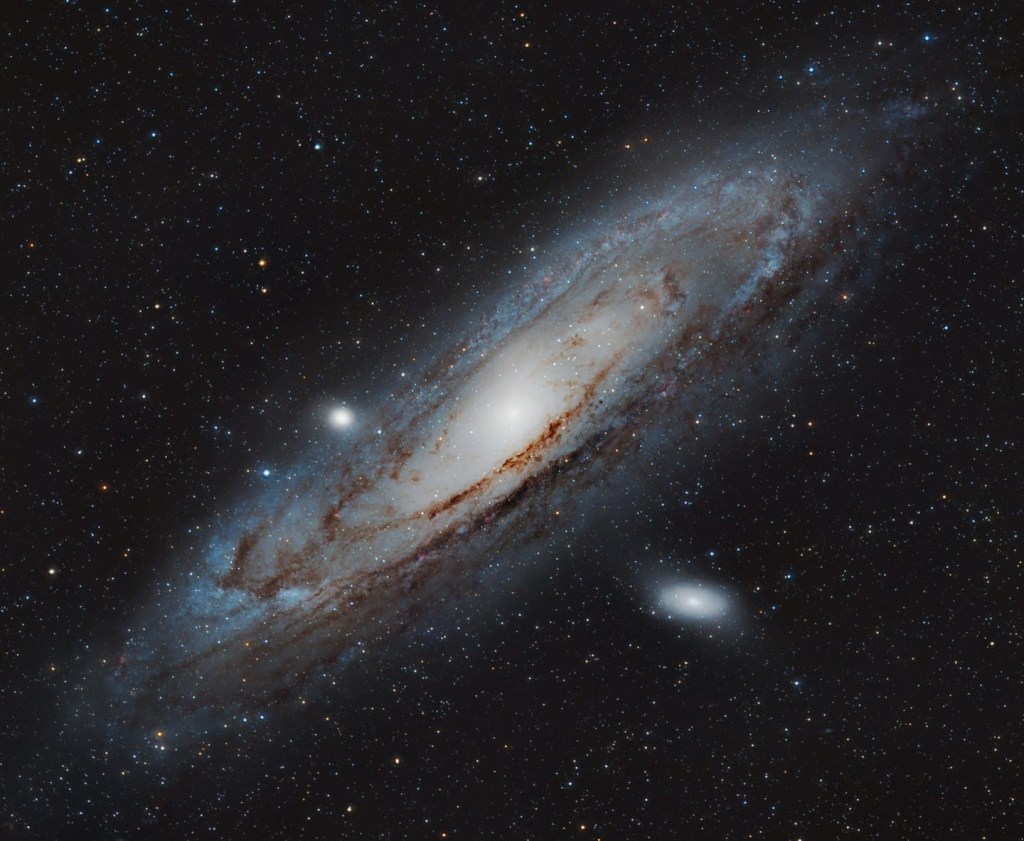
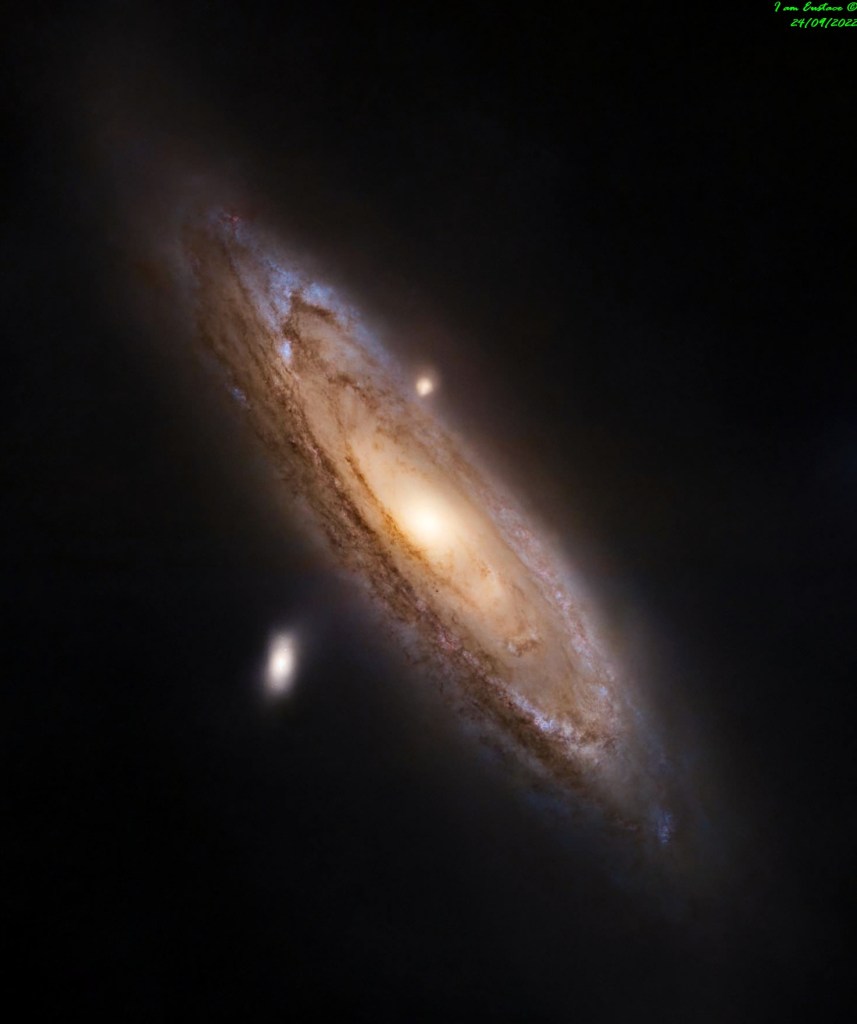
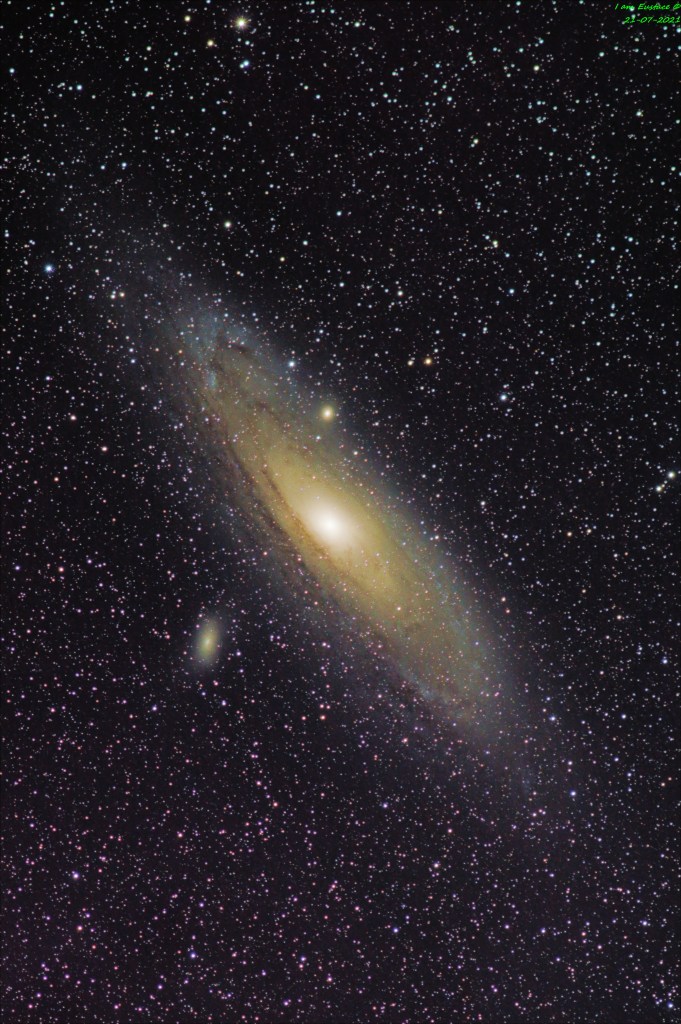
Buckets of light from a trillion stars – Andromeda Galaxy. I snapped this on several different nights under Sooriyagoda skies that is almost completely devoid of light pollution. This contains a total integration time of 12.5 hours. My insatiable love for vintage glass means that this beauty was snapped using a Nikon Nikkor 180 mm F/2.8 ED vintage classic lens.
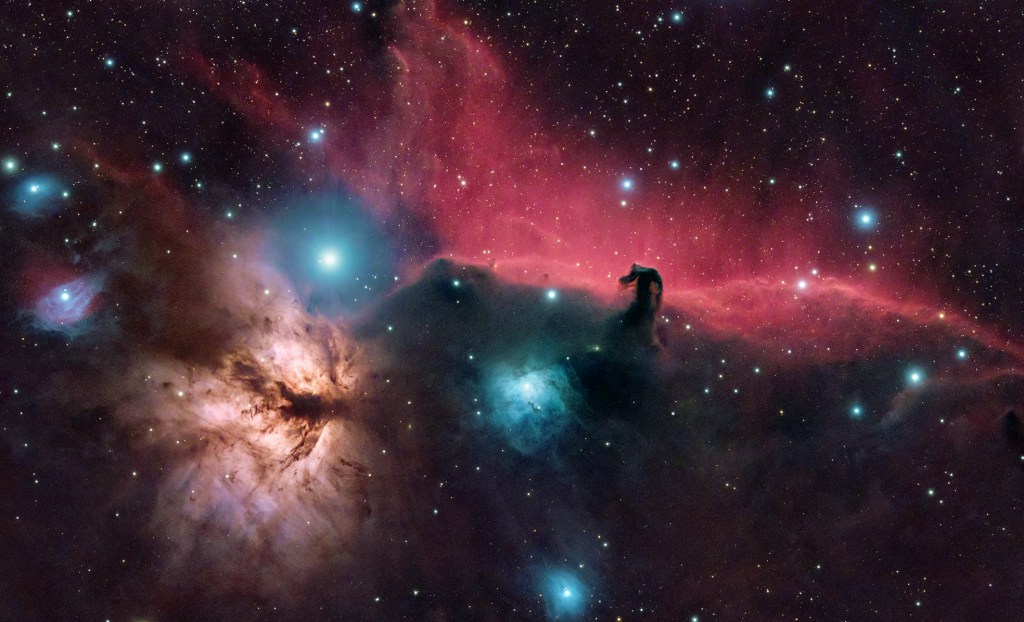
Galaxies!!
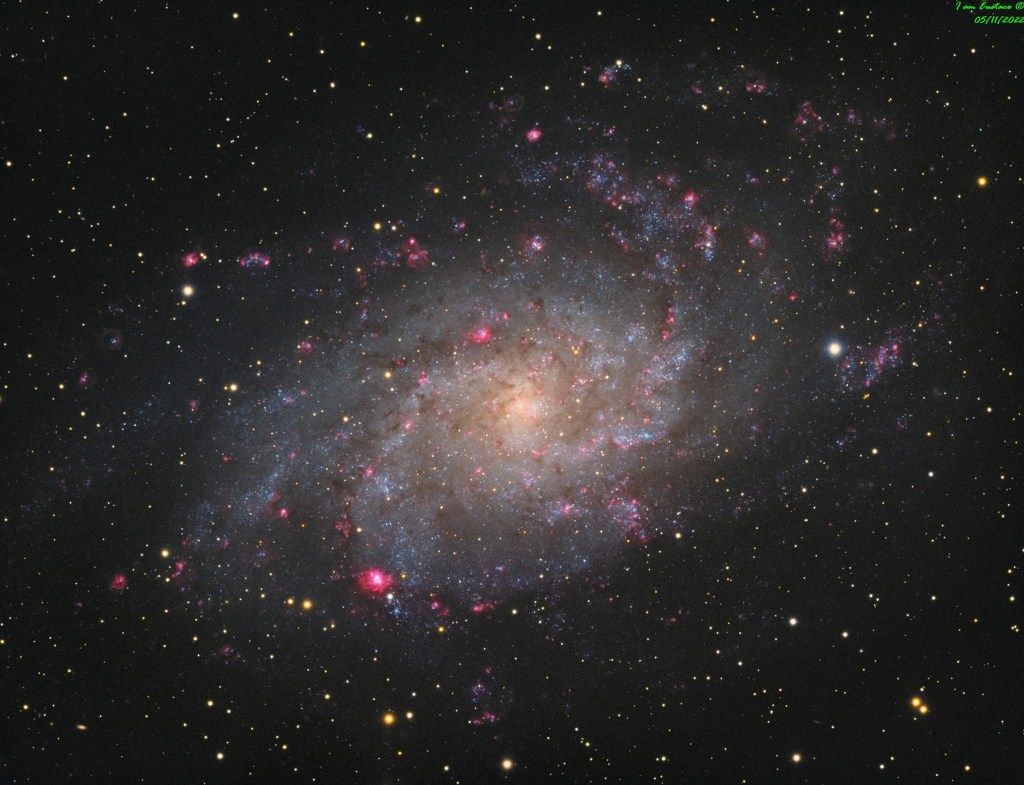
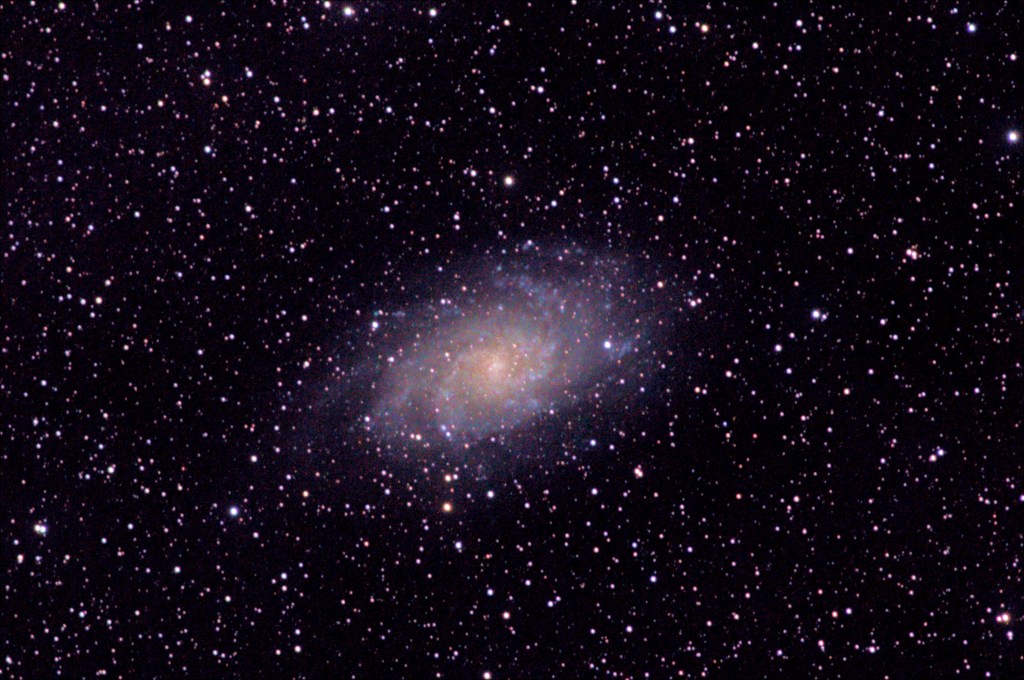
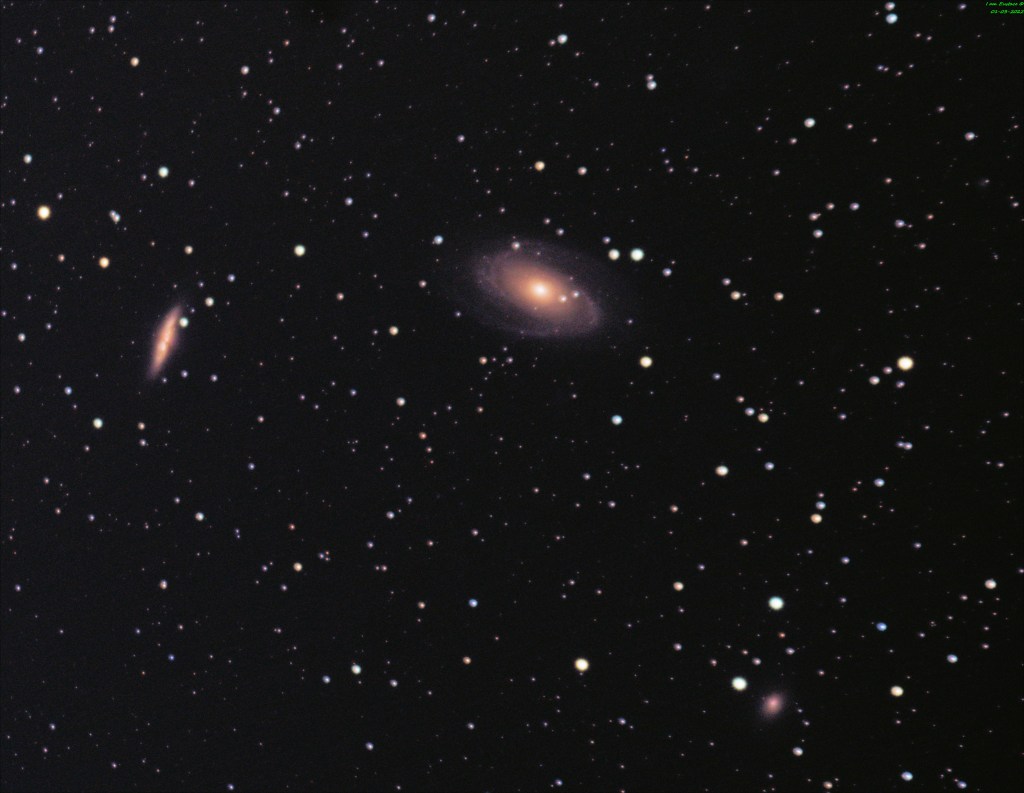
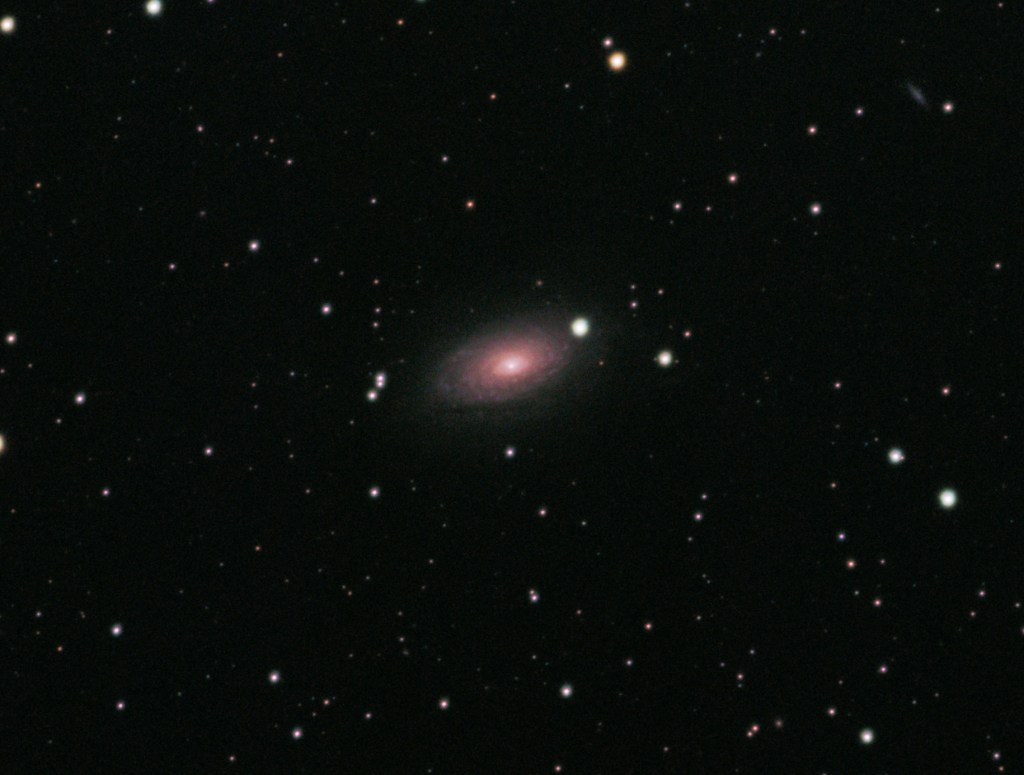
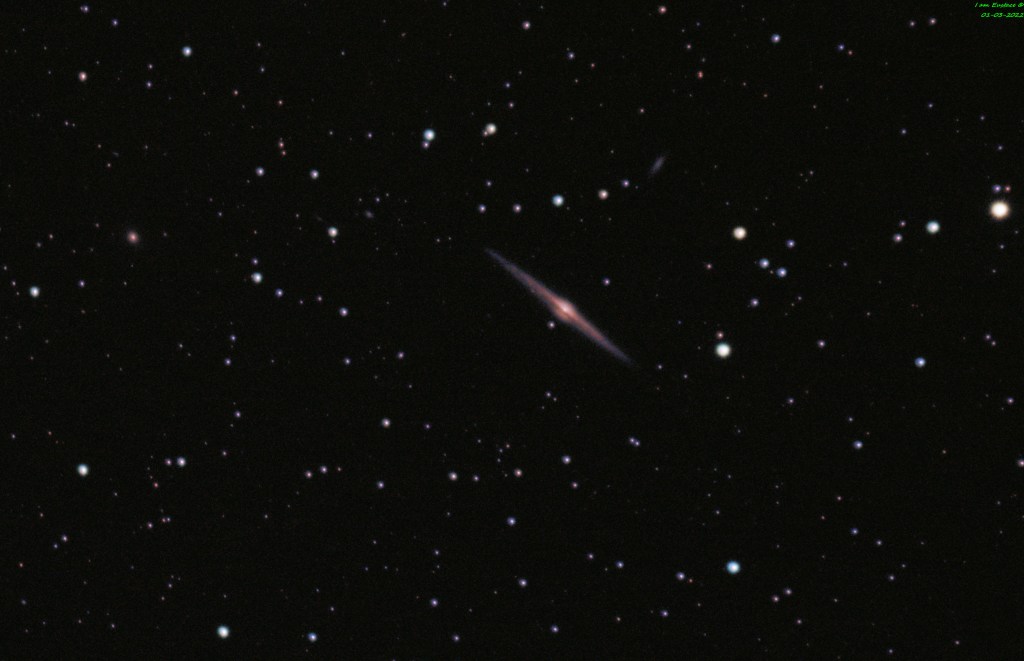
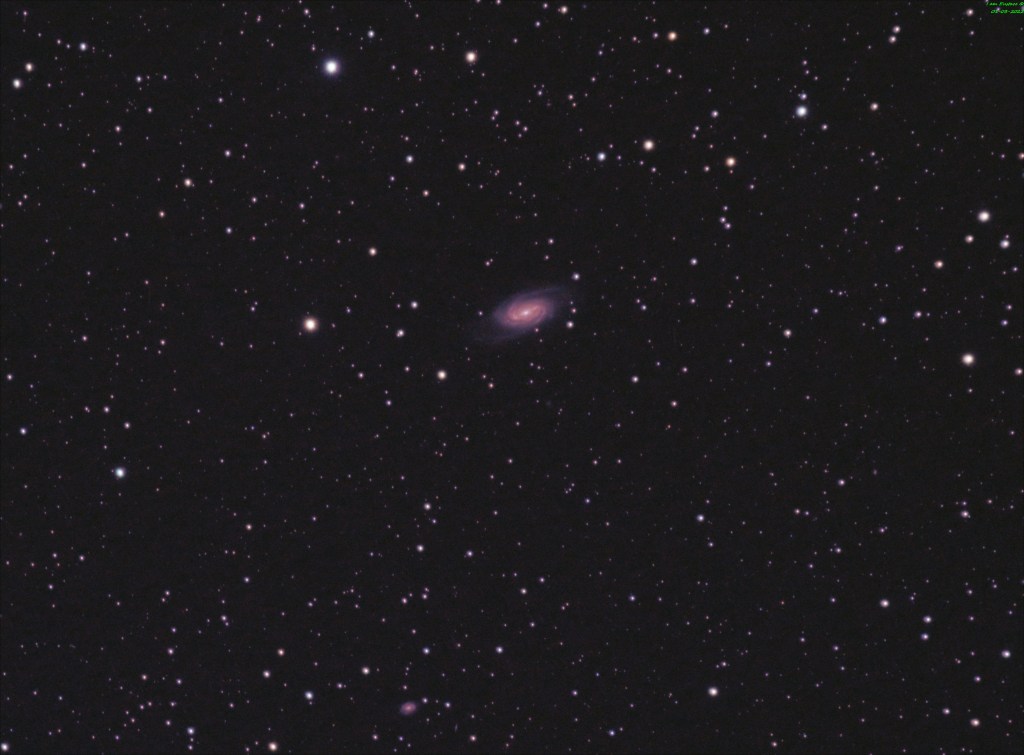
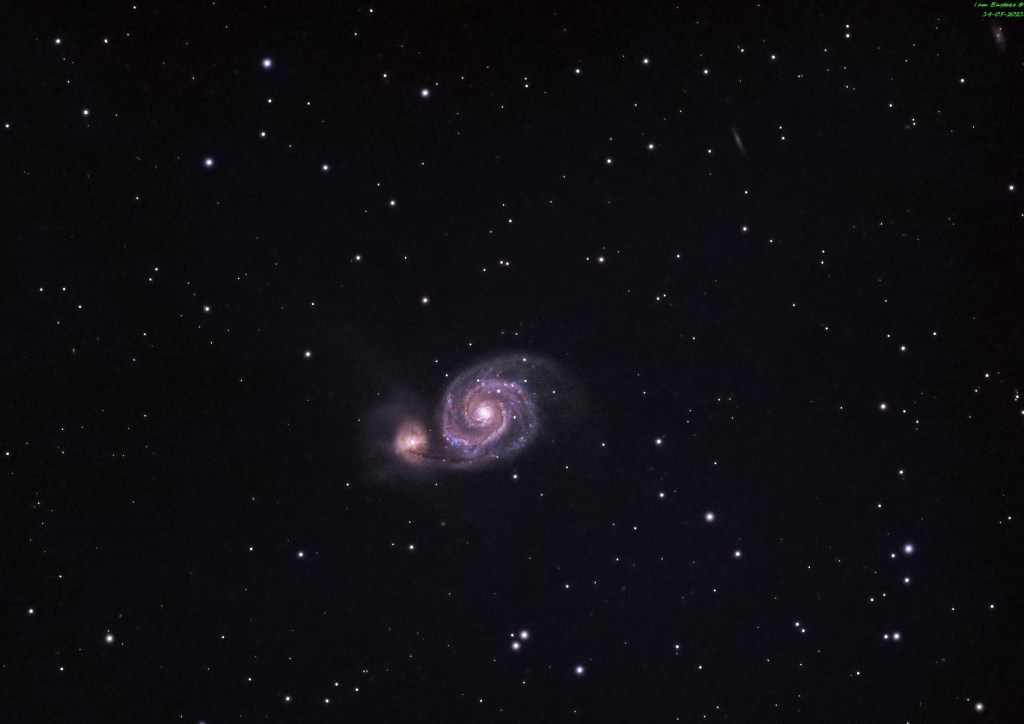
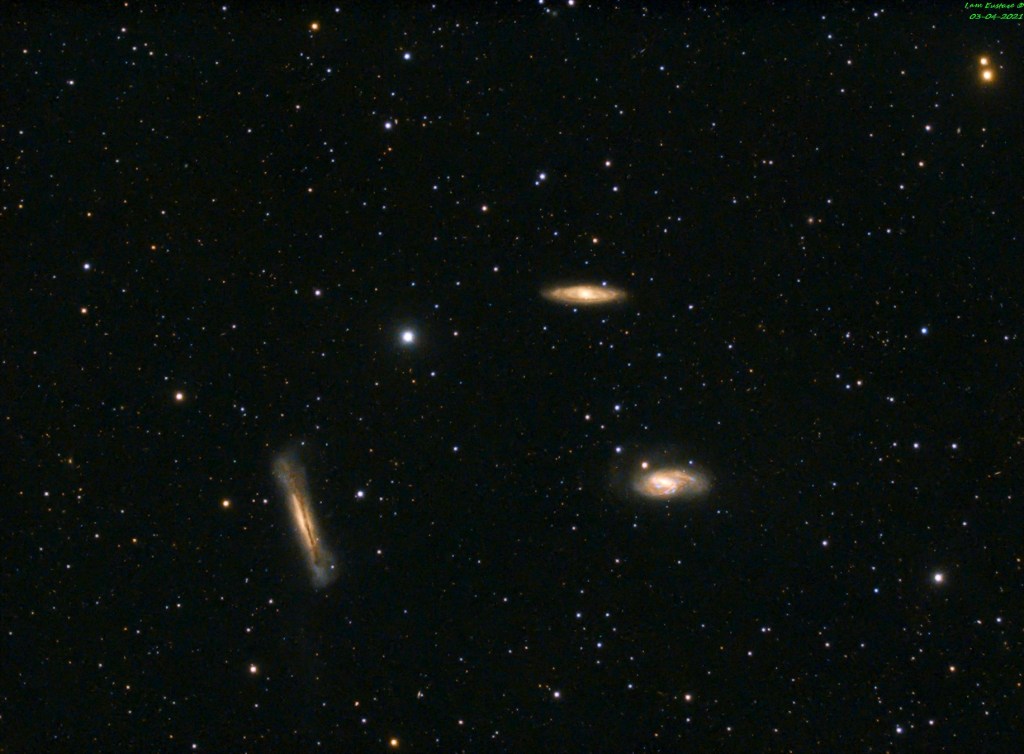
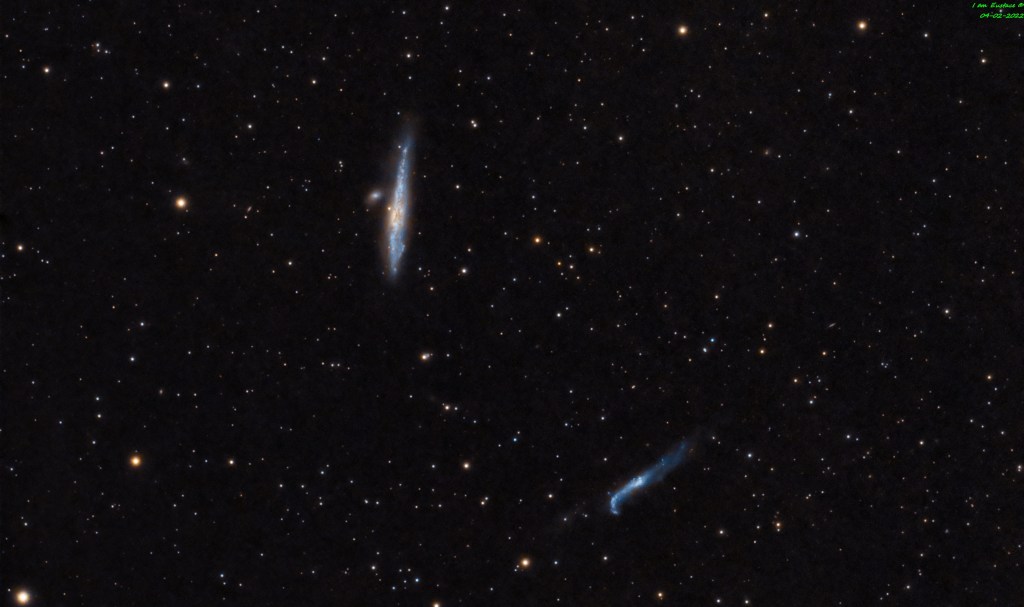
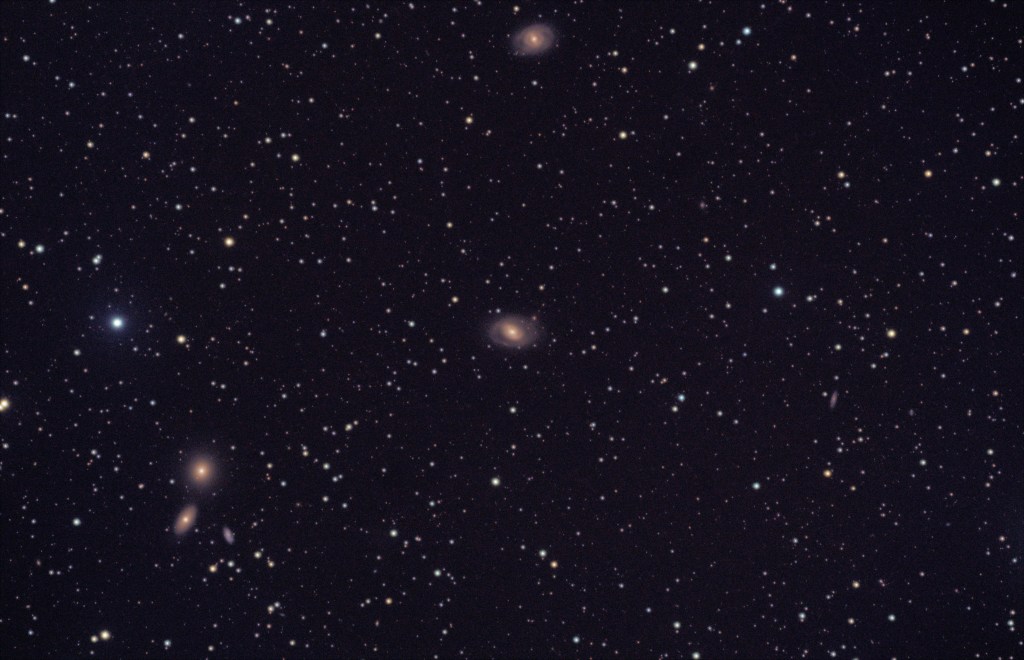
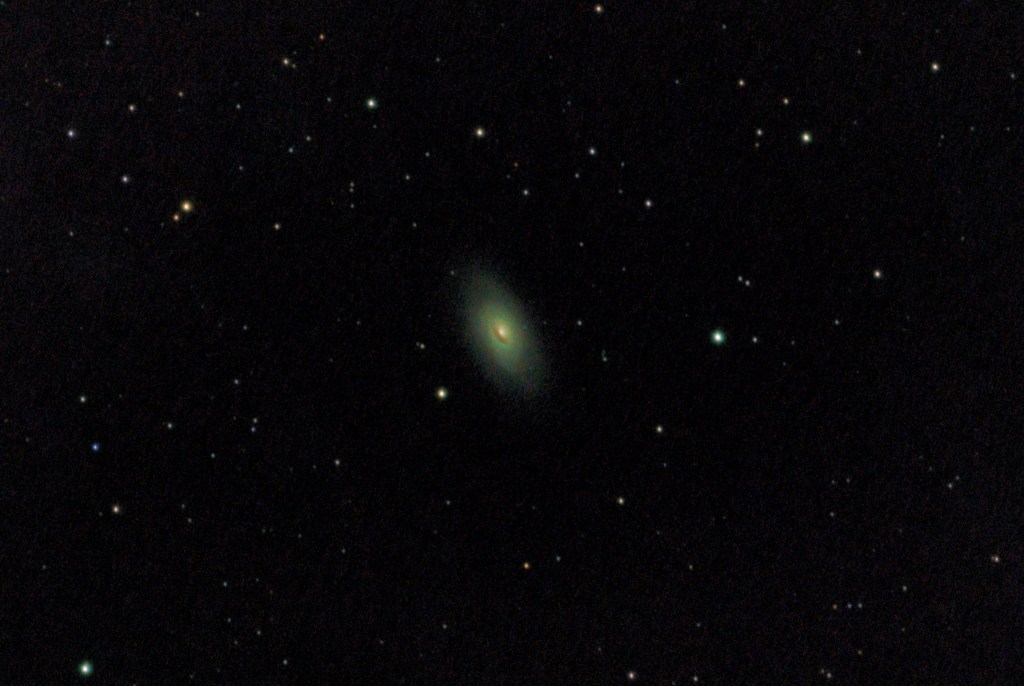
These marvels I imaged are entire galaxies, just like our own Milky-Way galaxy. But are located much further away. Take the first picture for example. The Andromeda galaxy, is situated about 2.537 million light years away! Yes, you read that right. The light I collected through my amateur astrophotography equipment left that object when our human ancestors, Homo habilis were still roaming the planet. Two of the most significant objects I’ve photographed under this category, are the two Magellanic clouds. Namely, the Small Magellanic Cloud (SMC) and the Large Magellanic Cloud (LMC) (refer to the picture labels to locate these objects in the album). These two are so-called dwarf galaxies and are situated much closer to our galaxy, the Milky-Way. In-fact they are situated ONLY 203,700 light years and 163,000 light years away from us, respectively. Another beautiful neighbor of ours is the Triangulum Galaxy (Messier 33), which is about 2.73 million light years away. Together with the Milky-Way and the Andromeda Galaxy, the Triangulum Galaxy formulates the so-called “local group” of galaxies. Other galaxies I imaged are much further away. For example, the Bode & Cigar galaxies (Messier objects 81 & 82) are located about 11.4 million and 12.4 million light years away, respectively. Further still, is the Sunflower galaxy (Messier 63), situated at about 37 million light years away. The Leo triplet of galaxies, is also at the same approximate distance from Earth.
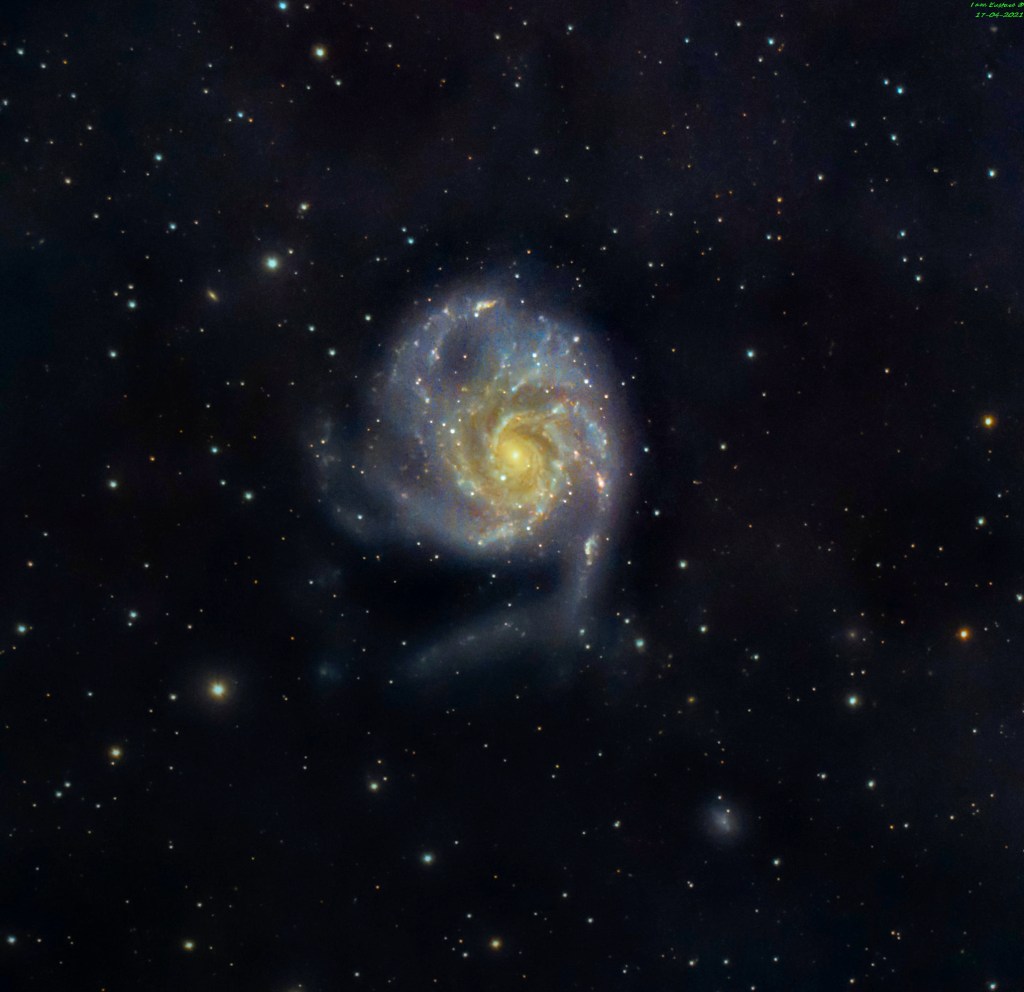
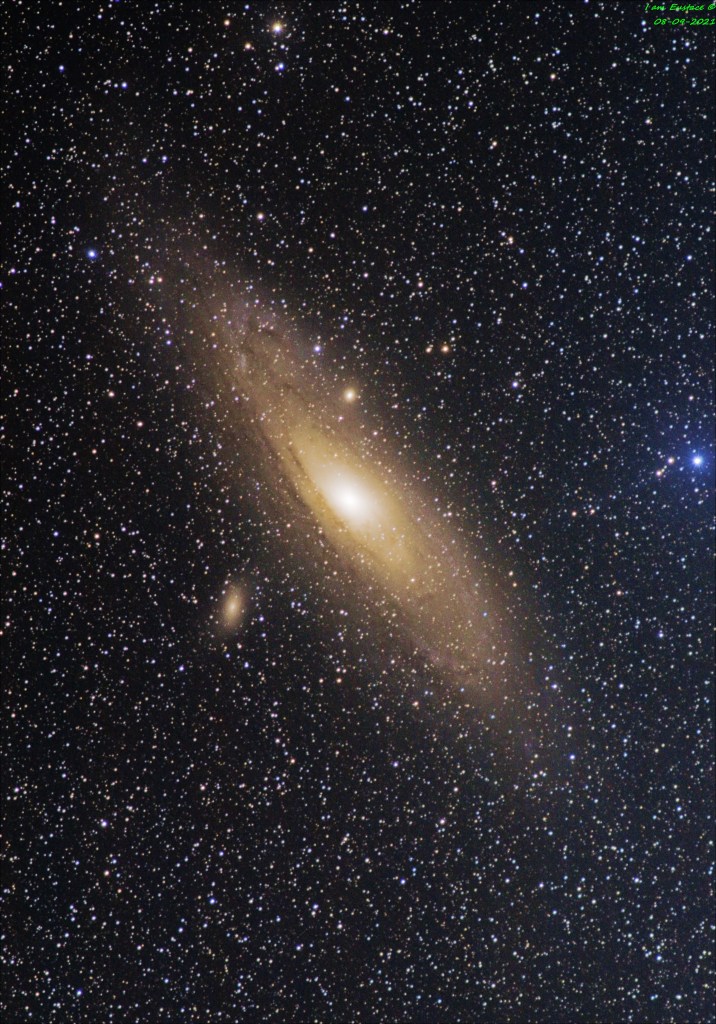
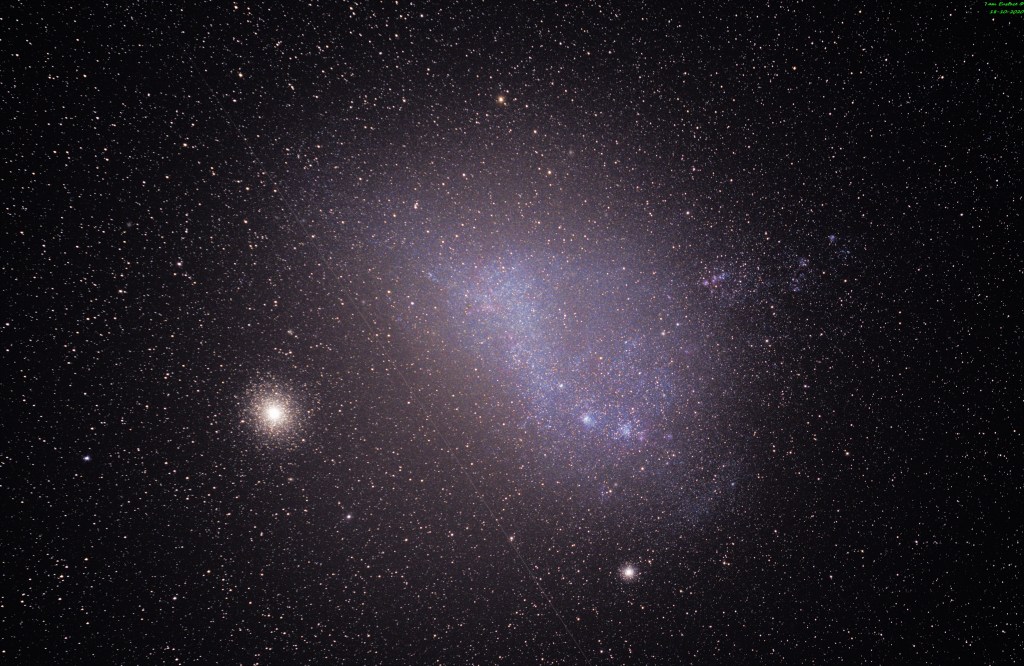
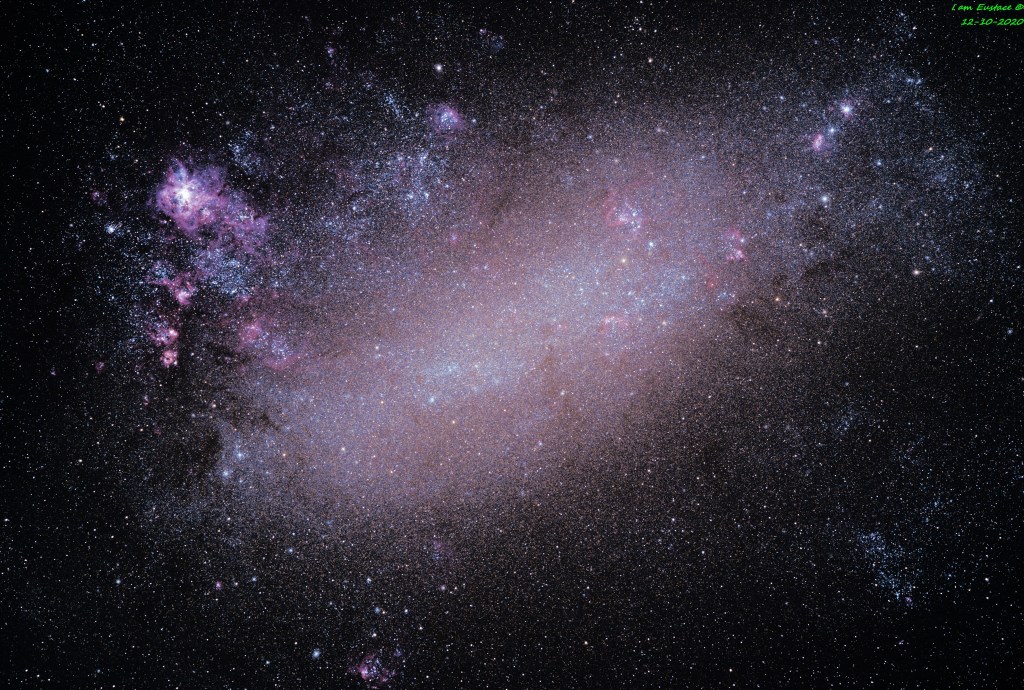
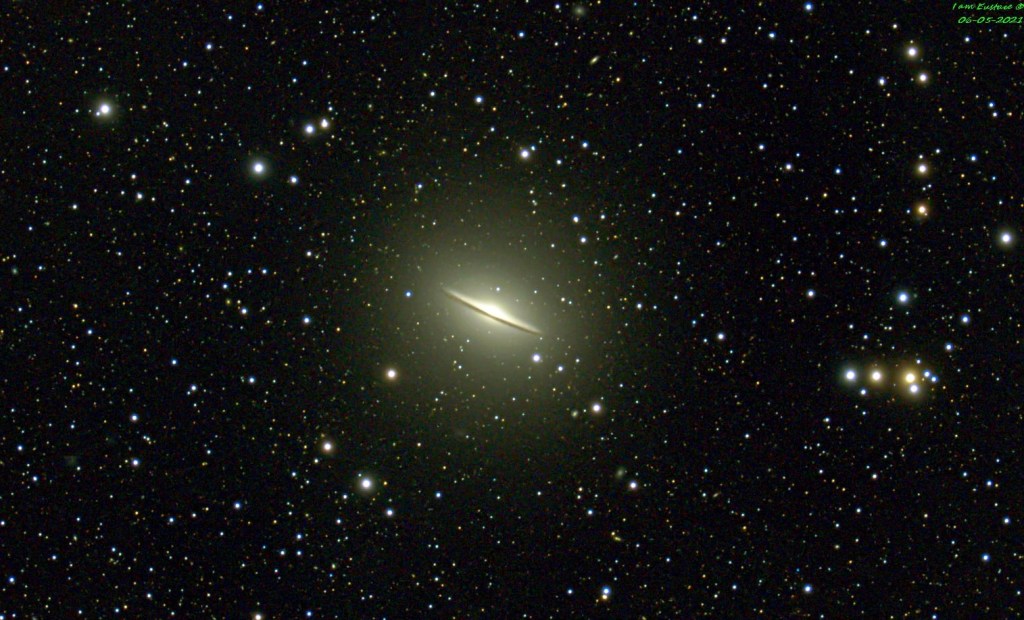
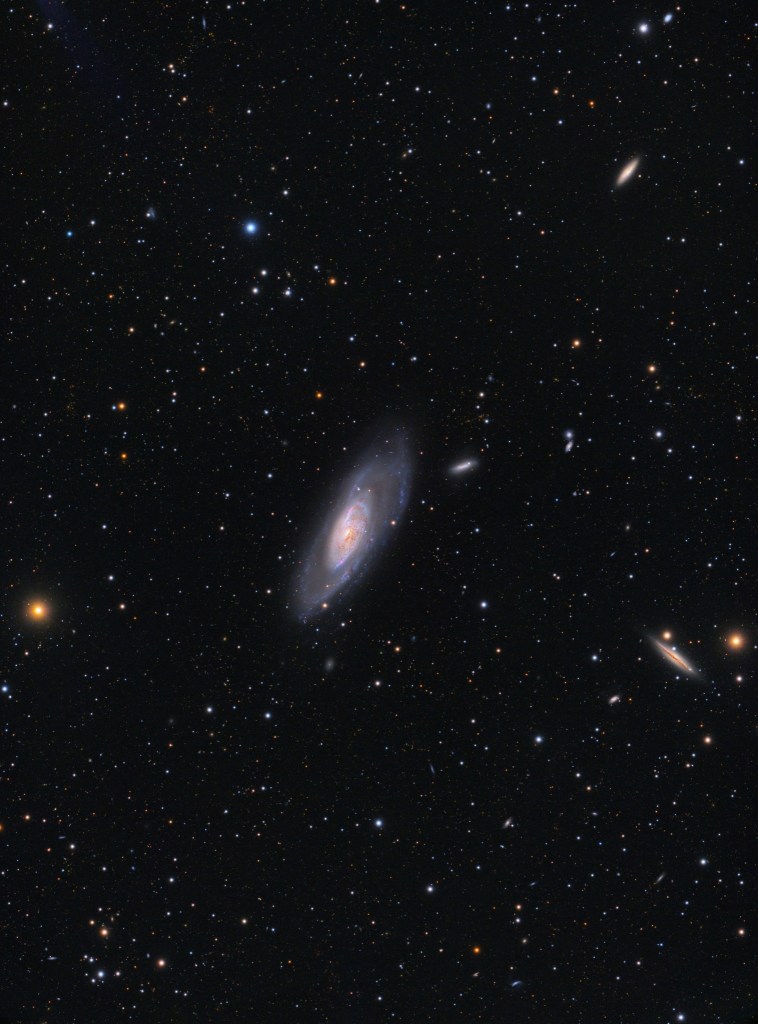
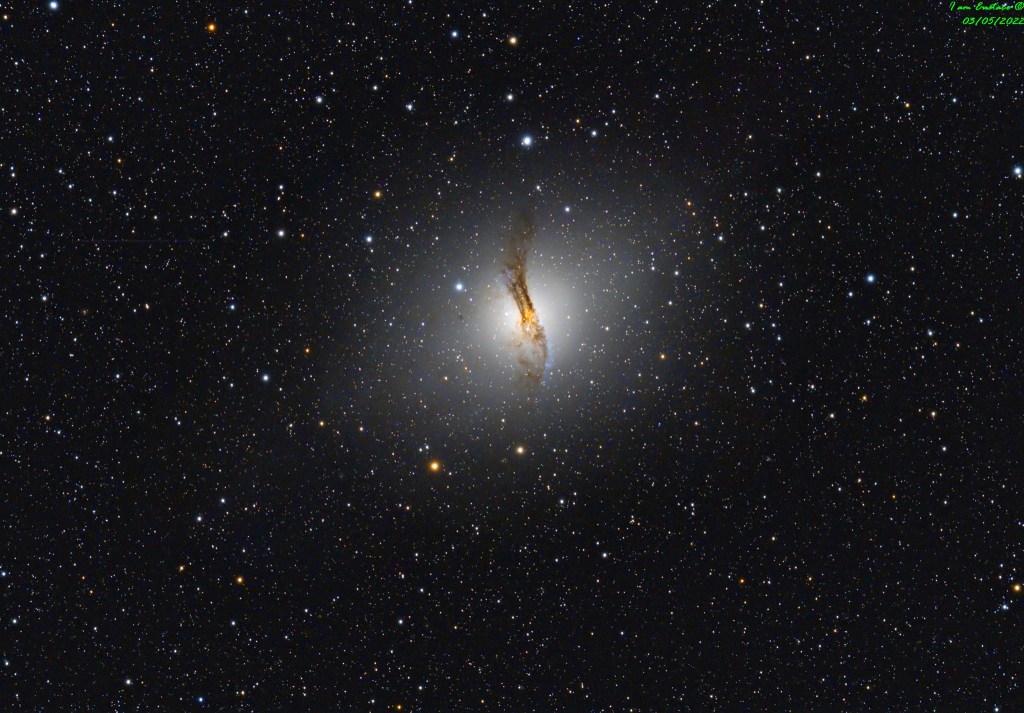
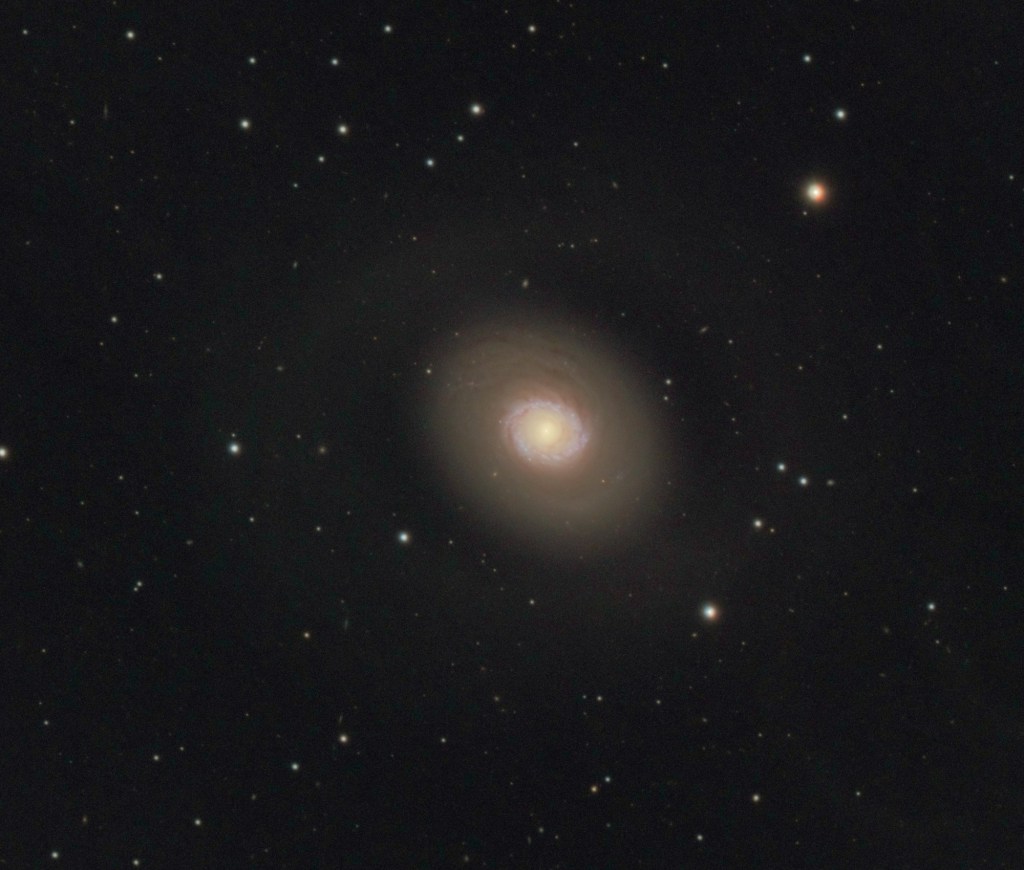
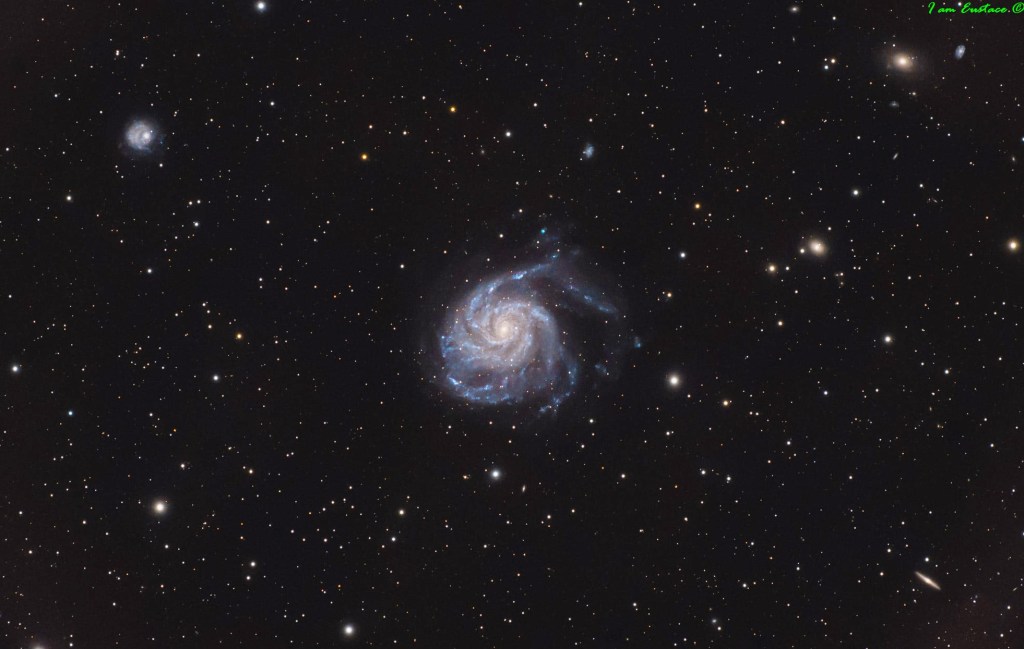
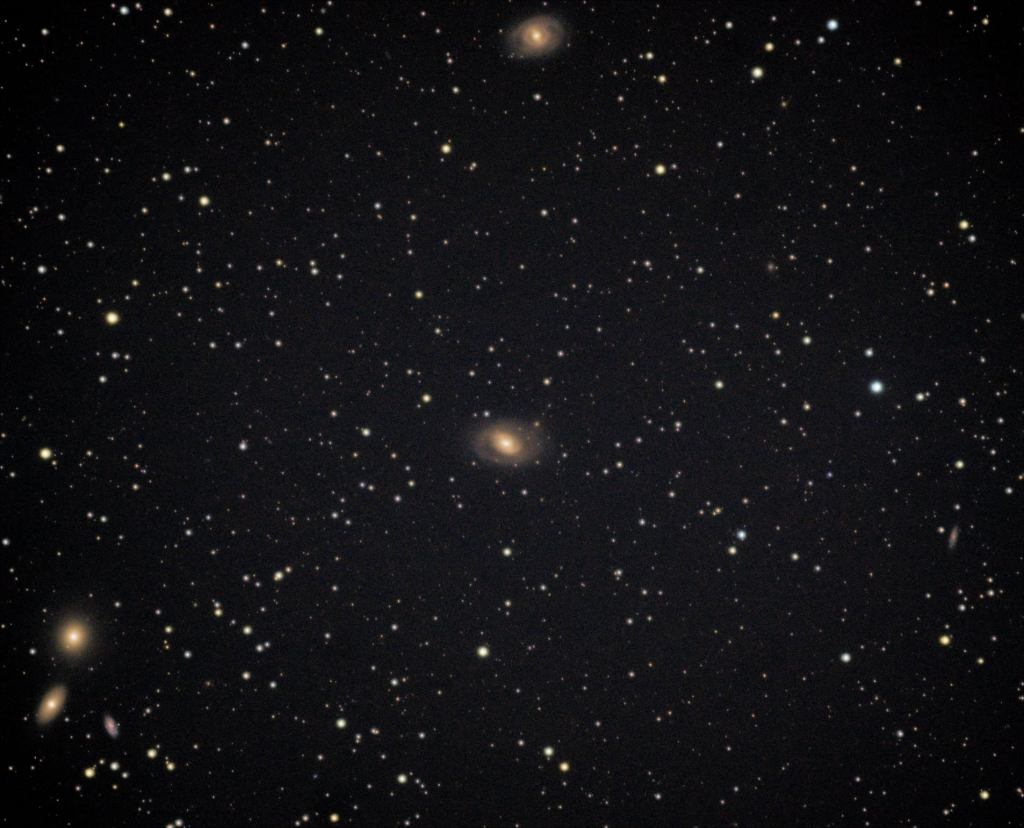
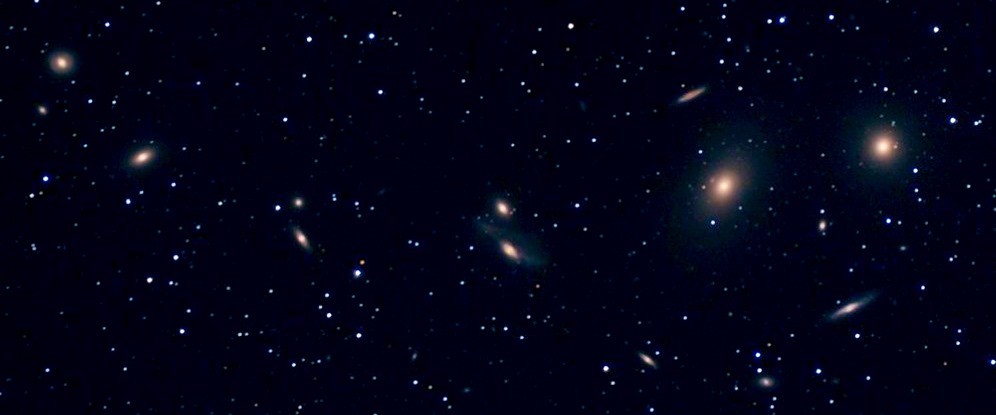
Early excursions into the hobby!
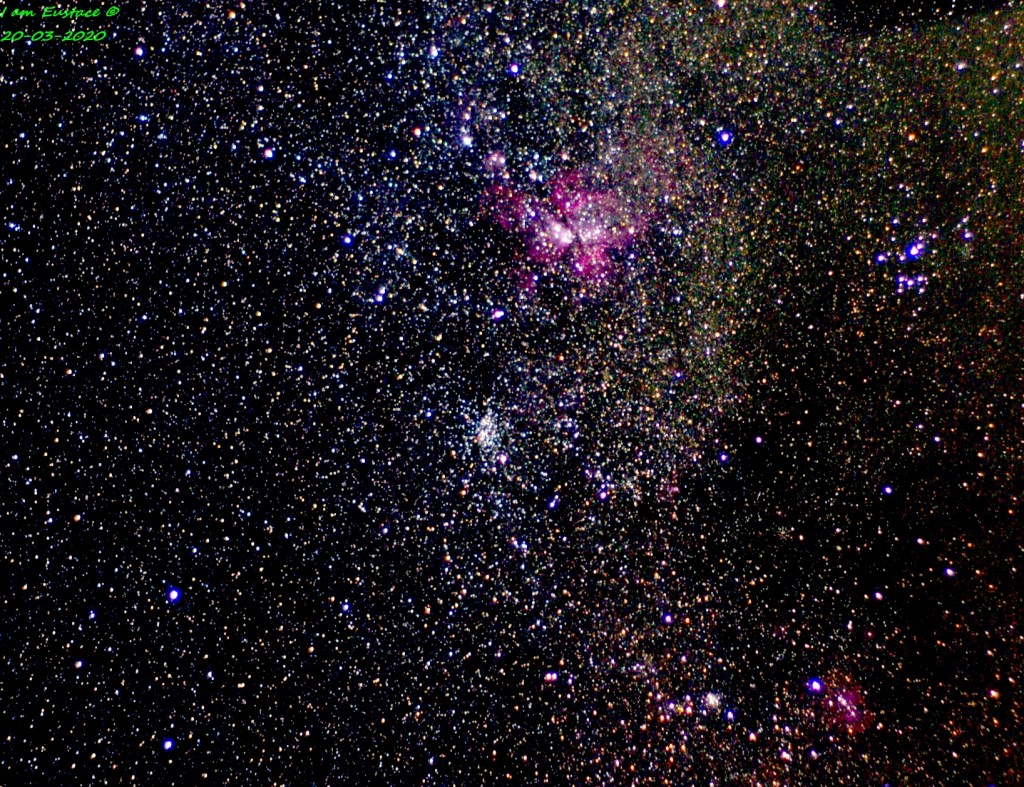
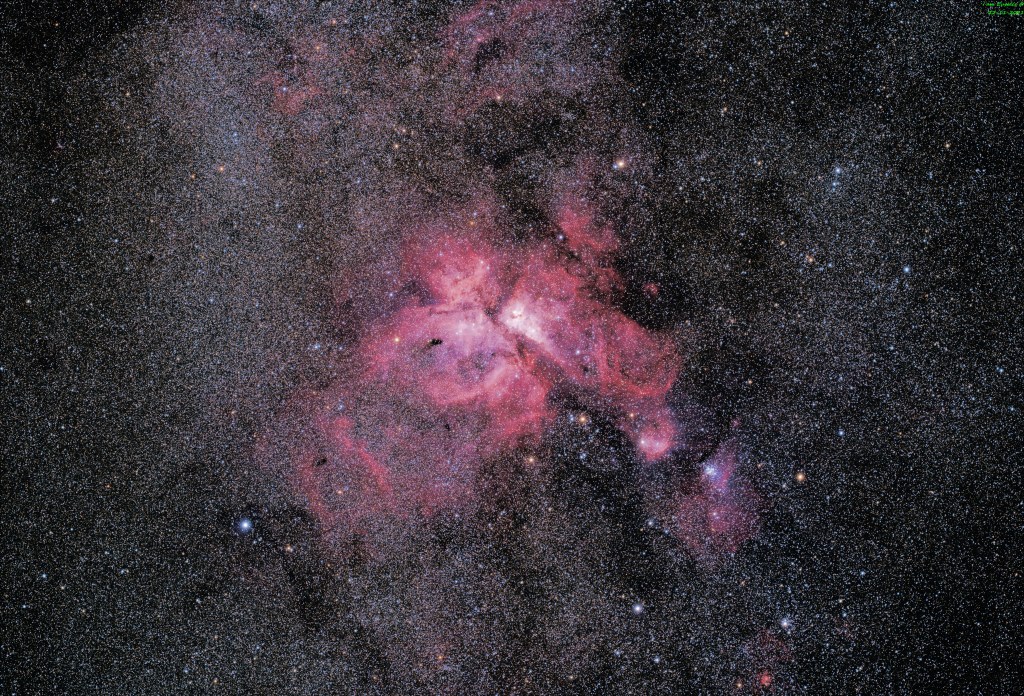
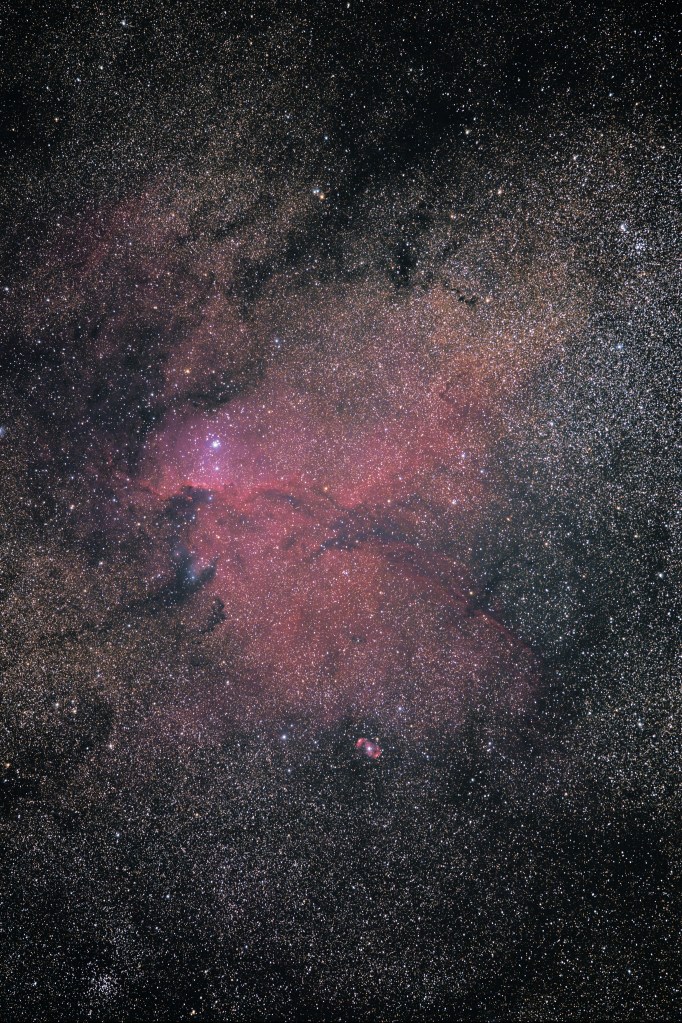
Southern Jewels – Eta Carina nebula. Power outages = zero light pollution. While others lament the absence of light, rejoice, grab your gear and happily snap away at the celestial wonders! Taken in Mihintale, April 2019. This is one of my first incursions into astrophotography.
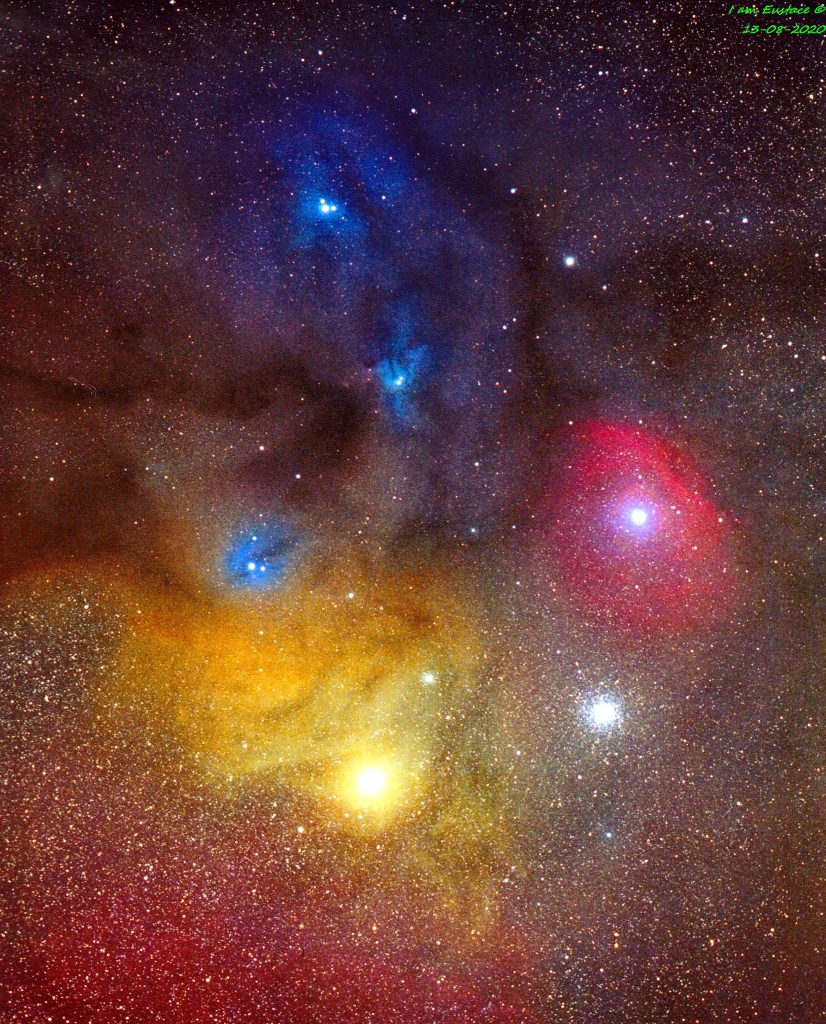
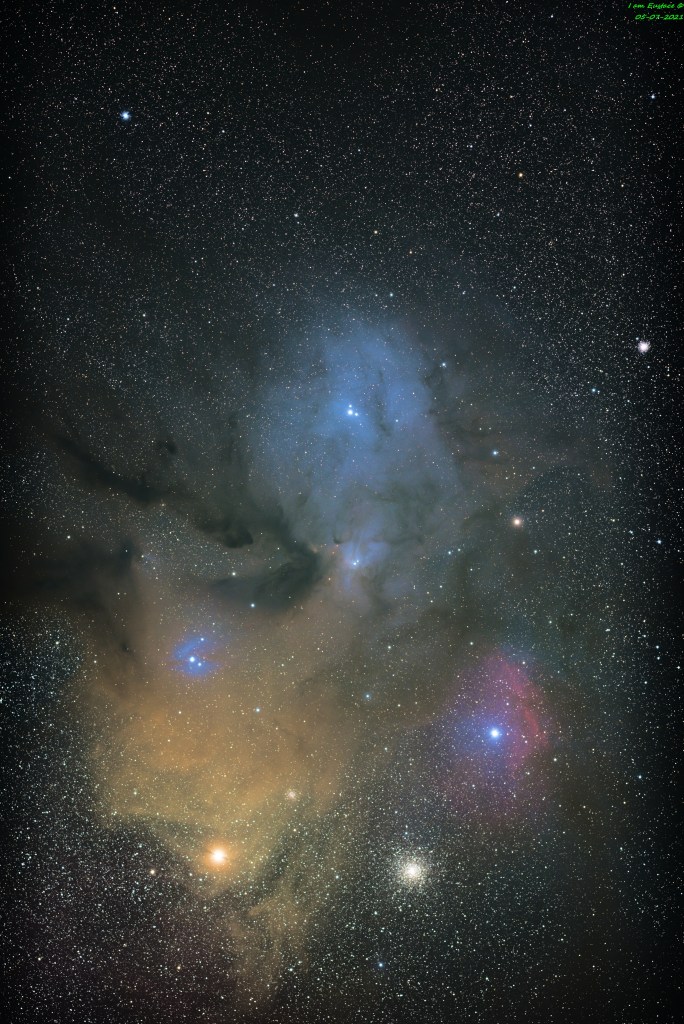
Eye of the Scorpion: The red-giant star Antares, the star cluster NGC 6121 and the Rho-Ophiuchi cloud complex in the constellation Scorpius. This beautiful region is on of my favourite targets but had almost no opportunity to image it thus far. This was imaged in May 2020 and contains roughly 4.5 hours of total integration time. Here, I used my 180 mm Nikkor ED vintage classic lens.
Nebulae
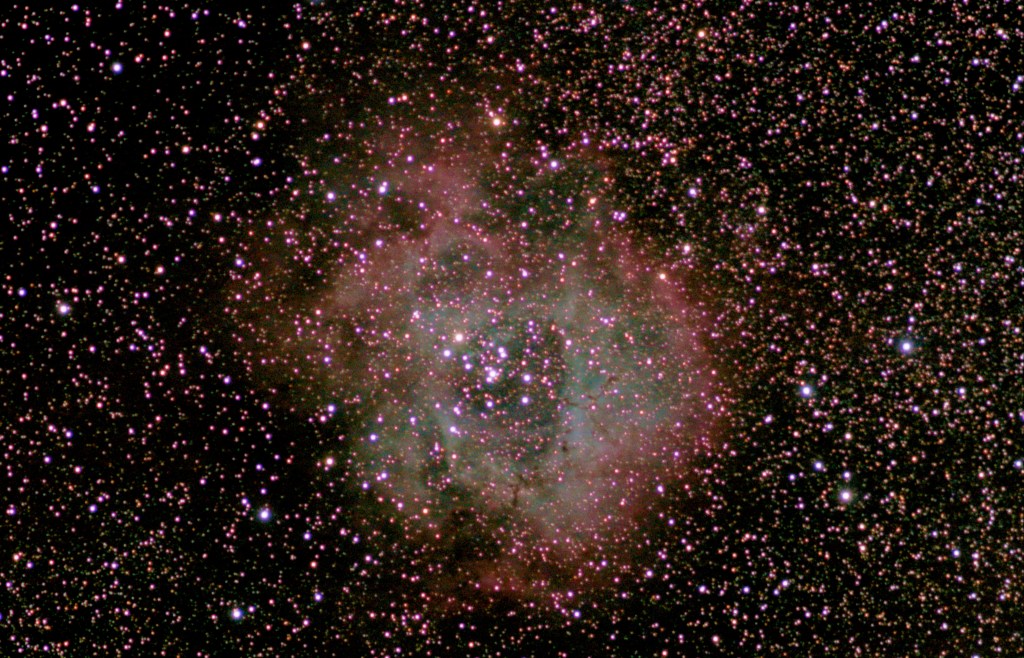
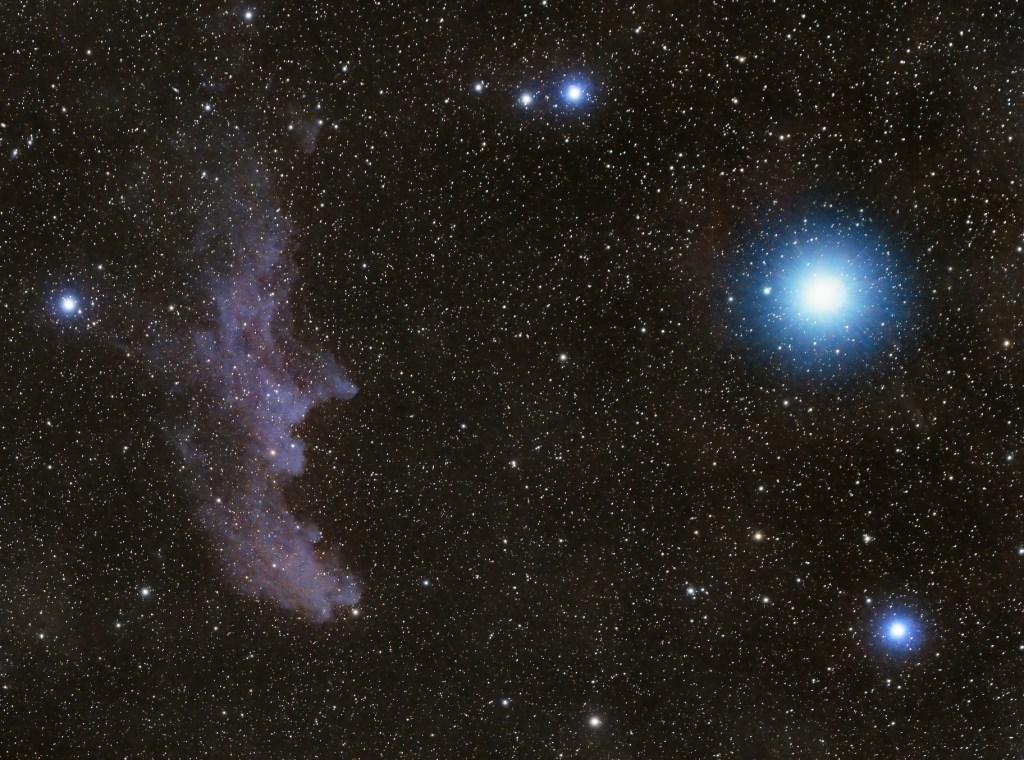
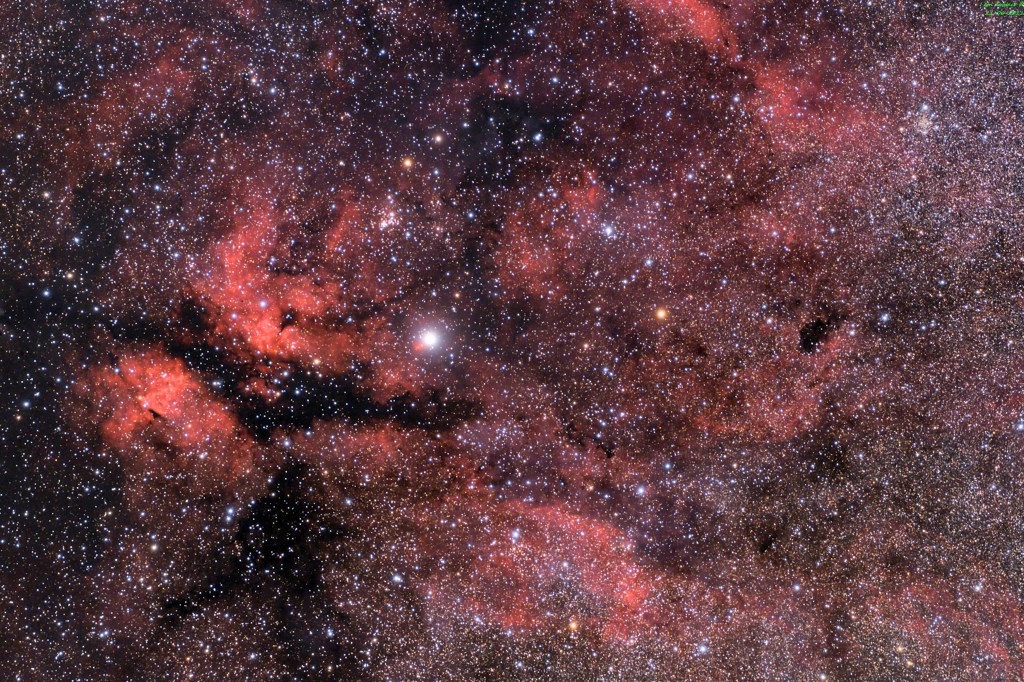
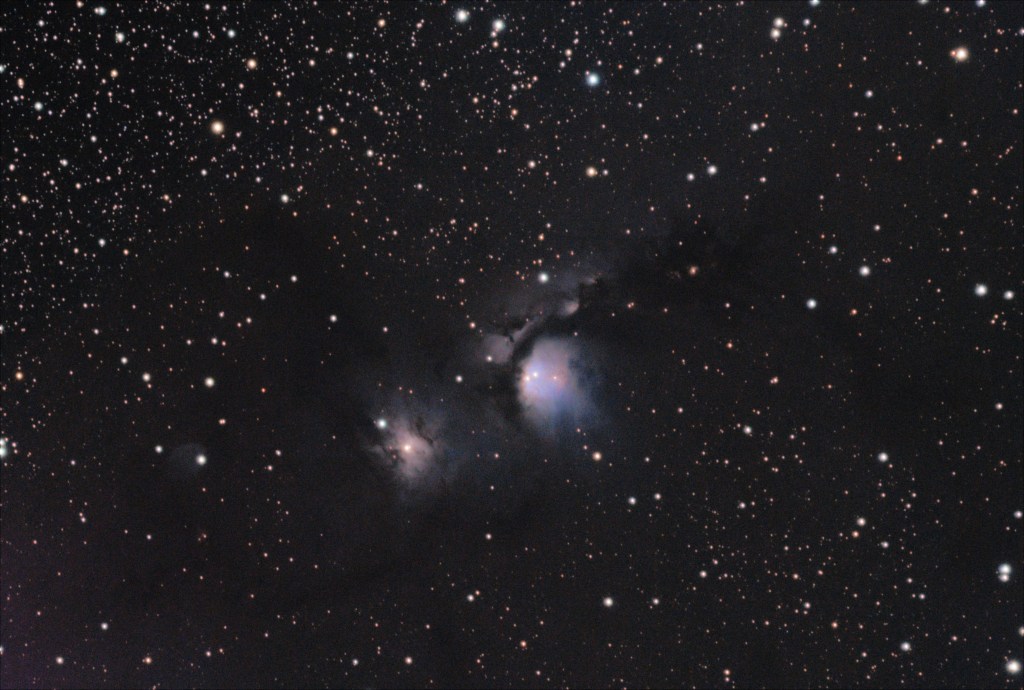
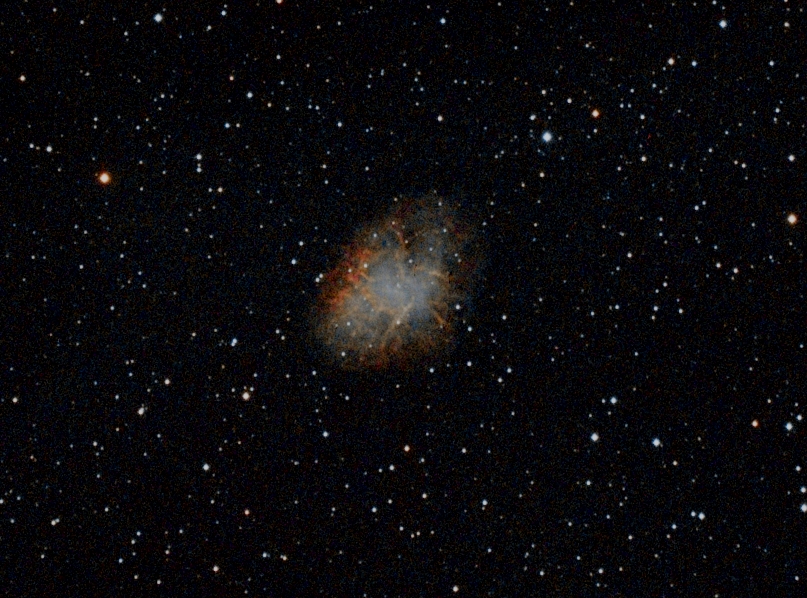
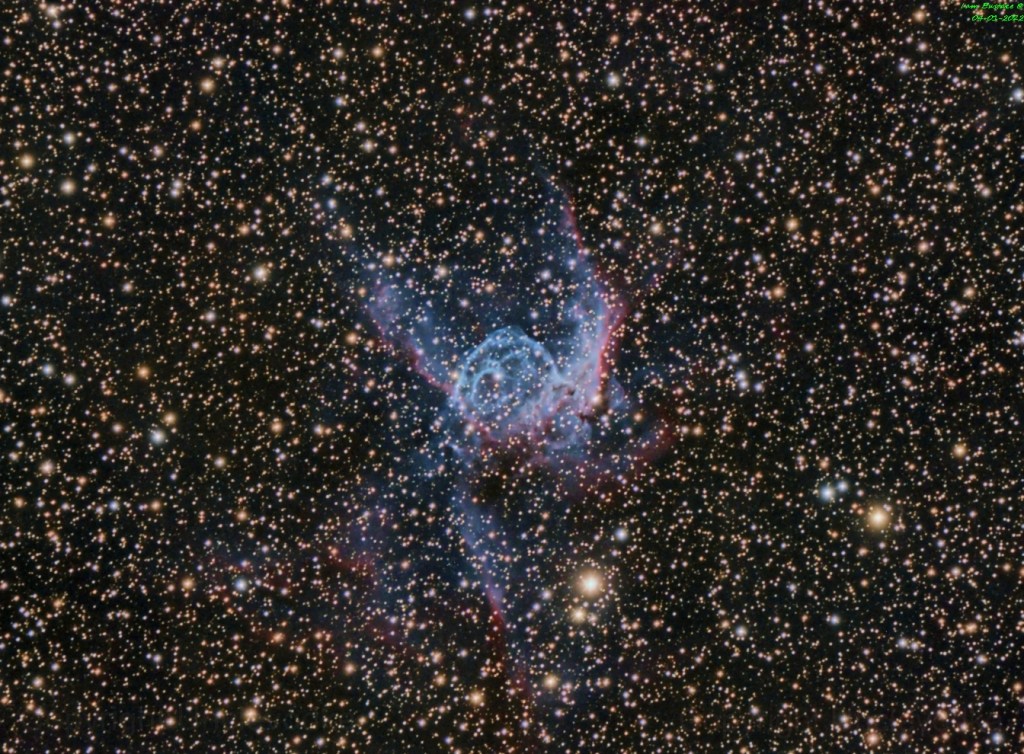
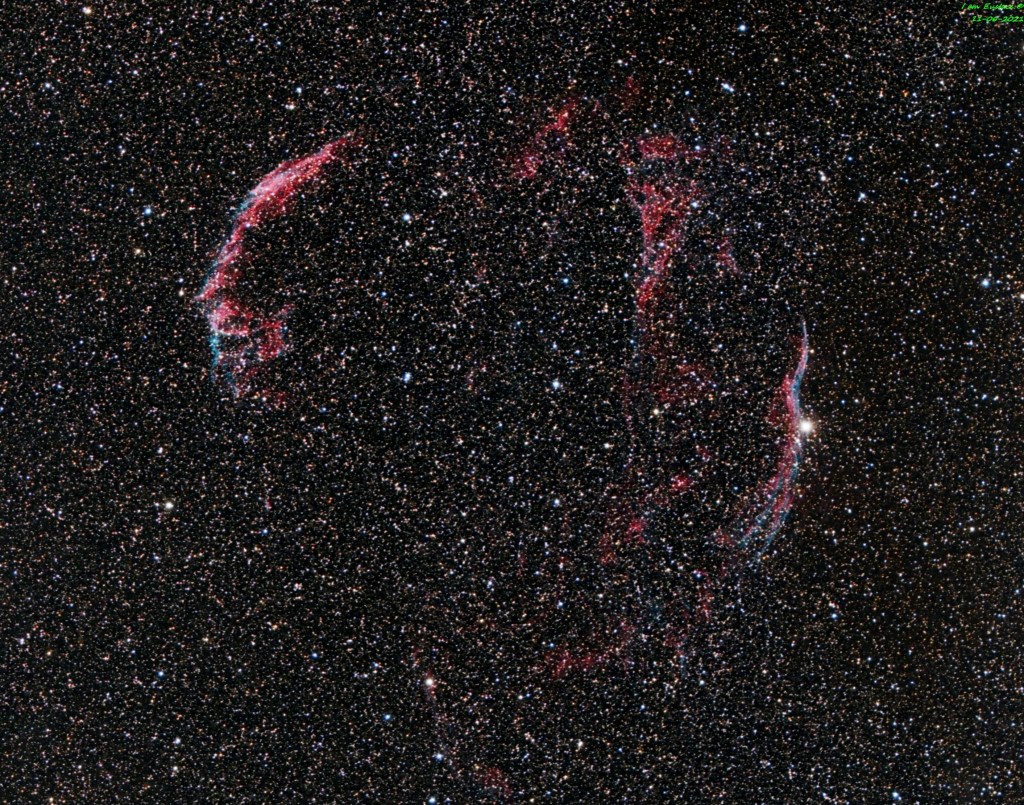
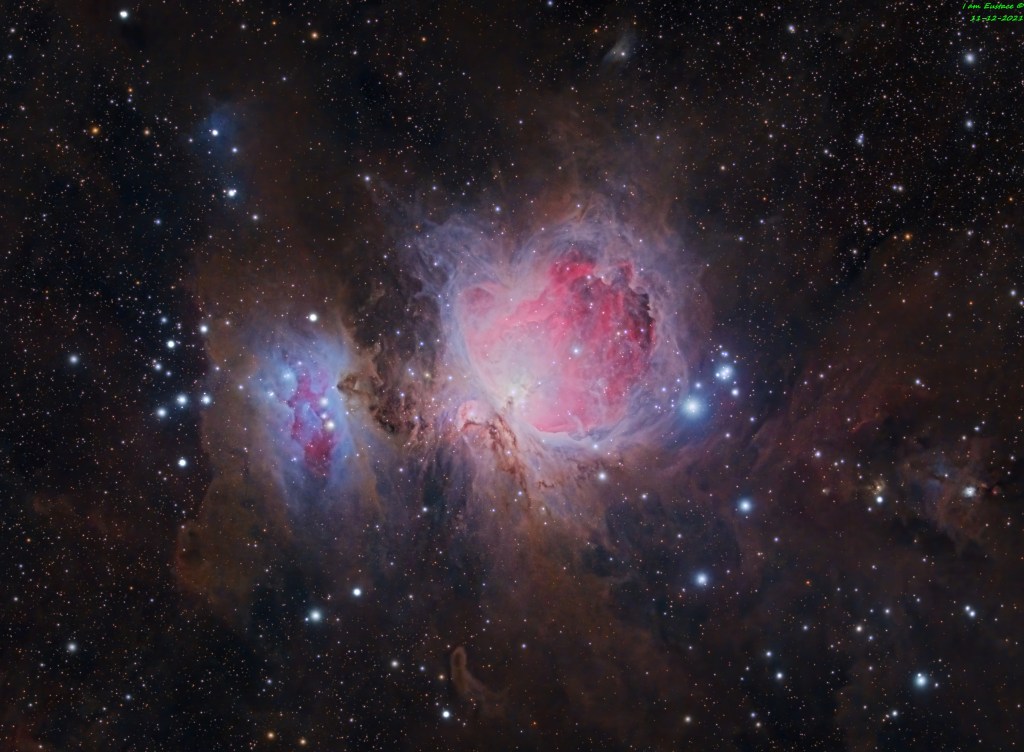
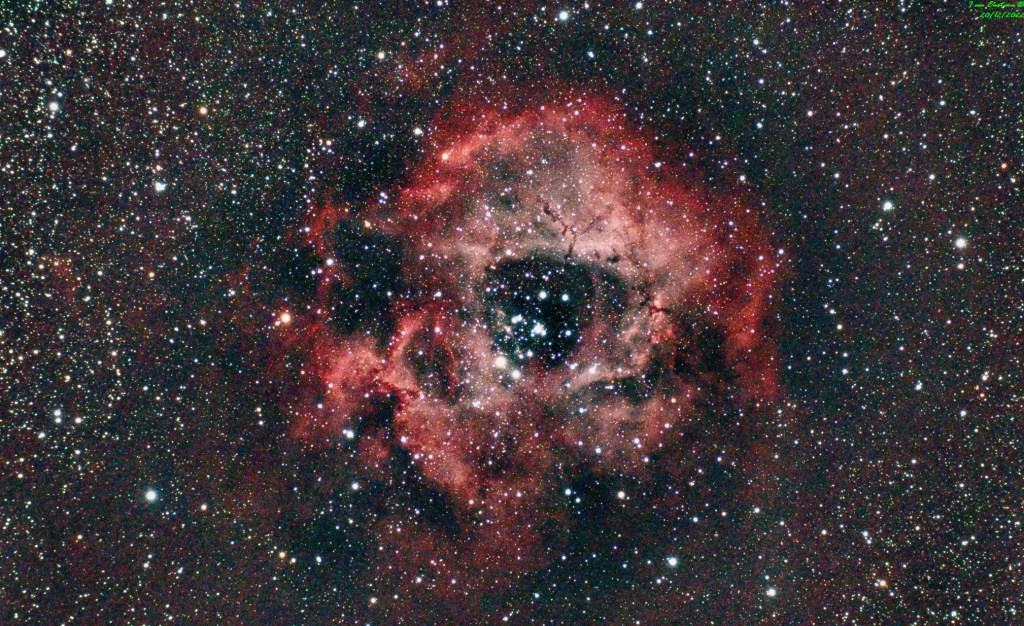
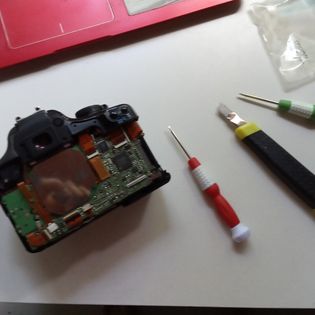
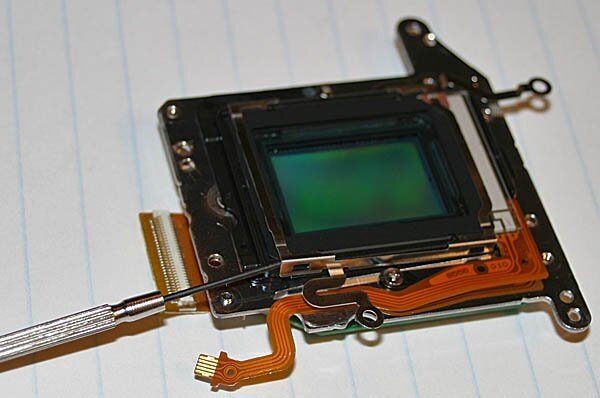
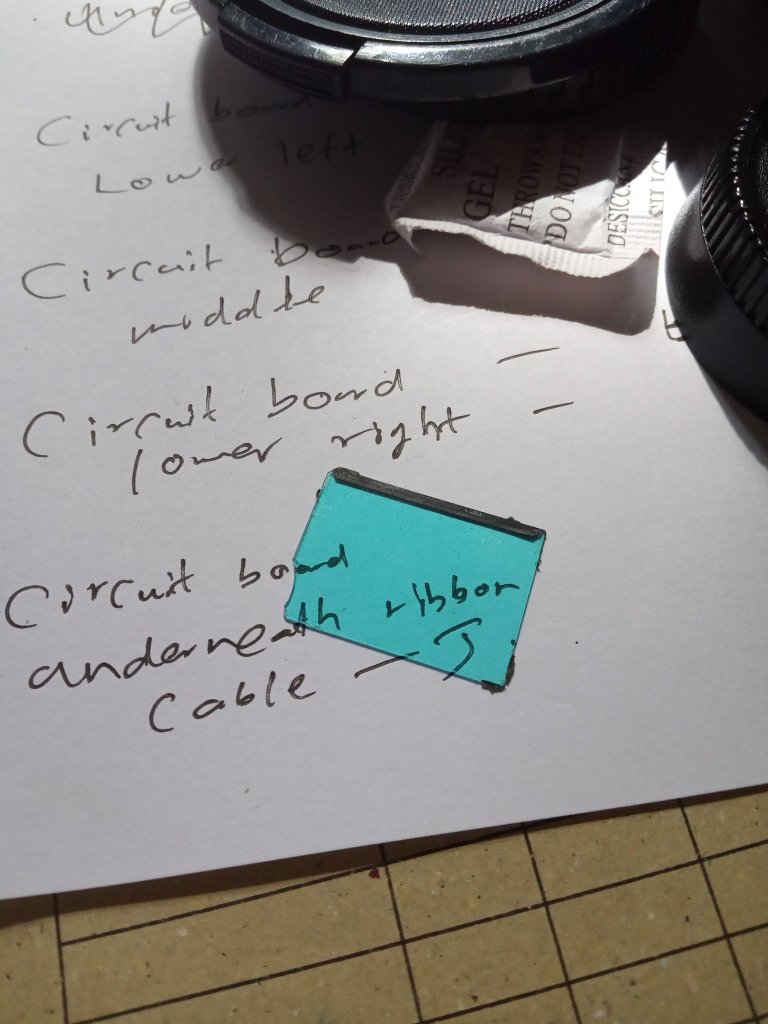
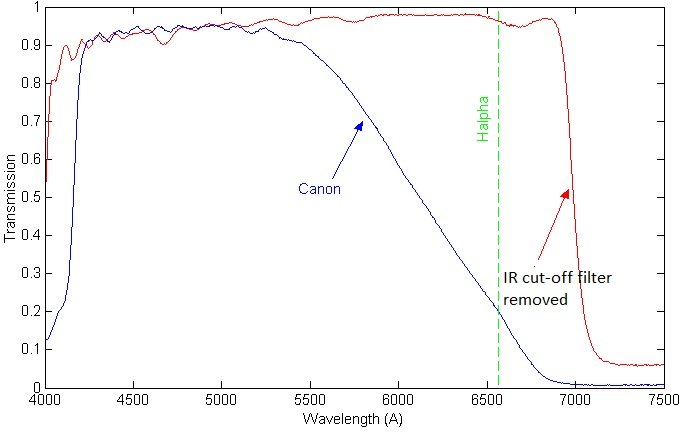
Nebulae are vast expanses of gas and dust where stars are born!! Some are remains of dead stars. They are found everywhere, both within our galaxy and in other galaxies as well. I got a major boost to imaging these stellar forges when I self-modified one of my main DSLR imaging cameras into full-spectrum sensitivity. Namely, I removed the stock filter of my Canon 450D DSLR camera to allow in more light of the red-end of the light spectrum. Many of the emission nebulae contain ionized hydrogen, which emit the reddish/purplish light at the wavelength 656.8 nanometers. Normal DSLR cameras have a filter that cuts out this wavelength. I took apart my camera to remove this filter to make it much more sensitive to this wavelength of light. You can see how this modification was done and how effective it is in one of the subsequent sections of this webpage.
Some of the highlights of my nebulae astrophotography are:
* The Eta-Carinae nebula – Is a giant forge of new stars in our own galaxy, Milky-Way. It is full of ionized hydrogen and appears reddish pink when imaged. It is one of the brightest nebulae and it will even be faintly visible to the naked eye, when viewed from a dark sky location.
*The Rho-Ophiuchi cloud complex – Is a large region of gas and dust that appears so colorful when imaged. It is one of my favorite astrophotography targets in the night sky.
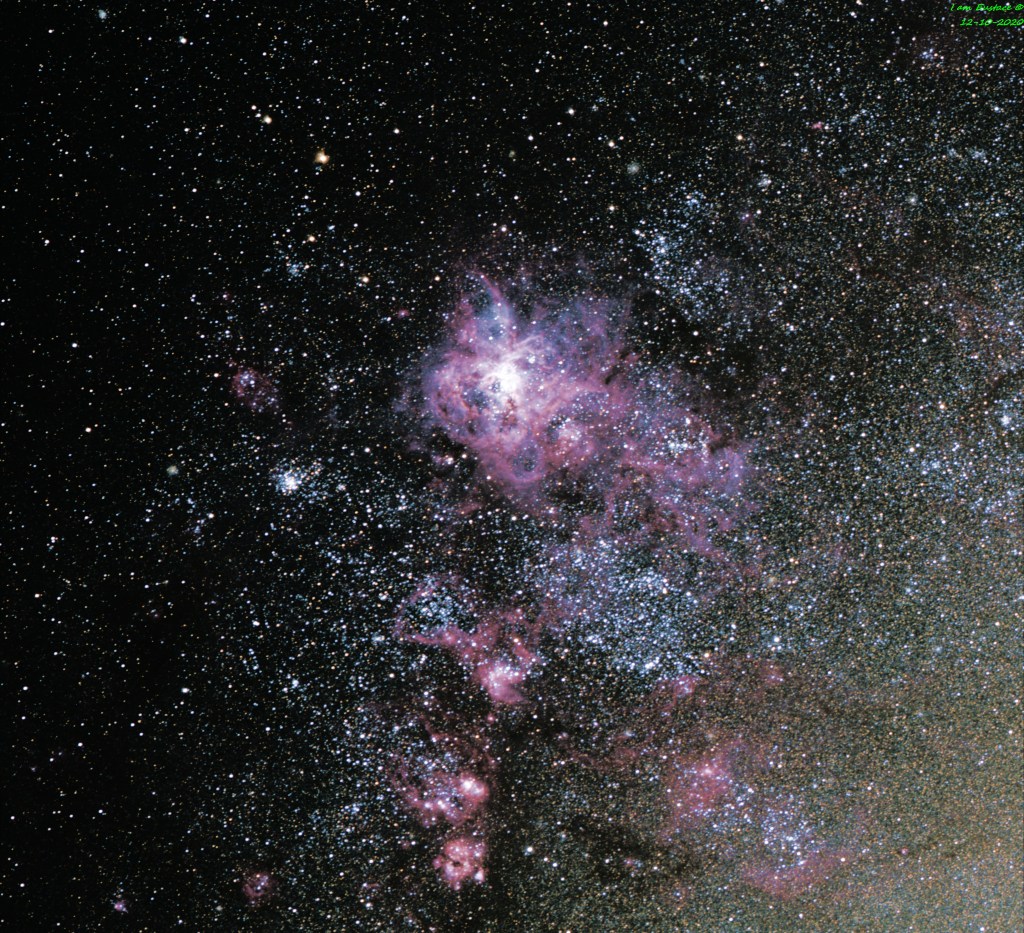
* The Tarantula nebula – This is a nebula in another galaxy!! It is found within our sister galaxy, the Large Magellanic cloud and is known to have absolutely gigantic proportions, dwarfing nebulae such as the Orion nebula found in our own galaxy.
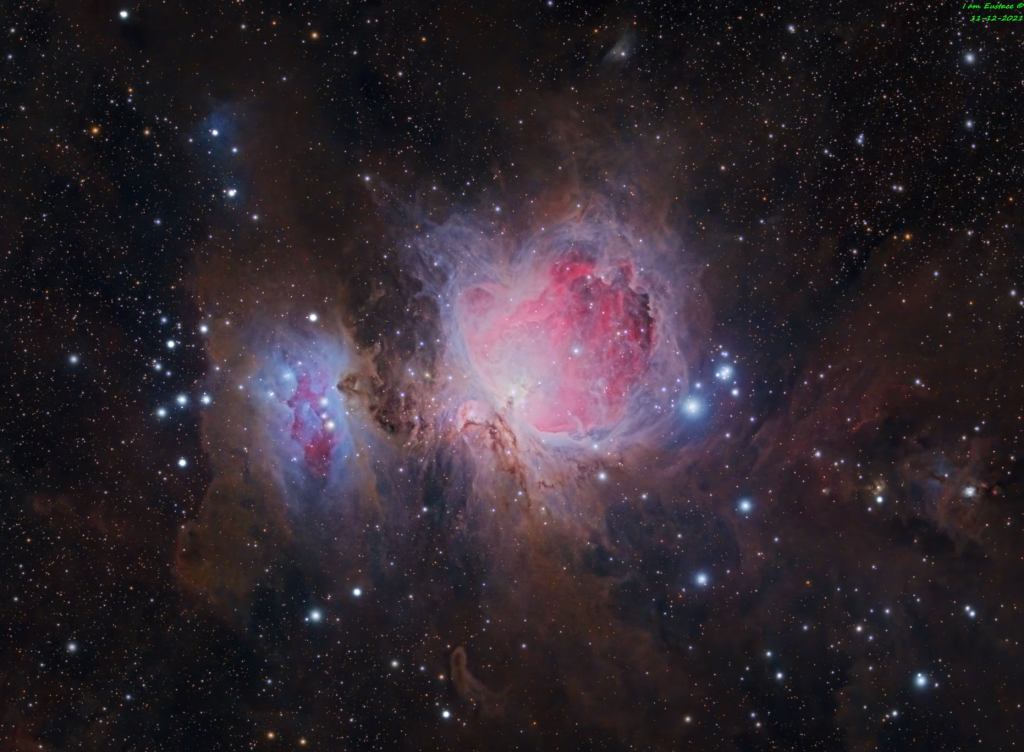
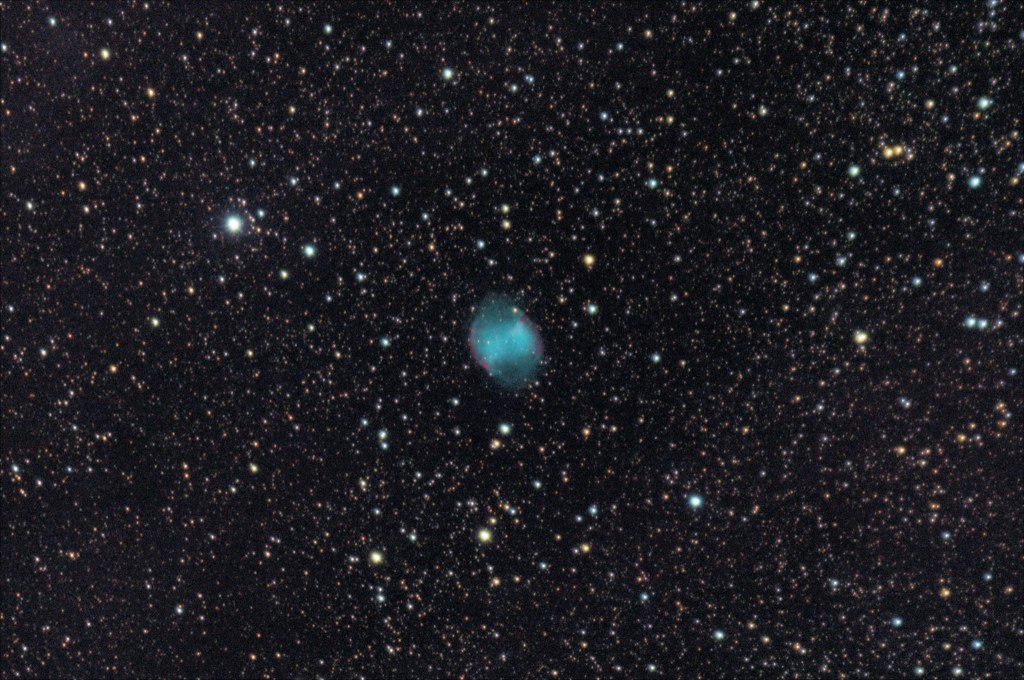
*The Orion nebula – A huge stellar nursery found within the constellation Orion, it is one of the most prominent nebulae in our own galaxy, the Milky-Way
Widefield astrophotography
I do not specialize in ultra widefield astrophotography, but made several incursions into this area. Below are some of my attempts;
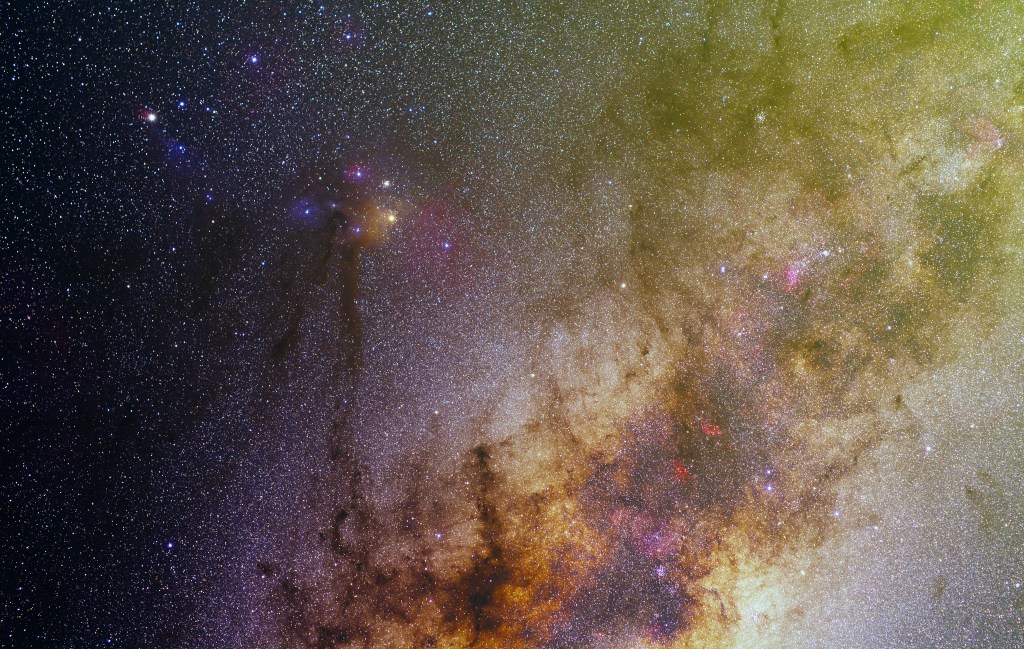
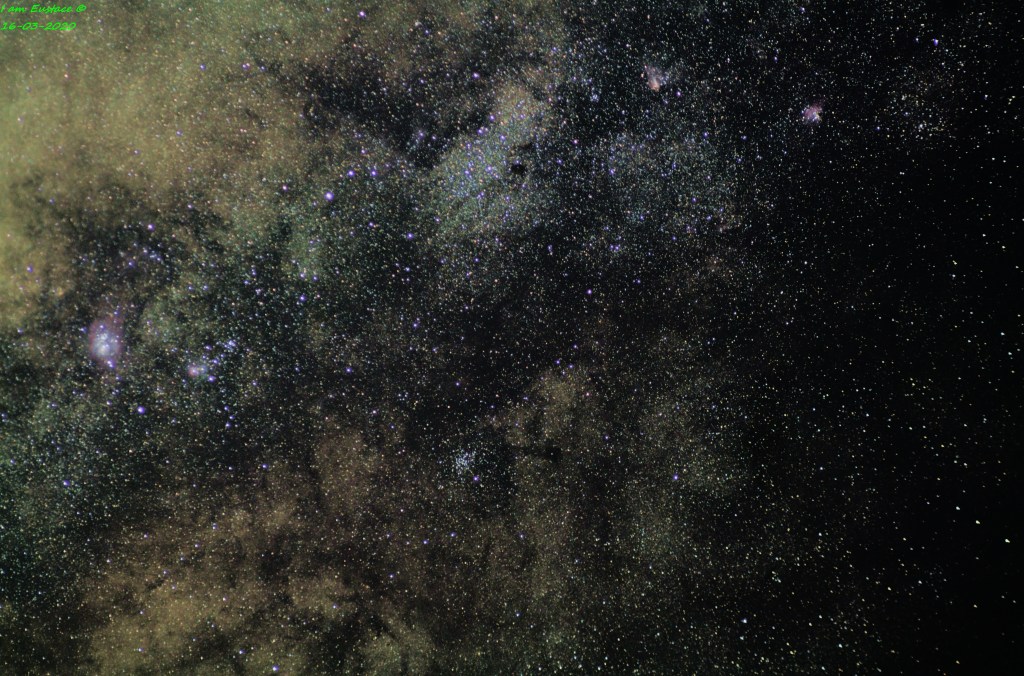
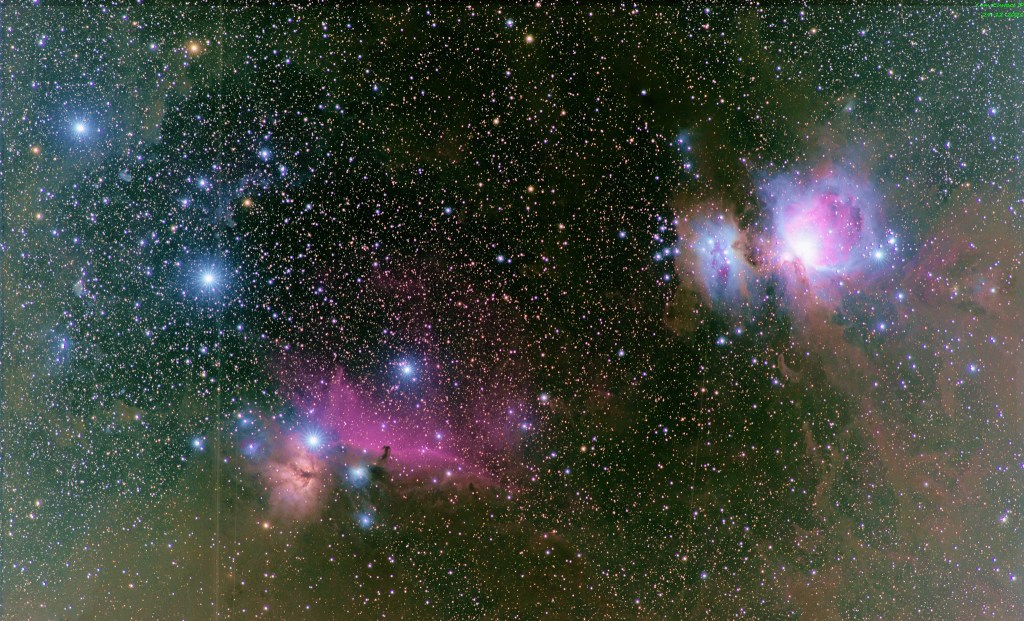
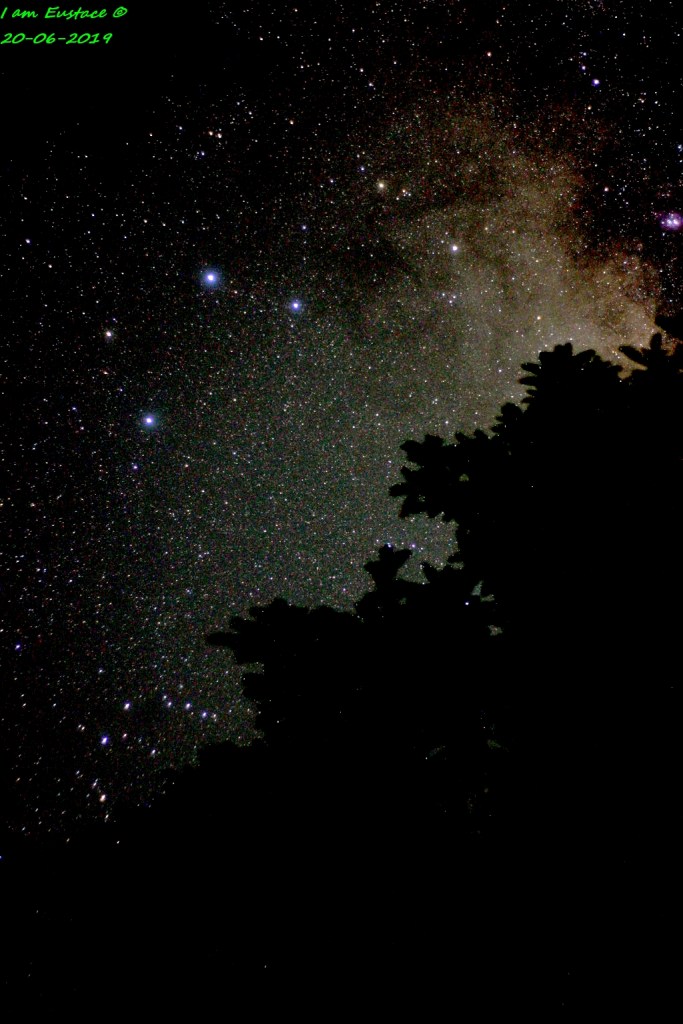
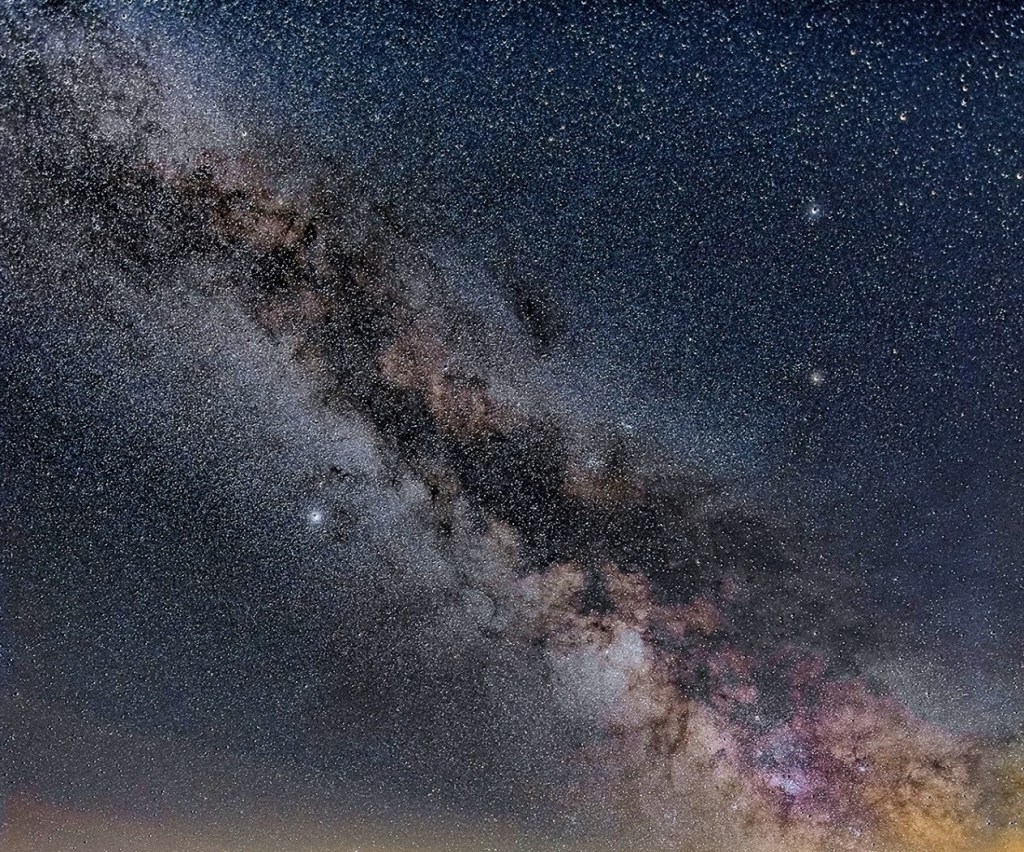
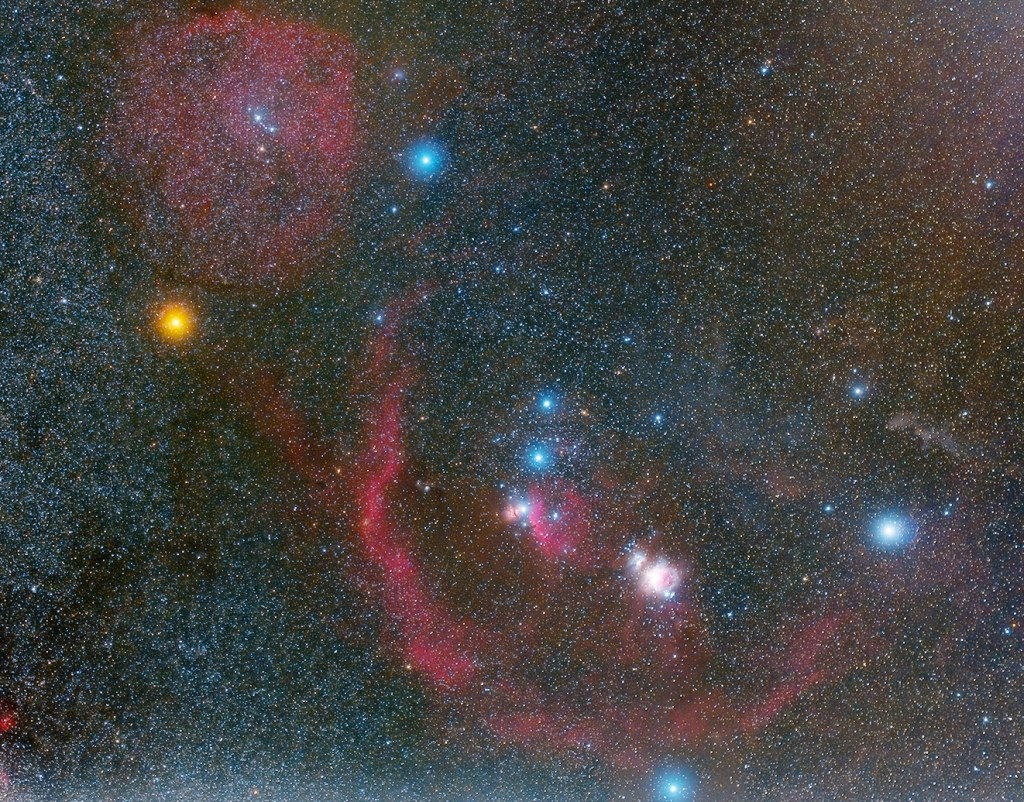
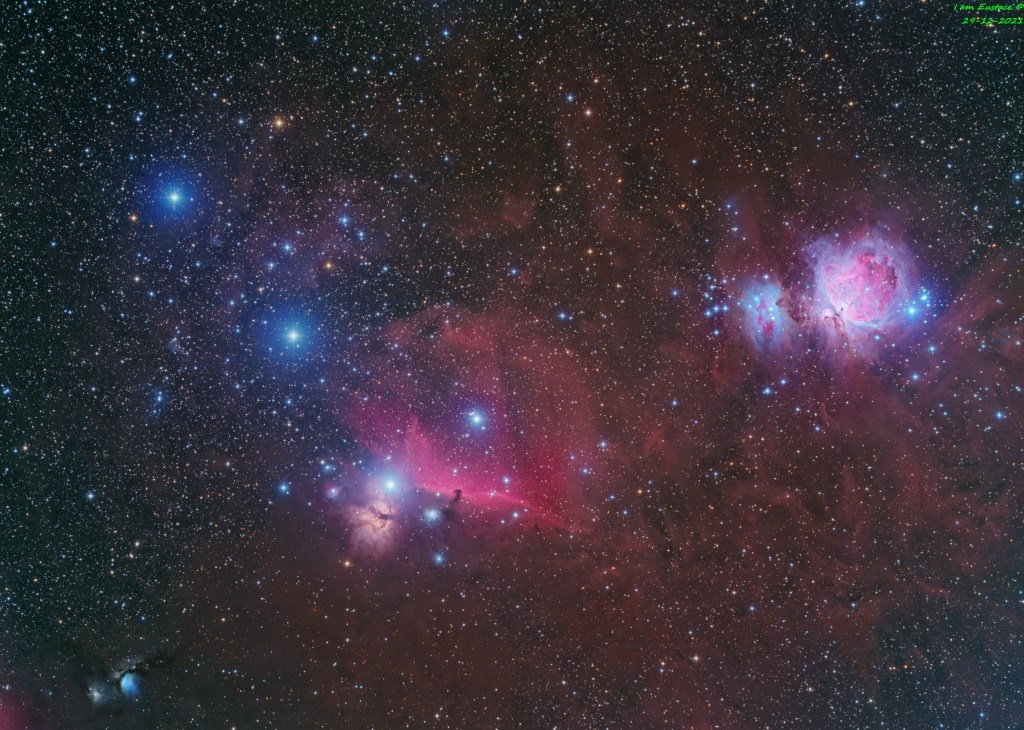
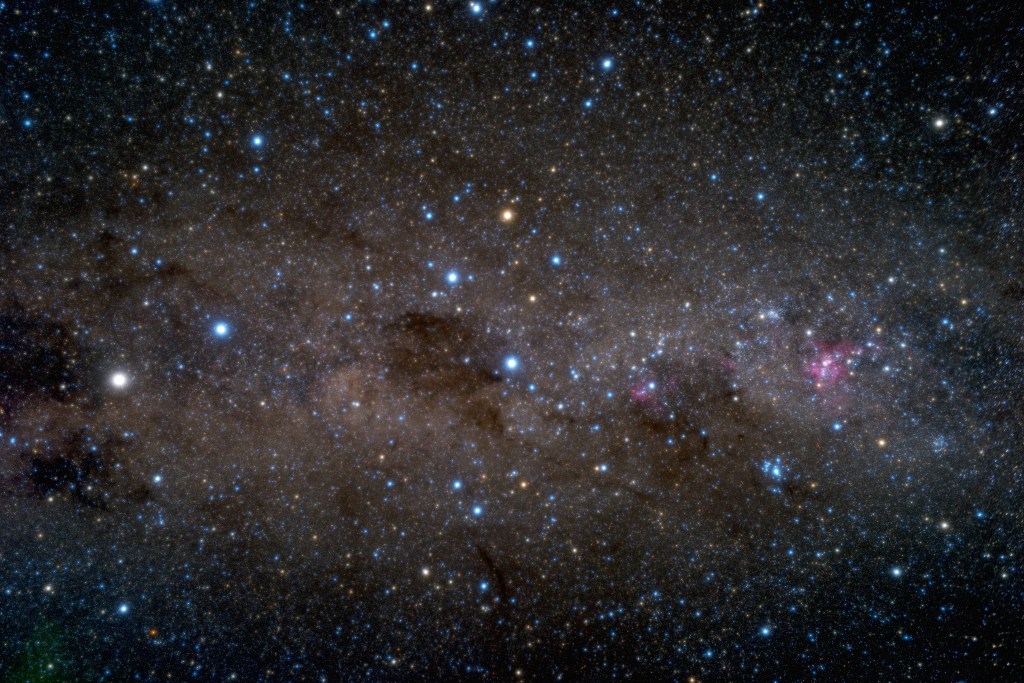
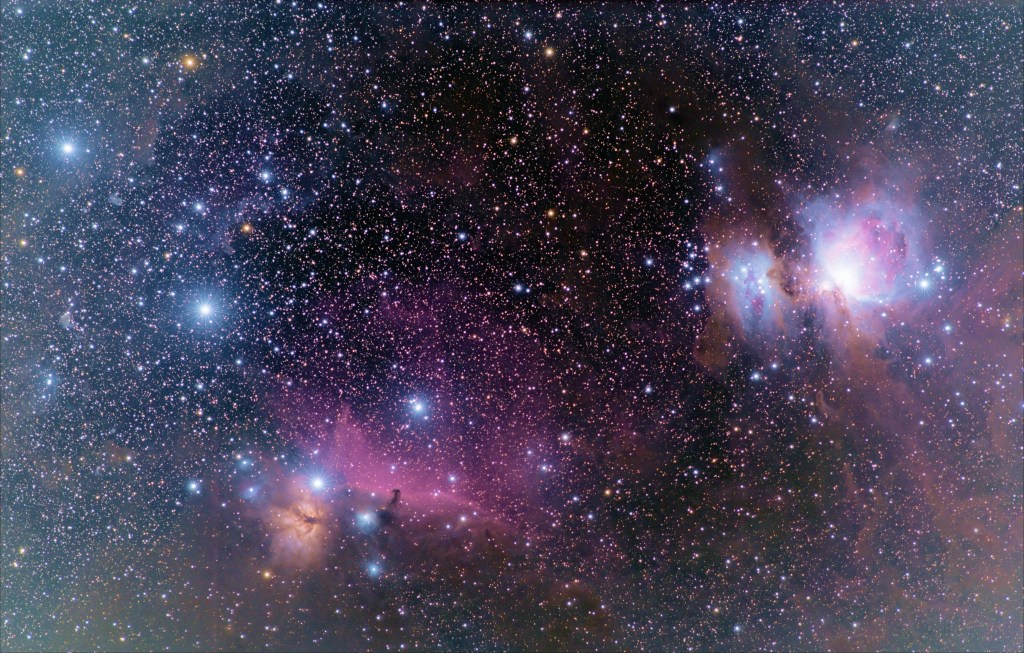
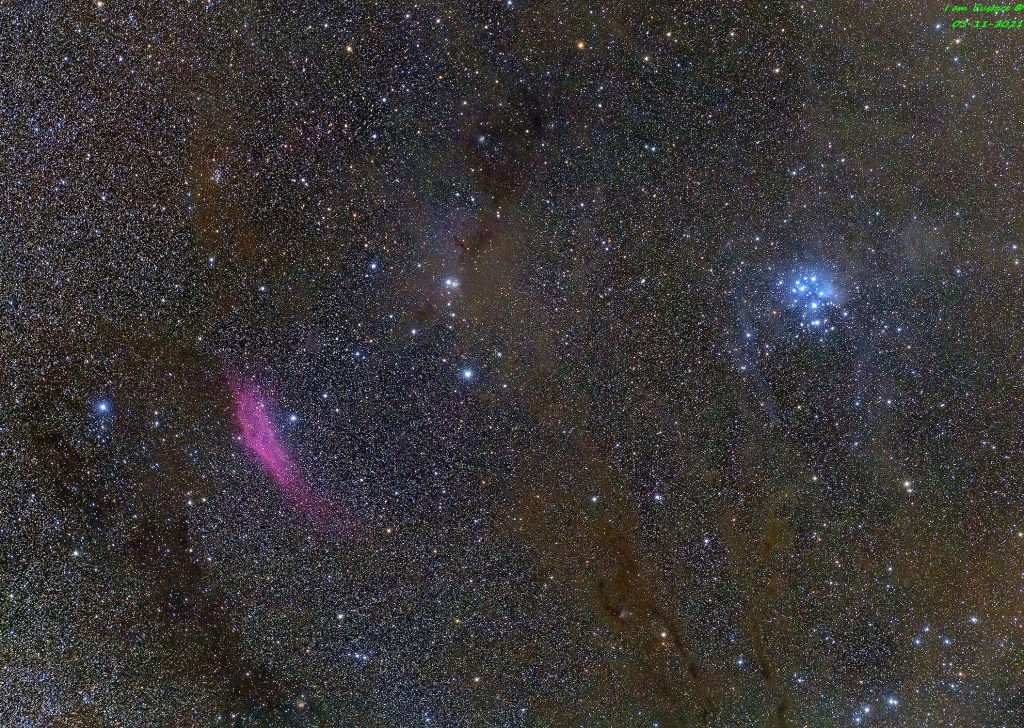
Countless – Milky way; One of my earliest incursions into widefield astrophotography. Widefield astrophotography using short focal length lenses yields innumerable number of stars in a single image. For this reason, they are relatively easier to photograph because they are less demanding and much more forgiving on tracking.
Star clusters
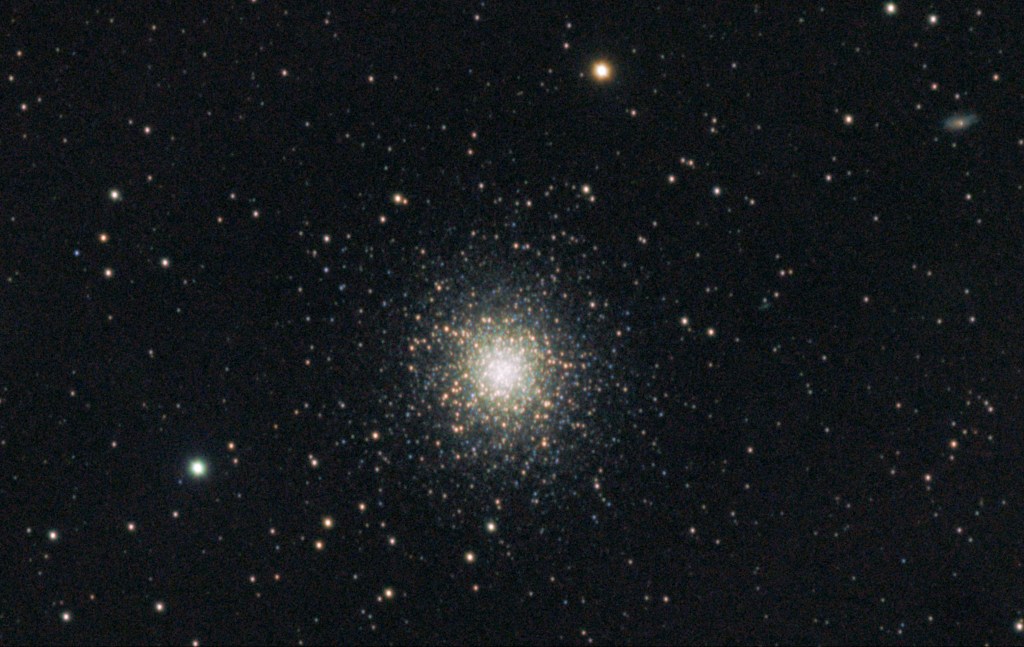
Star clusters can be several types that include open clusters such as the Pleiades, the wild-duck cluster and tightly gravitationally-bound globular star clusters such as the famous Hercules cluster. I was fortunate to image both types with my humble set of gear. Below are some of these fascinating star clusters (both open and globular types) that I imaged over the past several years.
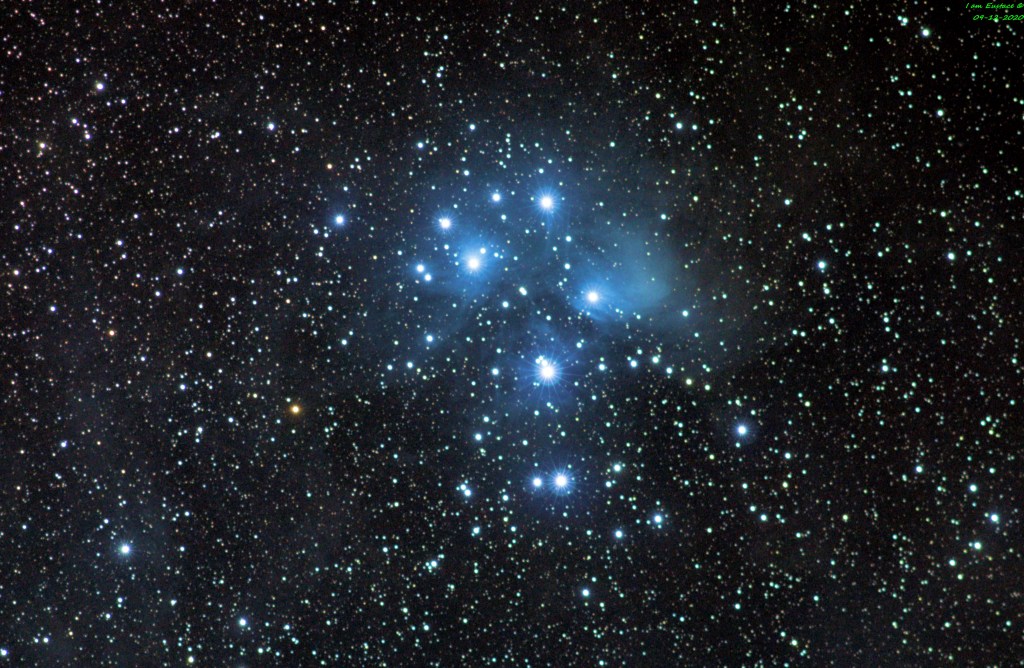
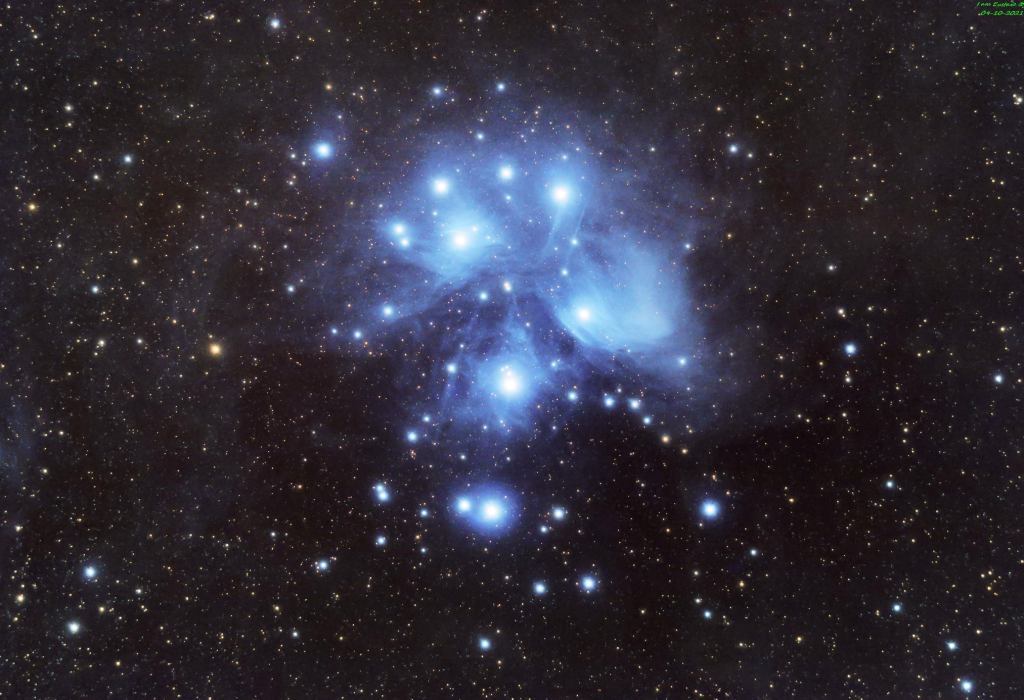
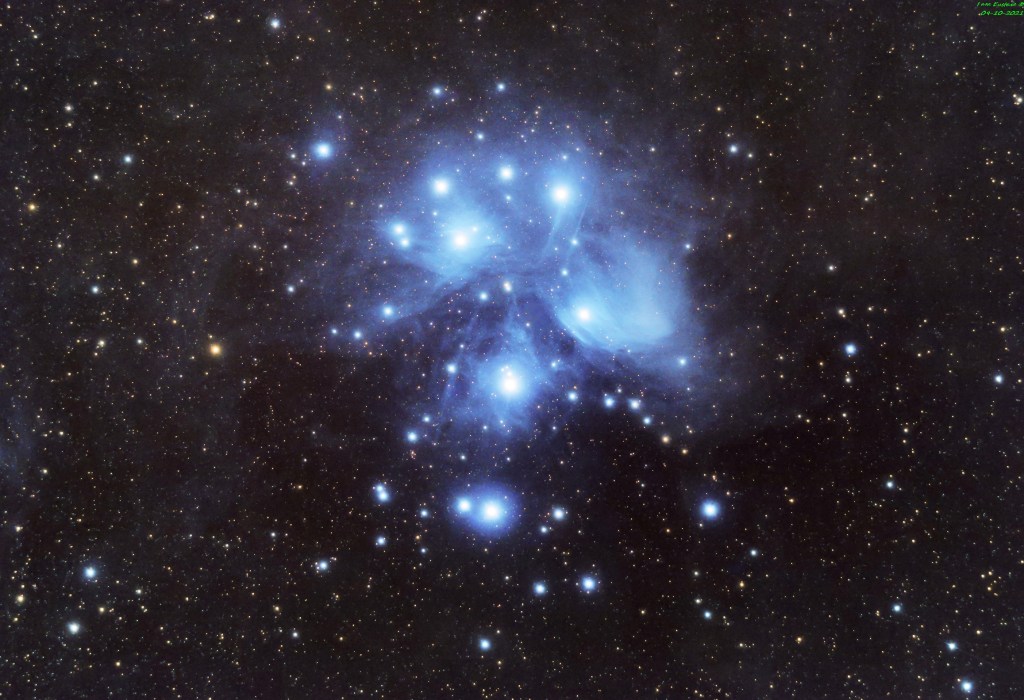
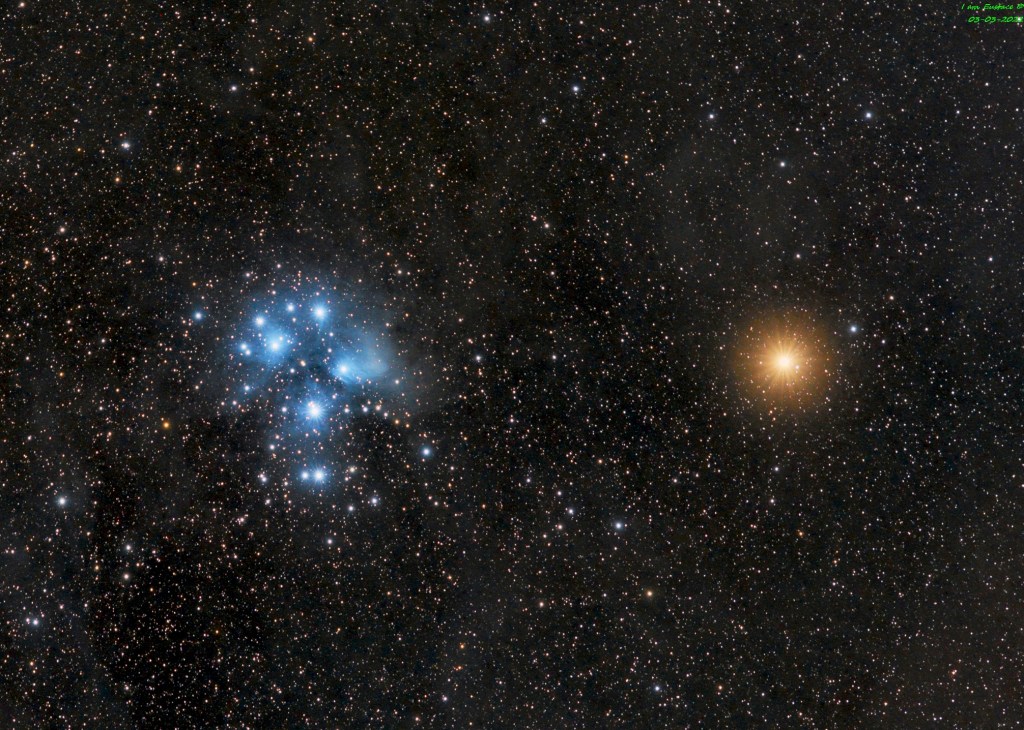
Boundless – The Pleiades, Subaru, හත්දින්නත් තරු, Seven Sisters – Boundless through the ages, these beauties appealed to the imagination of our kind through the ages. This image of Pleiades was done using my Nikkor 180mm. Another picture below shows the Pleiades – Mars conjunction that took place in early March 2021, captured using the same Nikkor 180mm lens.
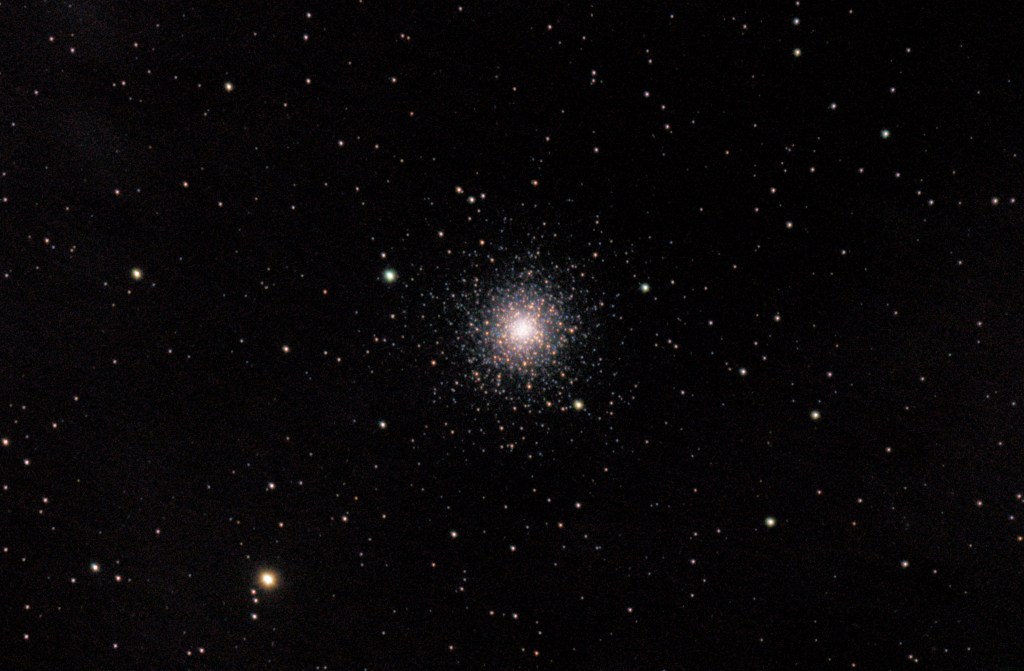
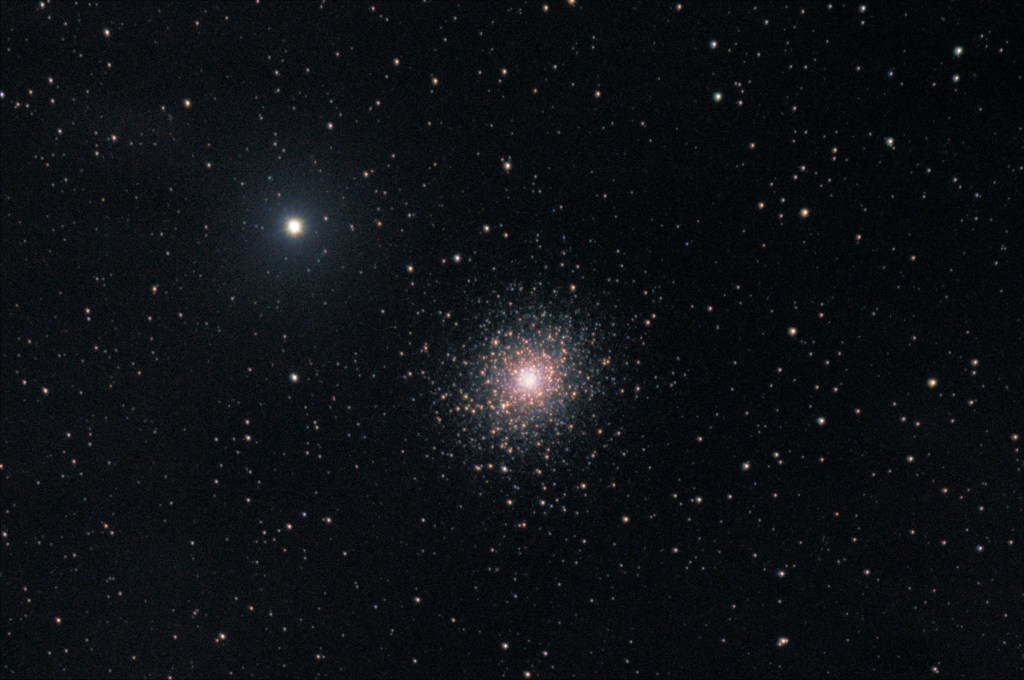
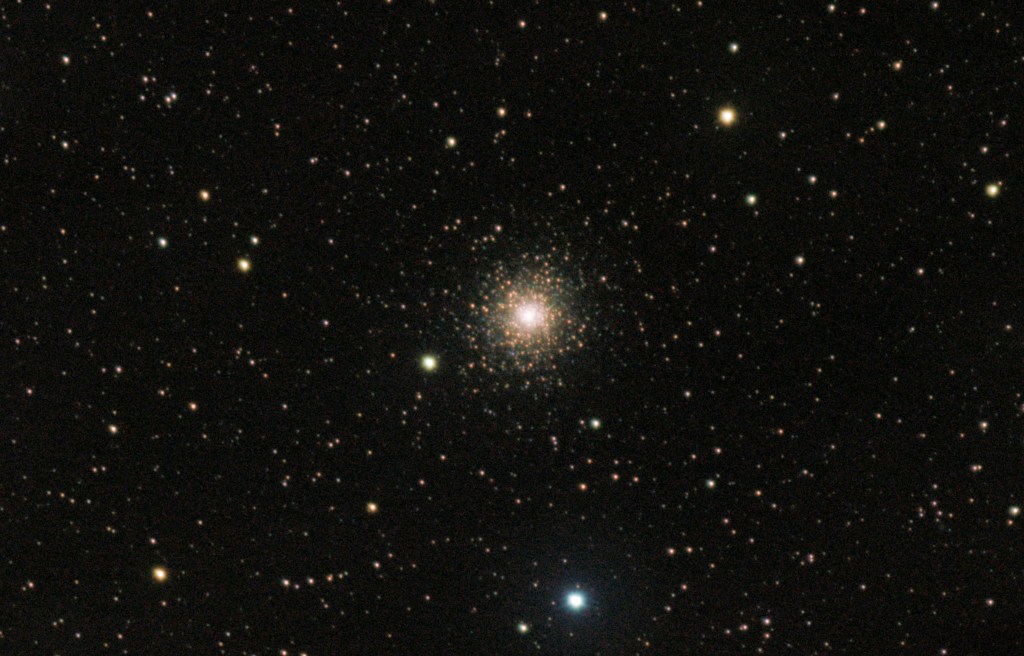
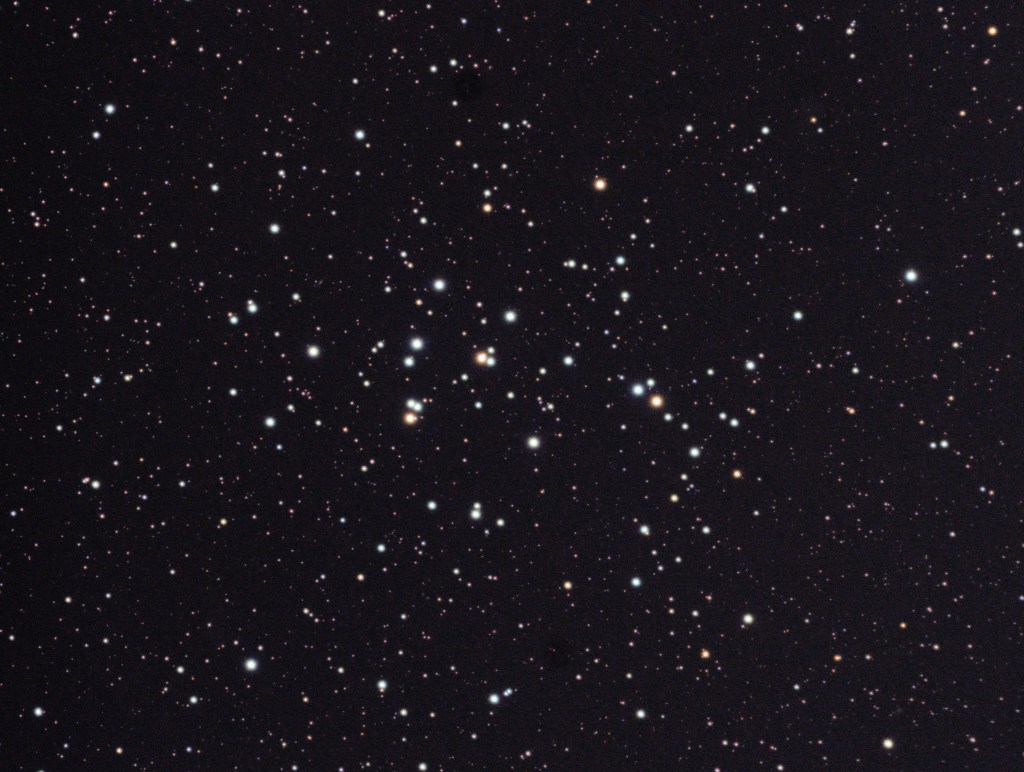
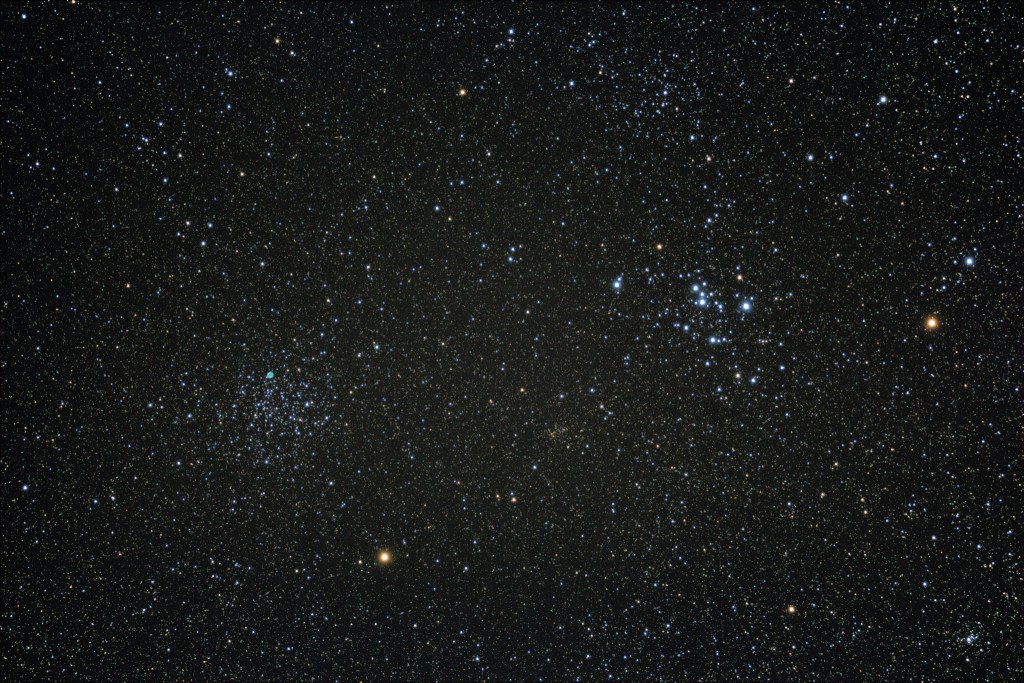
My early attempts into deep-space astrophotography
Some of my earliest incursion into the art of deep-space astrophotography were made in the years 2019, 2020 and the early quarter of 2021. I did not have a tracking mount and most of these were done either by hand-tracking or with a primitive self-made electronic clock drive. Nevertheless, I am so proud of these images because the amount of learning I did using these primitive contraptions was tremendous. Below are some of my earliest images of deep space astro imaging work, mostly done in 2019.
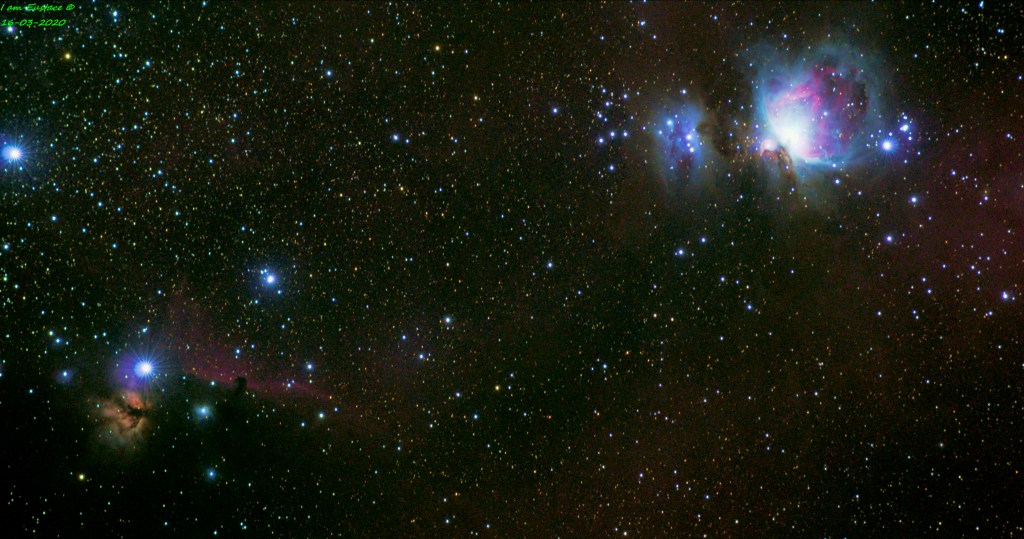
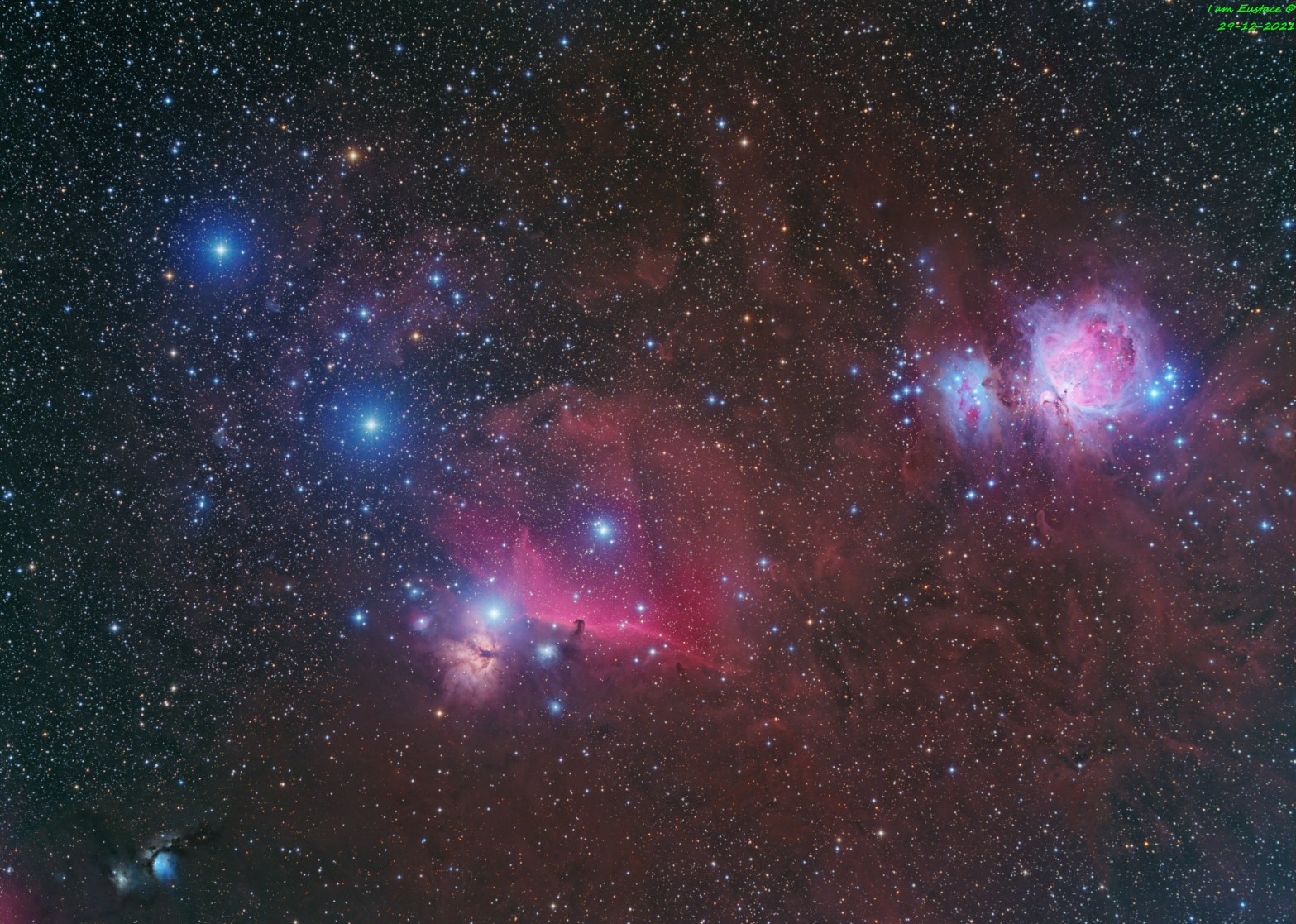
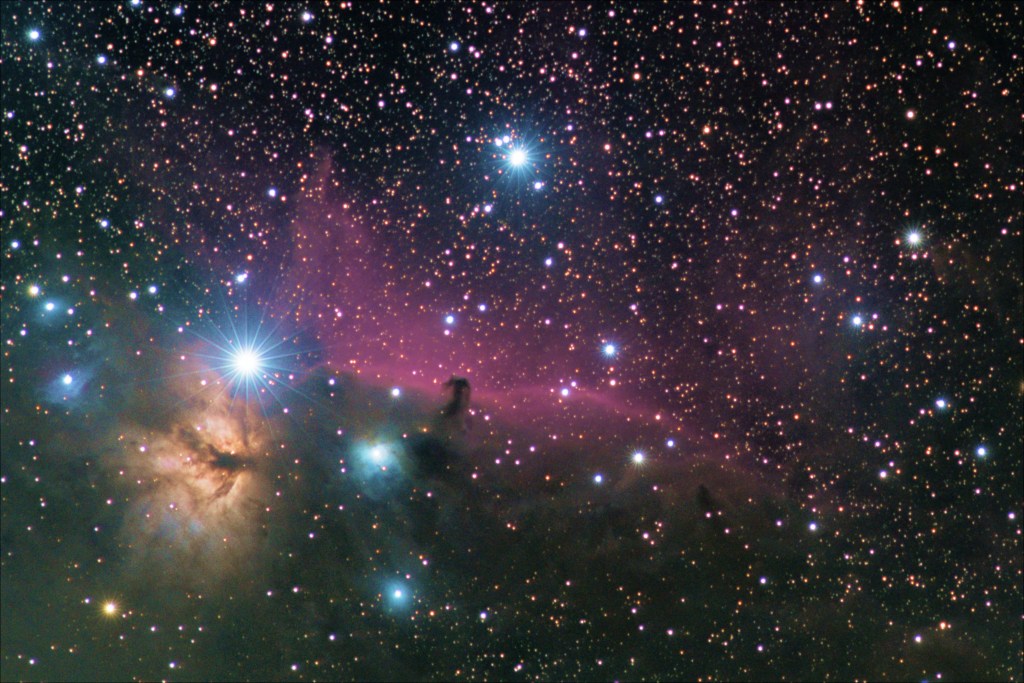
Indomitable – The hunter; The Running man; The horse-head and The flame. The nebulae quadruplet dominating winter skies. First light for my 180mm Nikkor vintage glass was awesome.
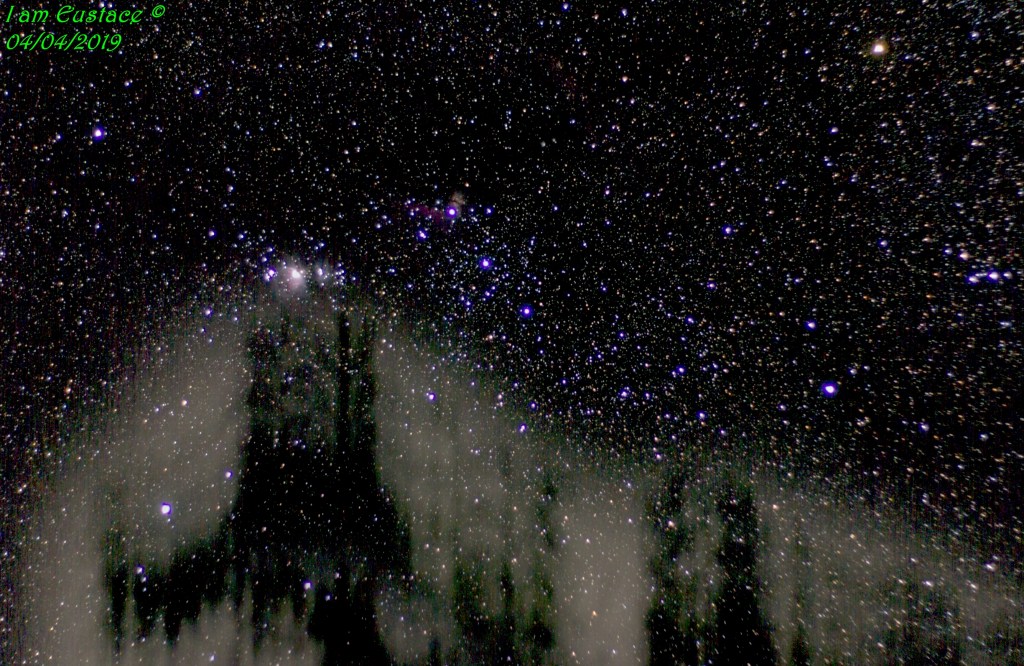
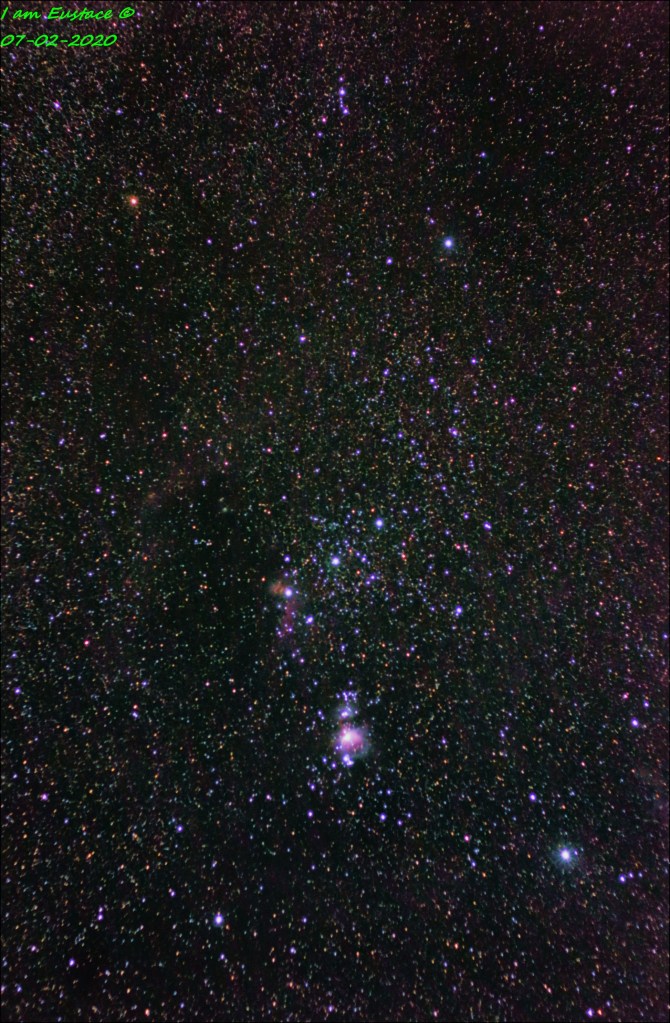
Forest stalker – The constellation Orion through a treeline. One of my first shots using a nifty fifty (50mm, f/1.8) lens and a vintage Canon body
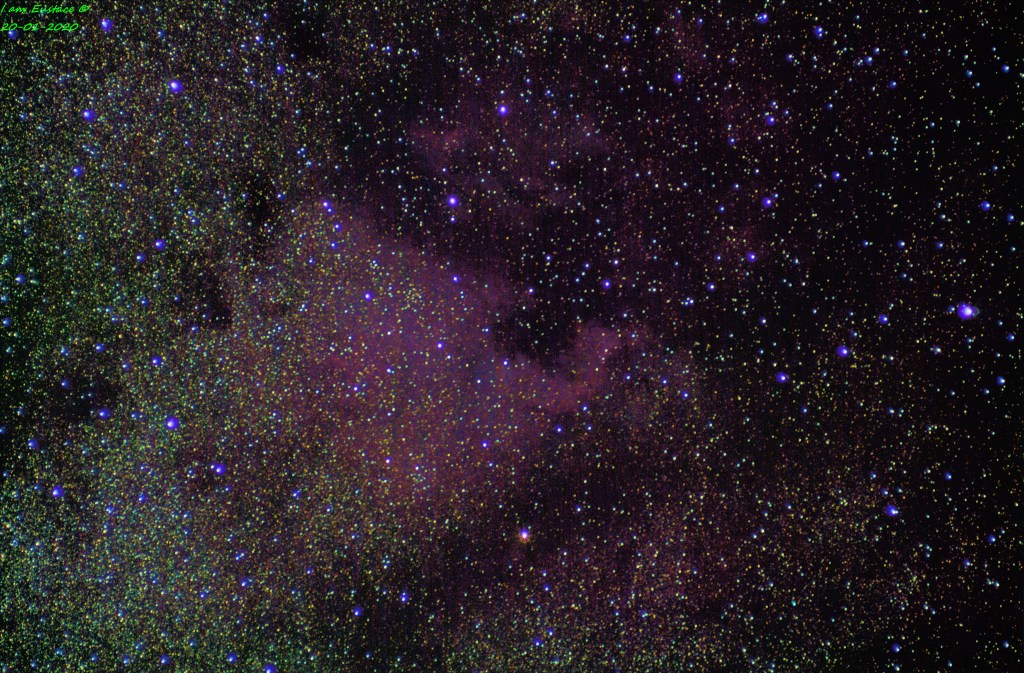
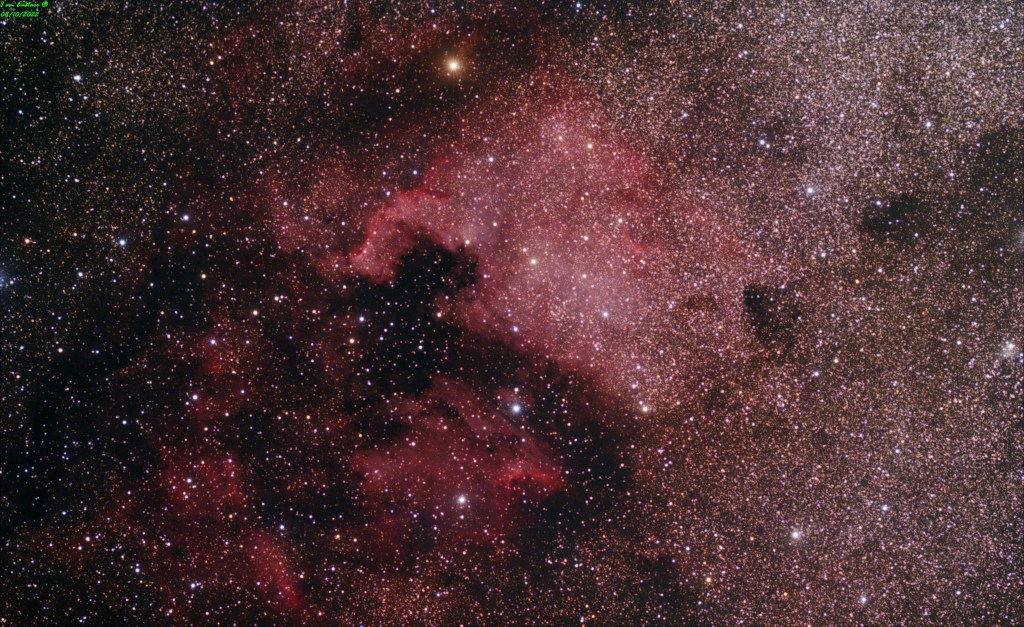
Swans and pelicans – North American Nebula in the constellation Cygnes – shot using a cheap 85mm prime lens on a stock Nikon DSLR
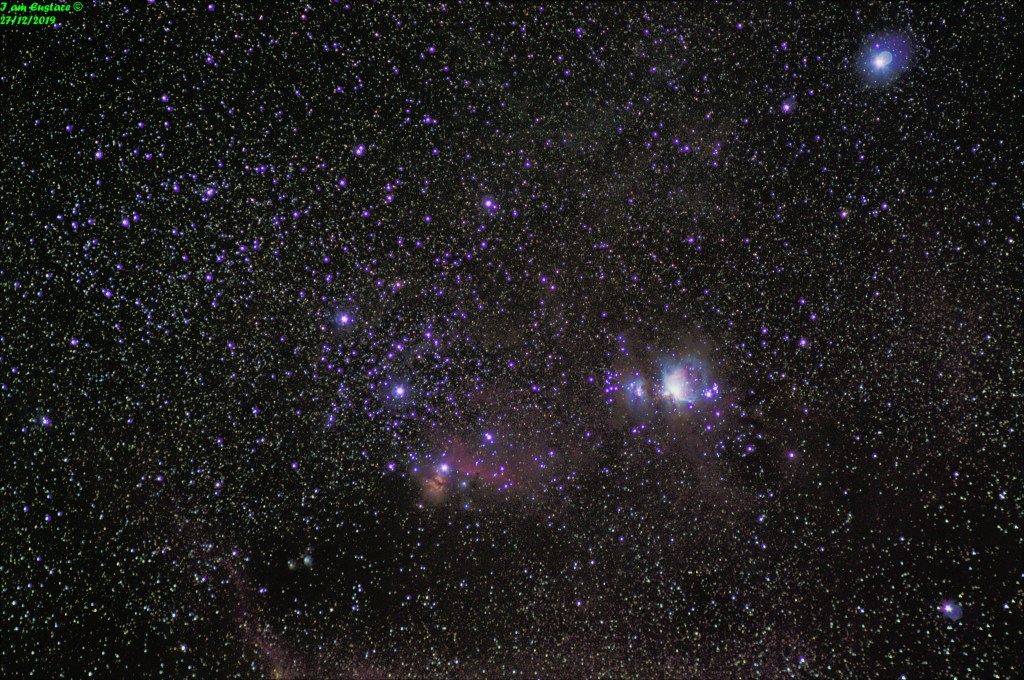
Aberrations – Intricate dust lanes of Orion’s belt through a cheap 85mm prime
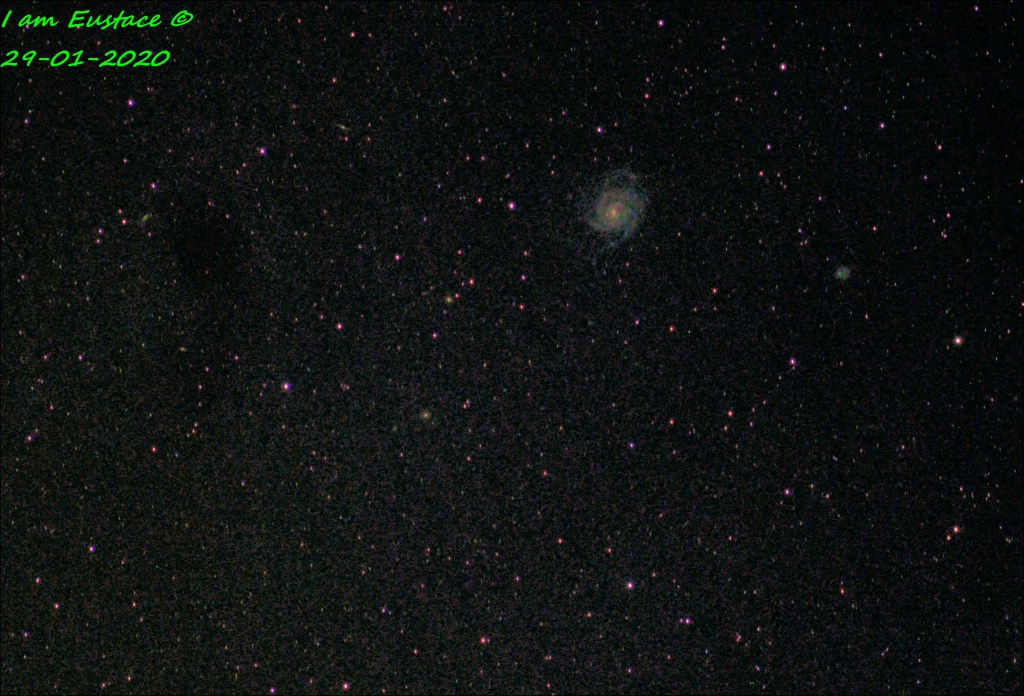
Elusive – The Pinwheel Galaxy, some whopping 21 million light years away!
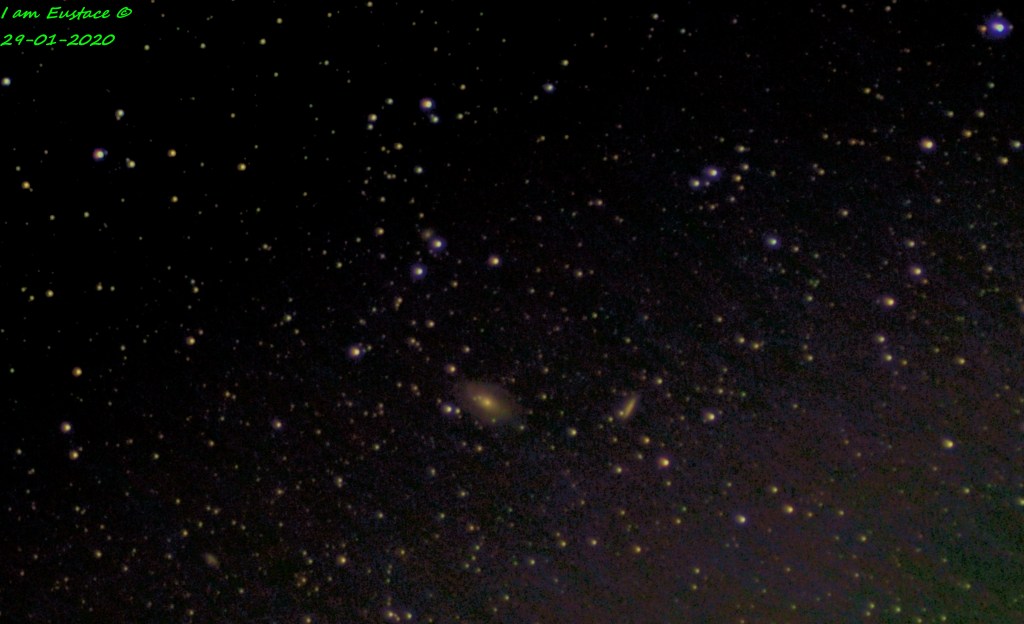
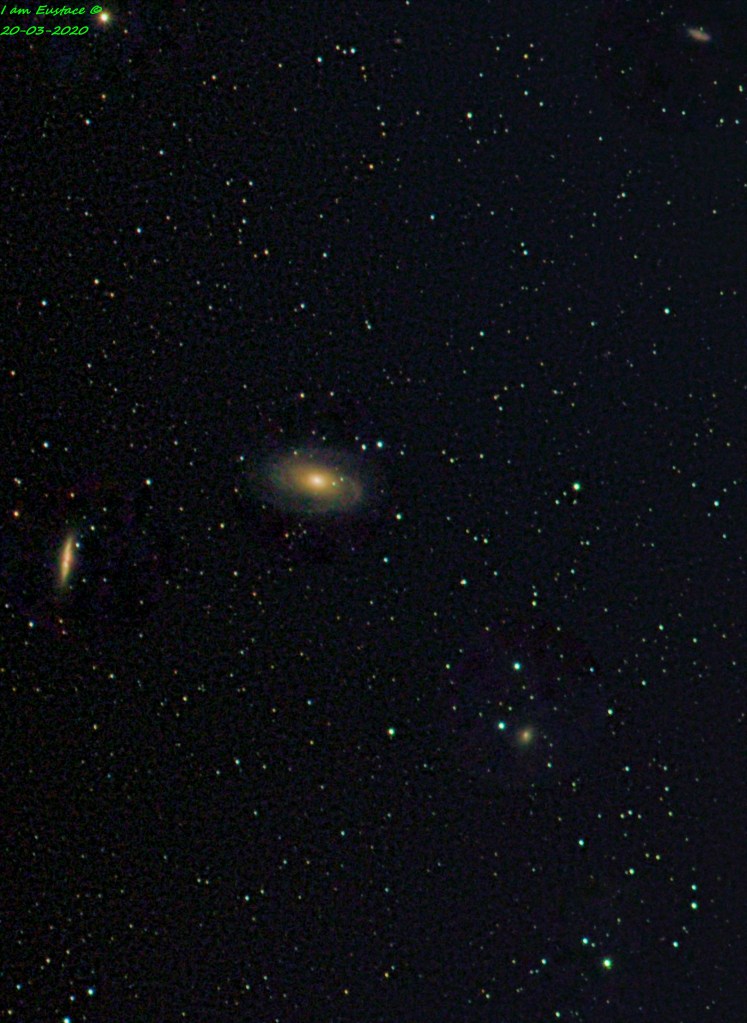
Bode & Cigar galaxies, both 12 million light years away! Through a cheap 85mm prime lens (top) and through a 180mm Nikkor ED vintage prime
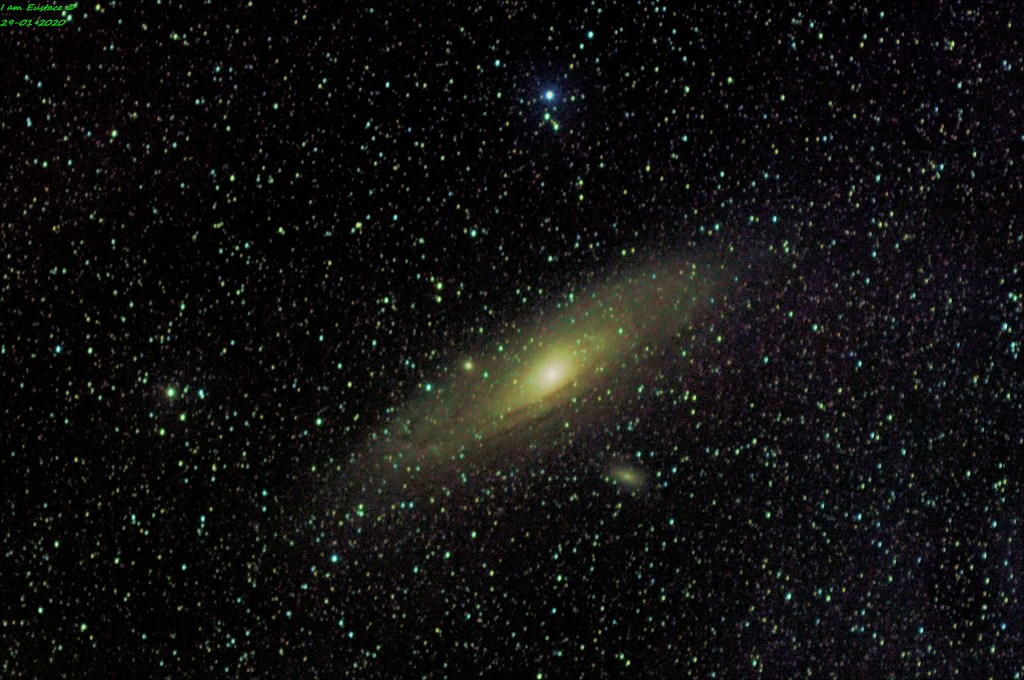
Ancient light – Andromeda at 2.5 million light years from my back yard!
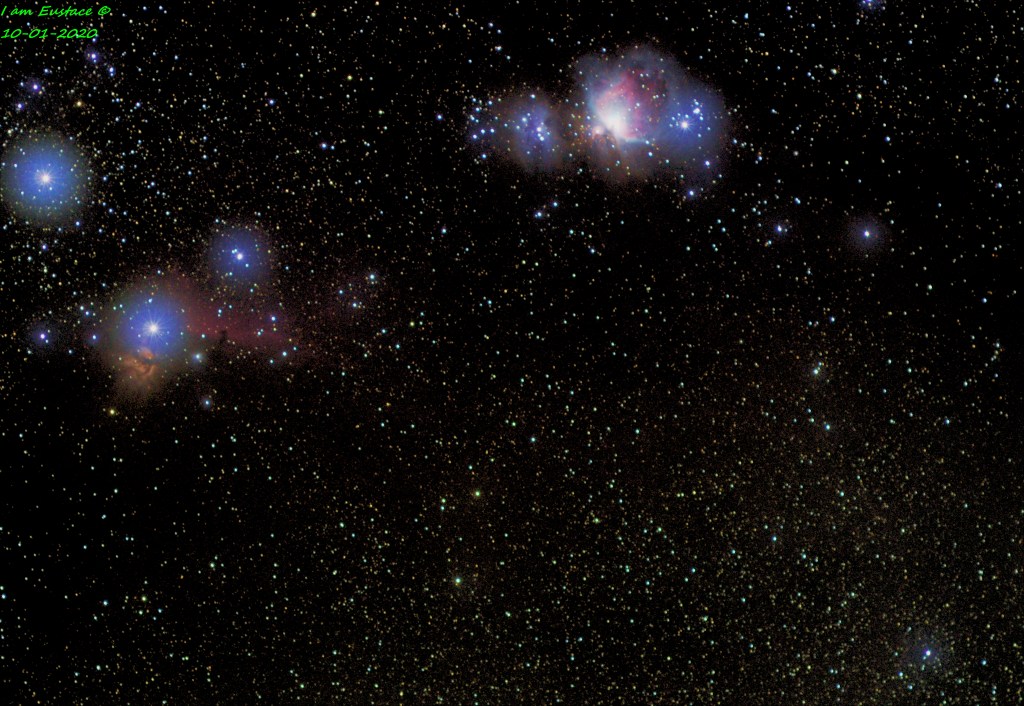
Piercing the haze – Nebulae of Orion on a hazy night through a 135mm vintage prime glass
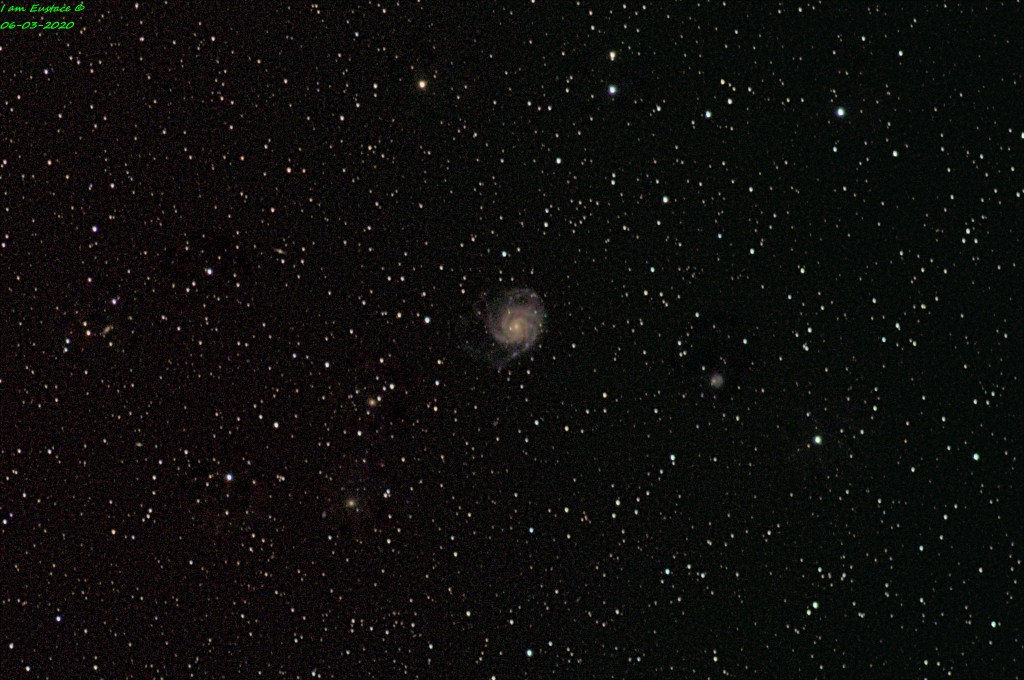
Messier’s 101st – The Pinwheel galaxy through 180mm Nikkor ED vintage glass. Finally put-on a good 90 minutes of data on one target!
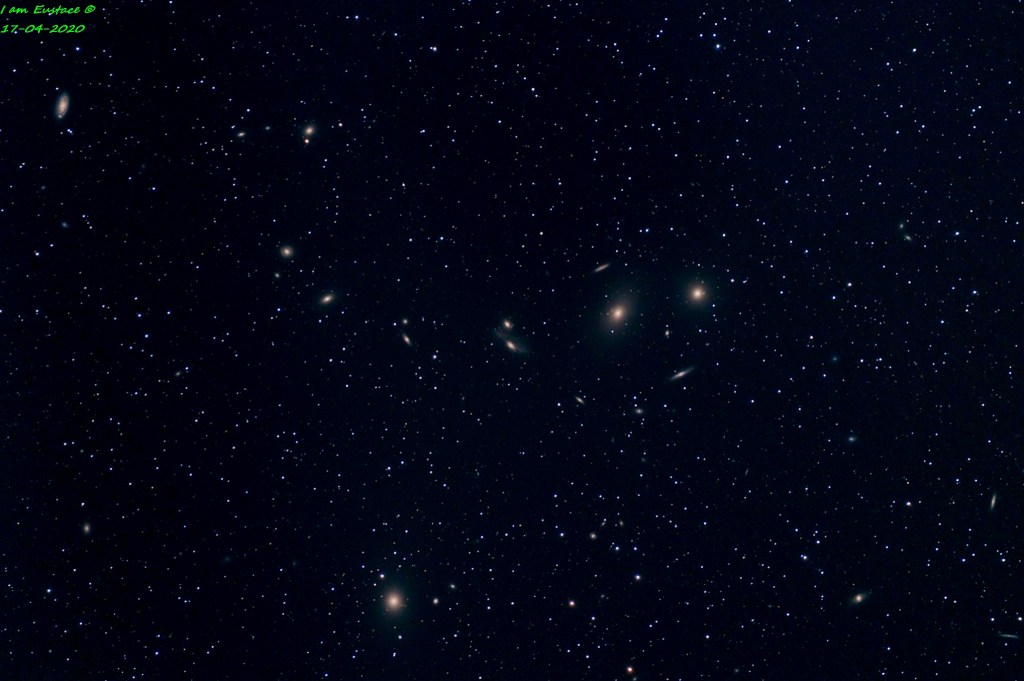
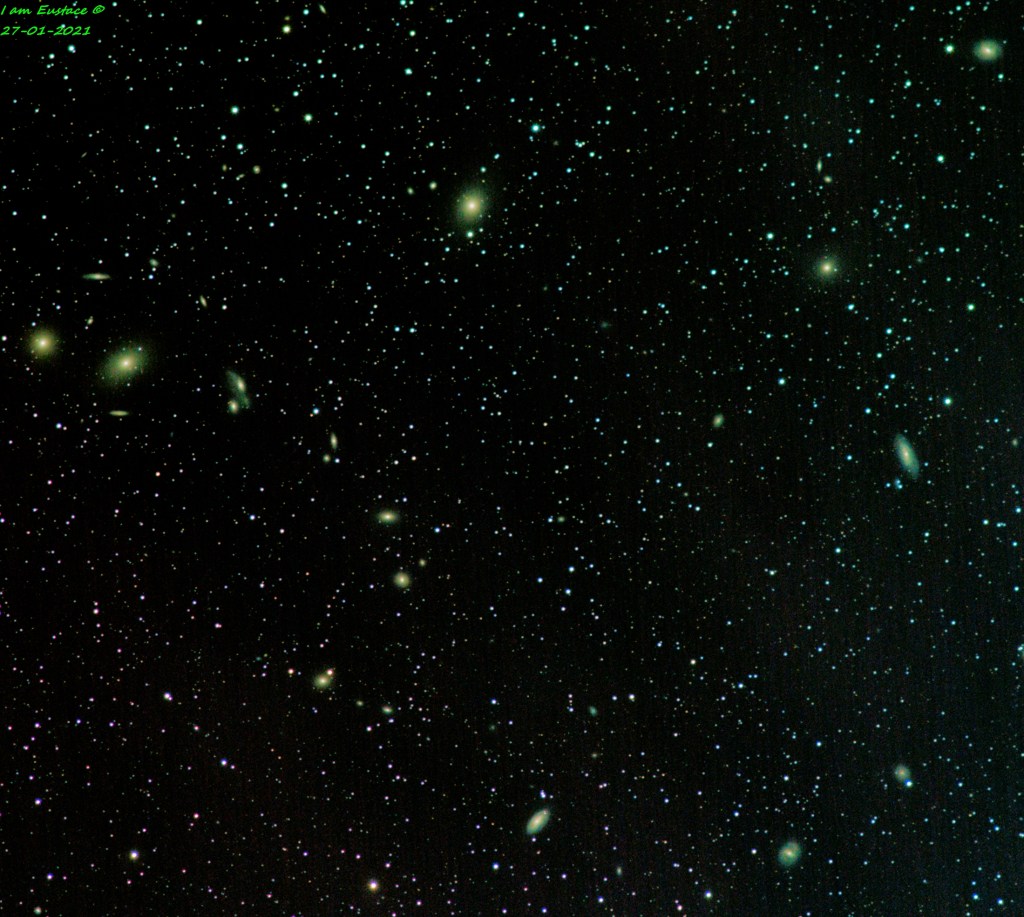
count em’ if you can! The Virgo cluster of galaxies; also known as the Markarian’s Chain – is the most challenging group of objects I’ve imaged to date. Most of these blobs of light are entire galaxies that make-up something called the Virgo cluster. The average distance to these objects is approximately 54 million light years. These are exceptionally dim objects and therefore are very difficult to image. I used my Nikkor 180mm f2.8 vintage lens for this attempt
Special events in my astrophotography
There were several special events I was fortunate to photograph during my astro-imaging journey. These include the appearance of two comets (namely C/2021 A1 (Leonard) in 2021 and C/2017 K2 PanSTARRS in 2022), a Pleiades-Mars conjunction in March 2021 and a very lucky shot of a chance meteor piercing the night sky! Below are those wonderful images;
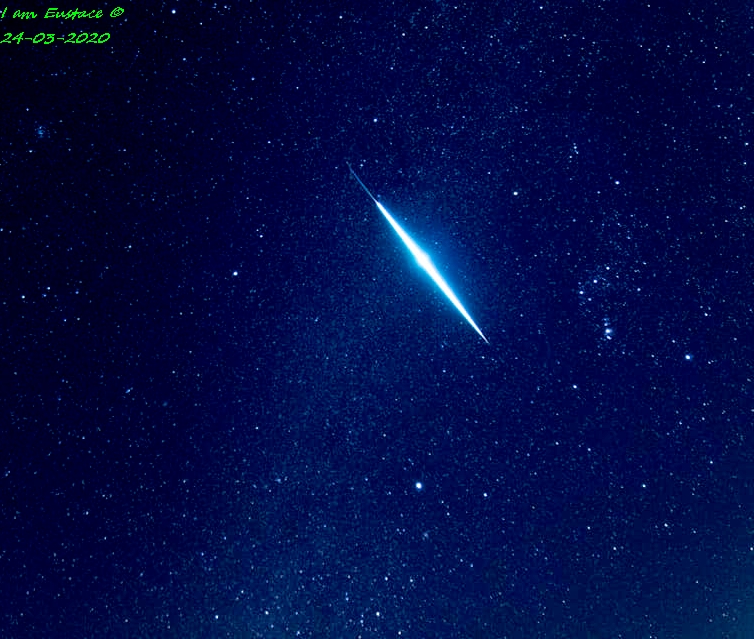
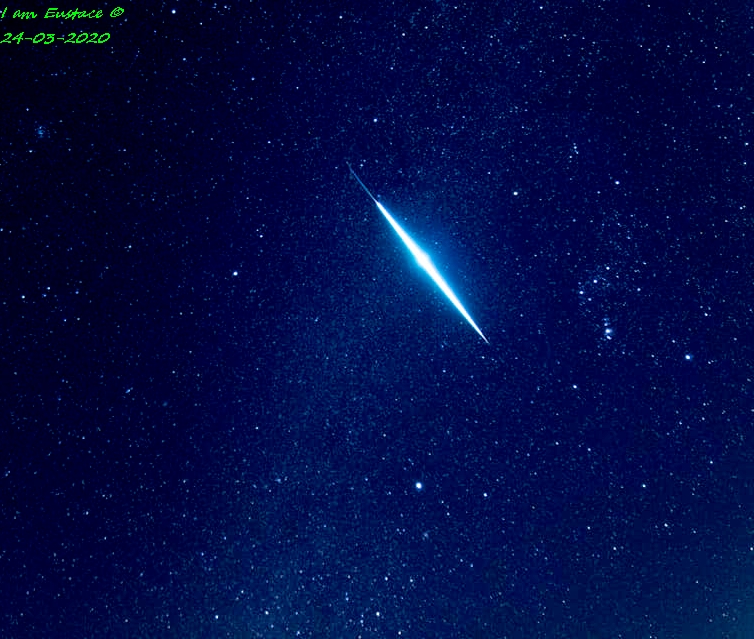
Meteora!: An intense streak of light left by a meteor piercing the night sky. I was imaging the surrounding nebulosity of the Orion region on the night of 24th March 2020, when I took this lucky shot. A 20 second exposure using my Nikkor kit lens at 18mm on Nikon D3200.
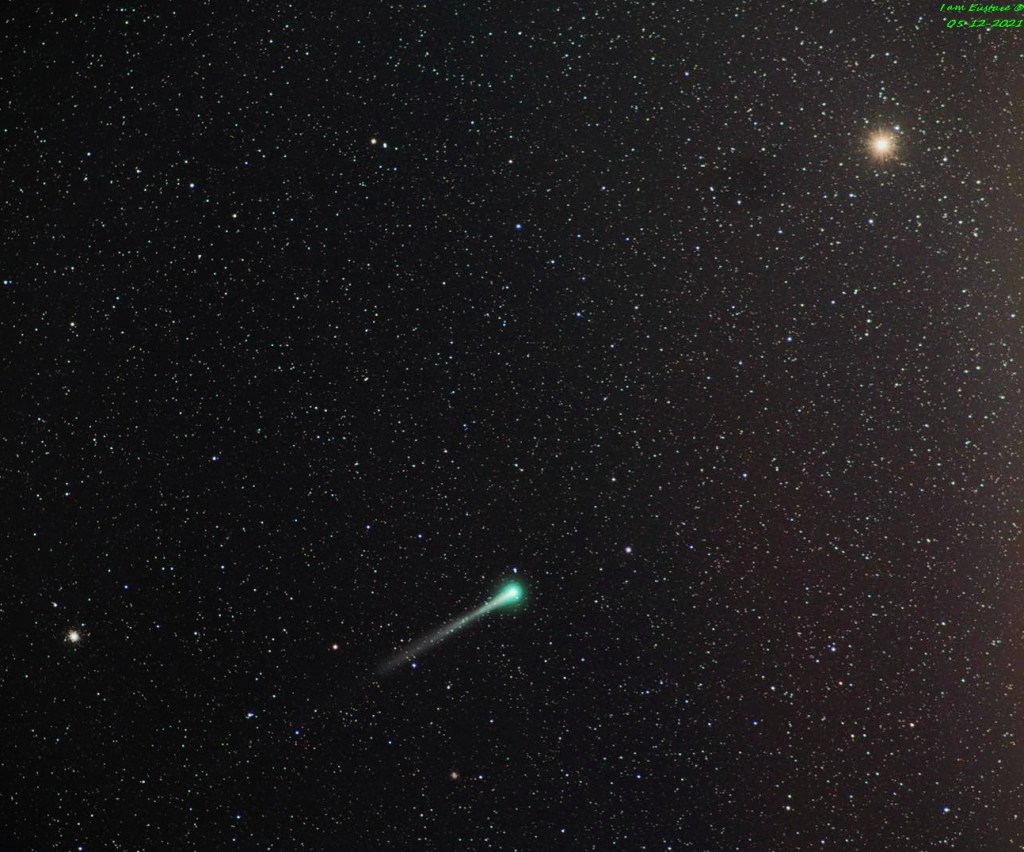
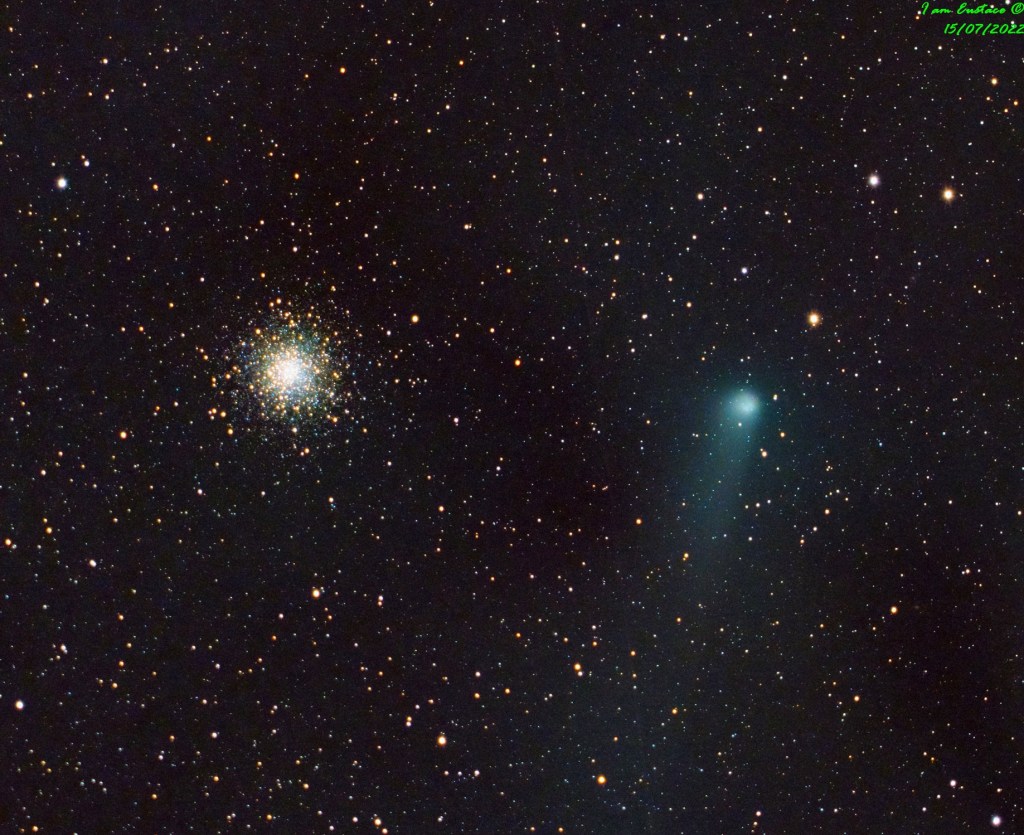
Lunar astrophotography
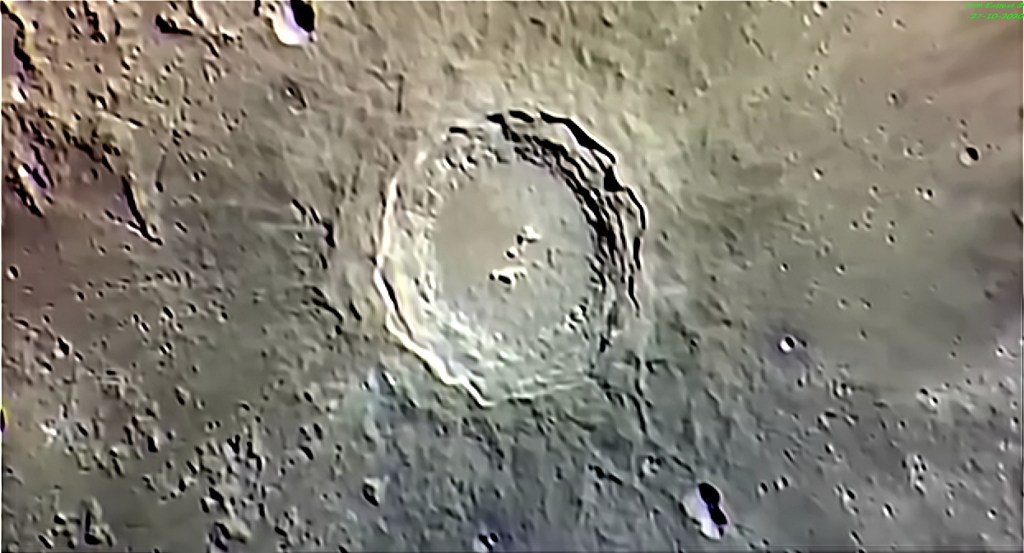
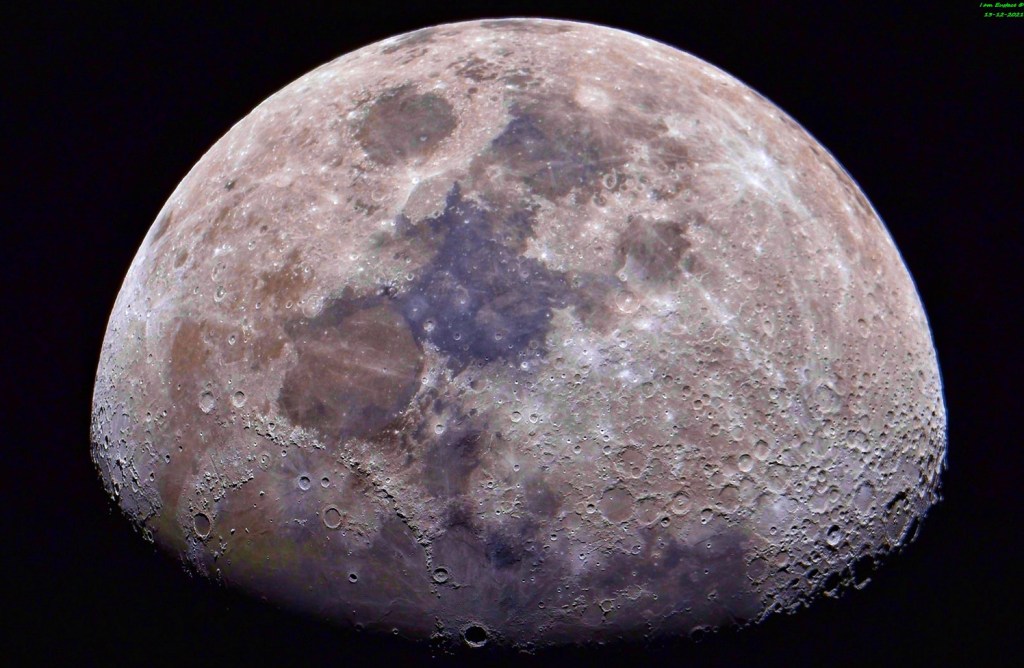
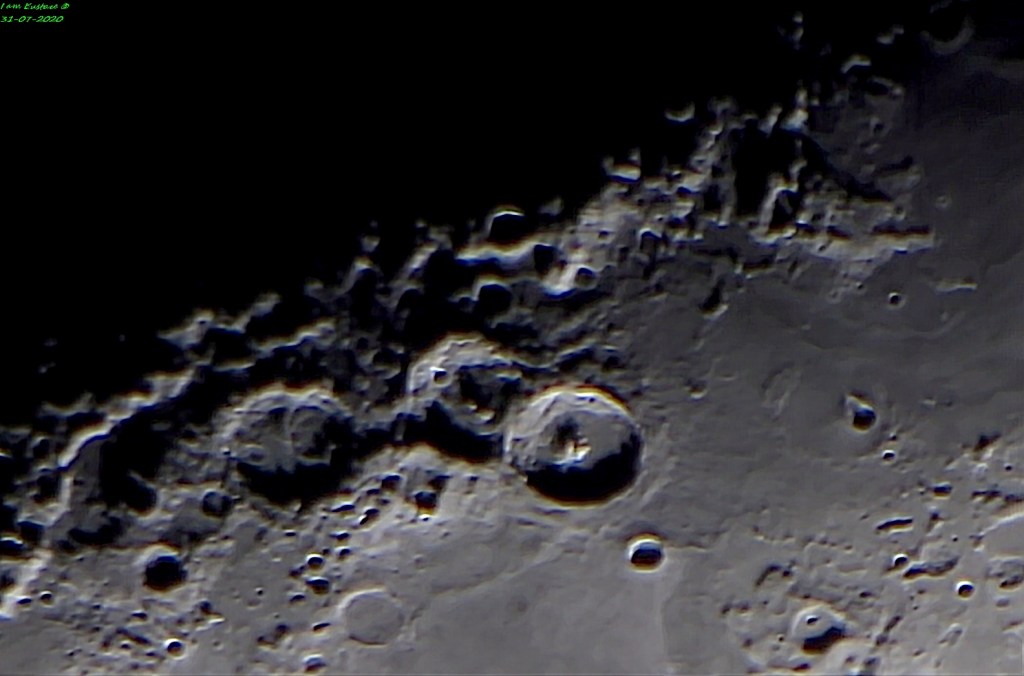
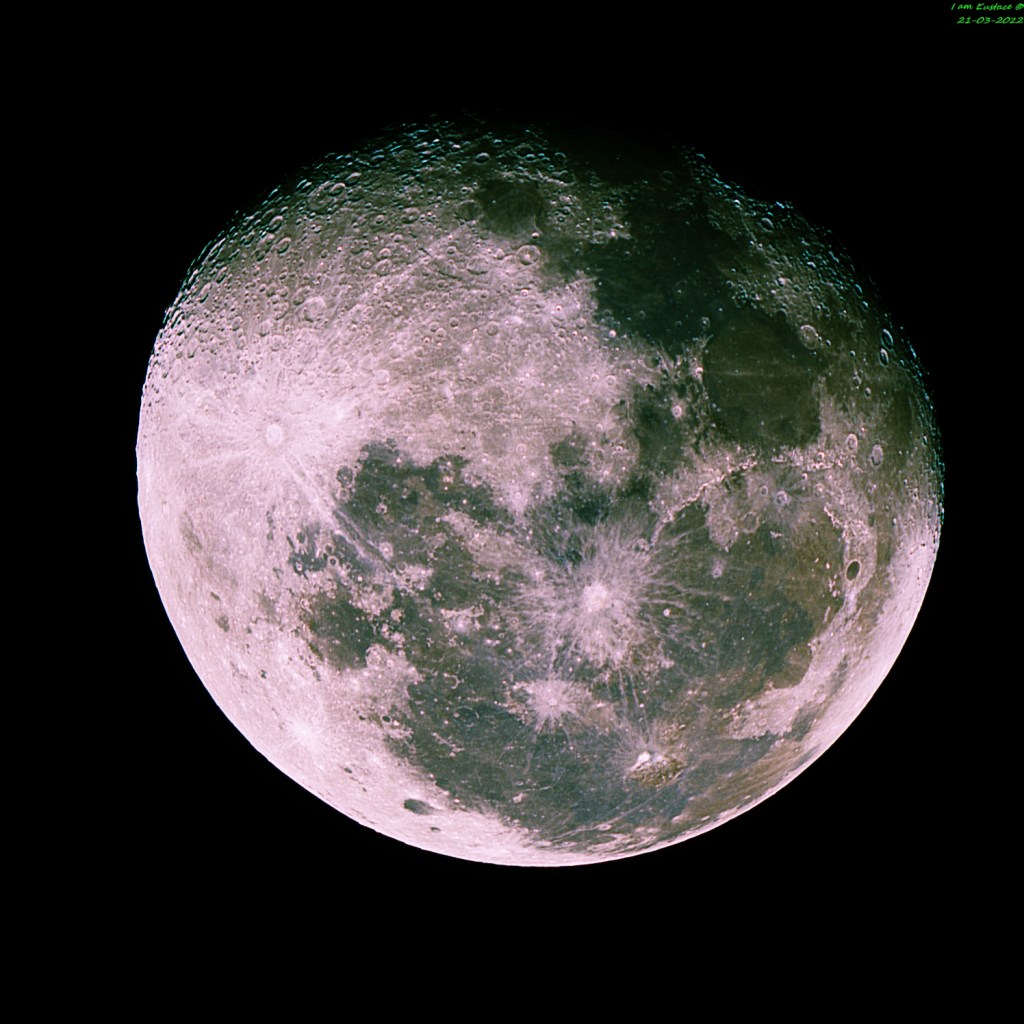
Lunar and planetary astrophotography is a completely different ballgame because the equipment and the imaging techniques used are completely different from what’s used in deep-space photography. For these lunar shots, I mainly used a home-made 93mm, F/10.9 refractor telescope and stock DSLR cameras. I’ve also made use of my newly refurbished 80mm triplet apochromatic refractor telescope. When imaging more details, I’ve used a 8 inch, F/4 Newtonian reflector telescope and a series of Barlow lenses to get a large focal length required to get-zoomed-in vies of the lunar surface. The low-quality, spherical mirror optics of this Newtonian telescope was however a letdown on the image quality. This however, was all I had in terms of a long focal length instrument.
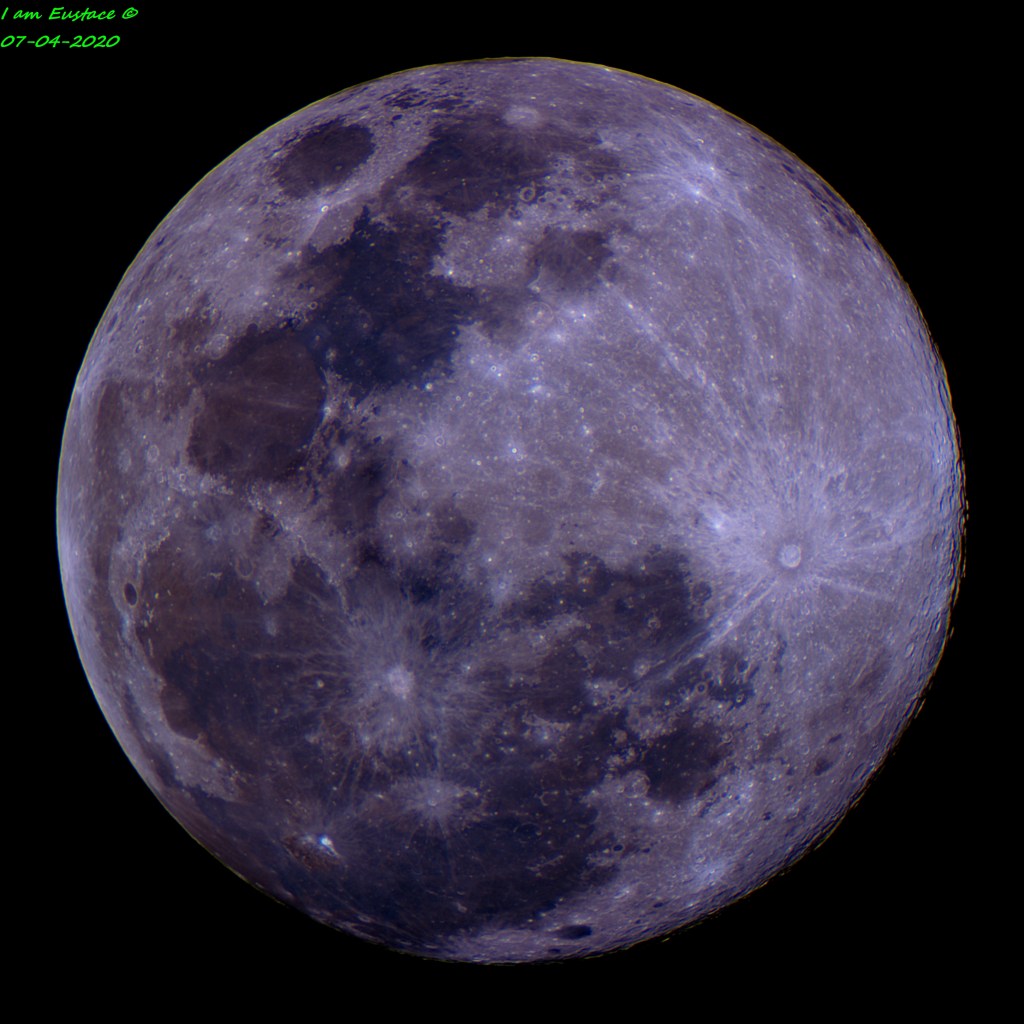
The “rose” moon: Supermoon in April, 2020. This image represents moon in it’s true colour. Taken with a 1000 mm, f/10.9 home made refractor telescope. The imaging chip I used was a Nikon D3200 set at 100 iso and 1/200 th of a second shutter speed.
Planetary astrophotography – early and later attempts
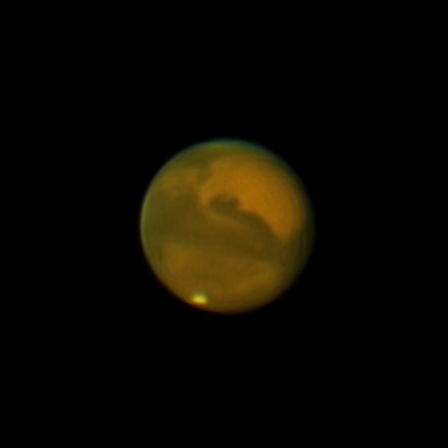
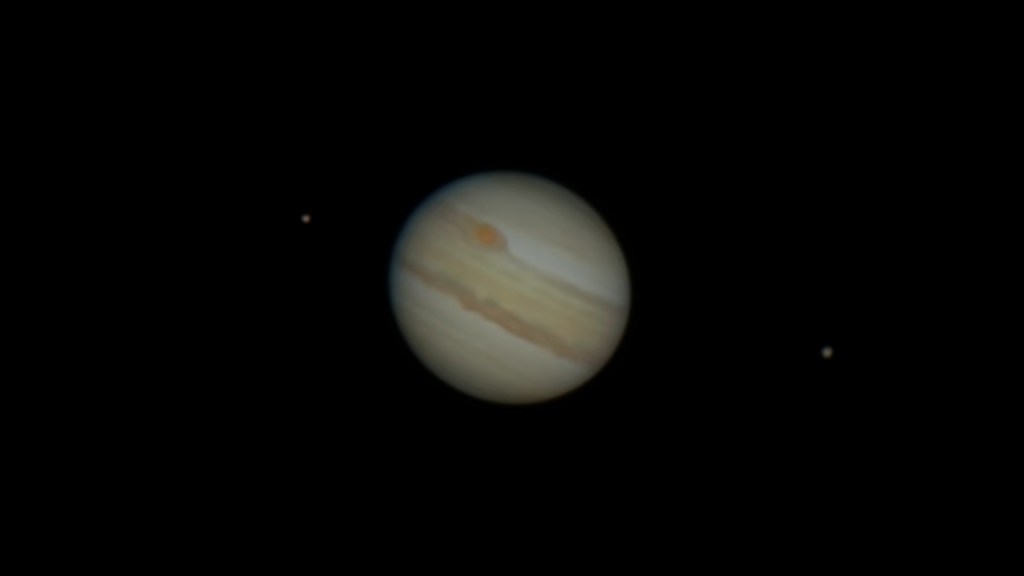
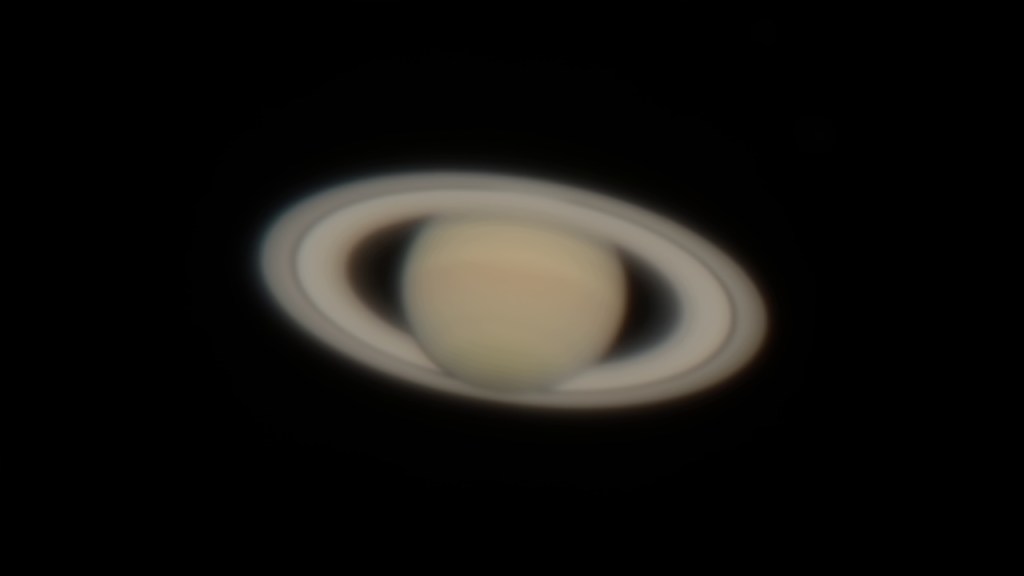
Although I do not specialize in planetary astrophotography, I am an avid learner of the completely different techniques and equipment used in this regard. All of these images of the planets of our solar system were obtained using two different instruments. Namely, a 93mm DIY refractor telescope and a 203mm F/4 Newtonian telescope. Various Barlow lenses up-to 5X were used in the imaging train to bump-up the focal length where needed. The main planetary imaging camera I used was a ZWO ASO120MC-s high-speed astrophotography planetary camera.
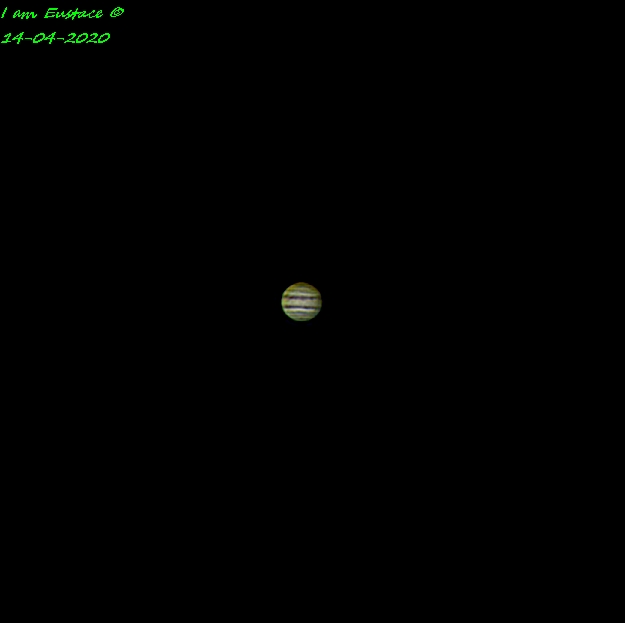
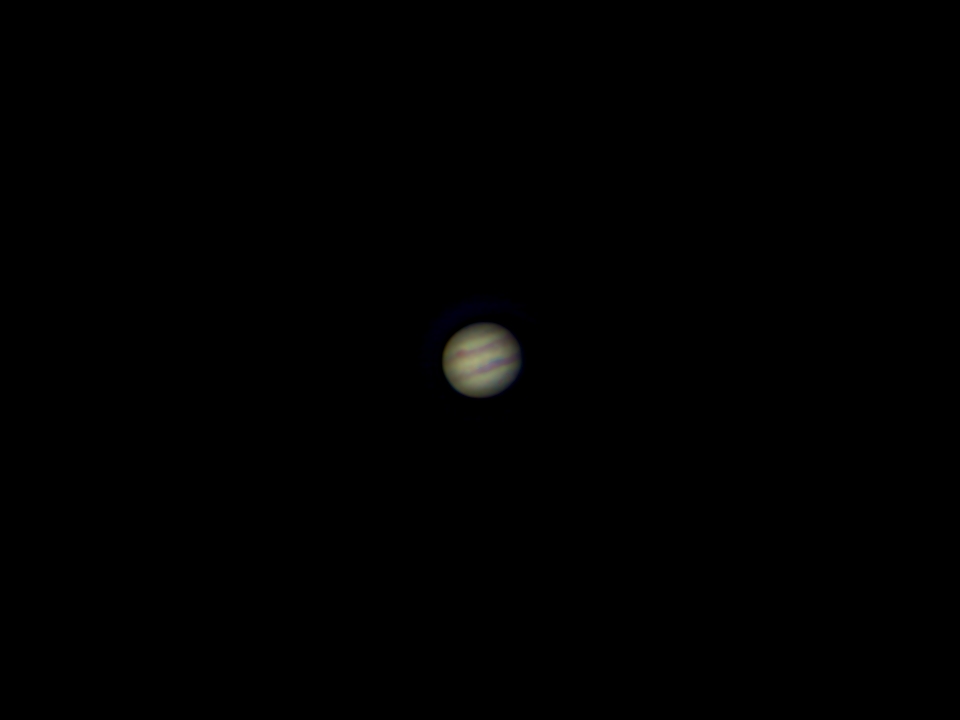
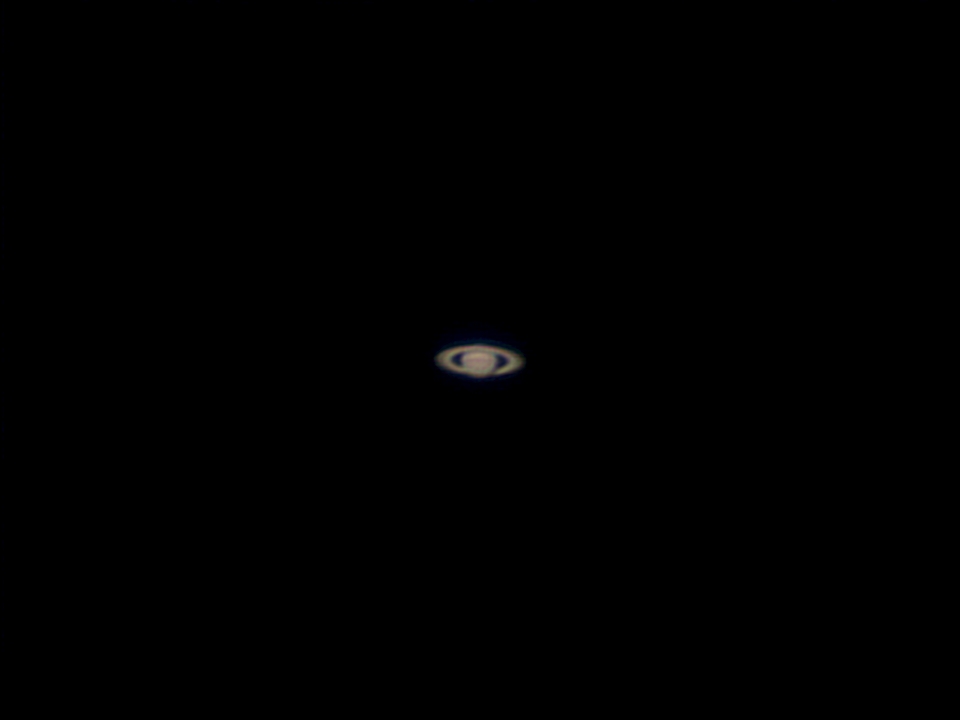
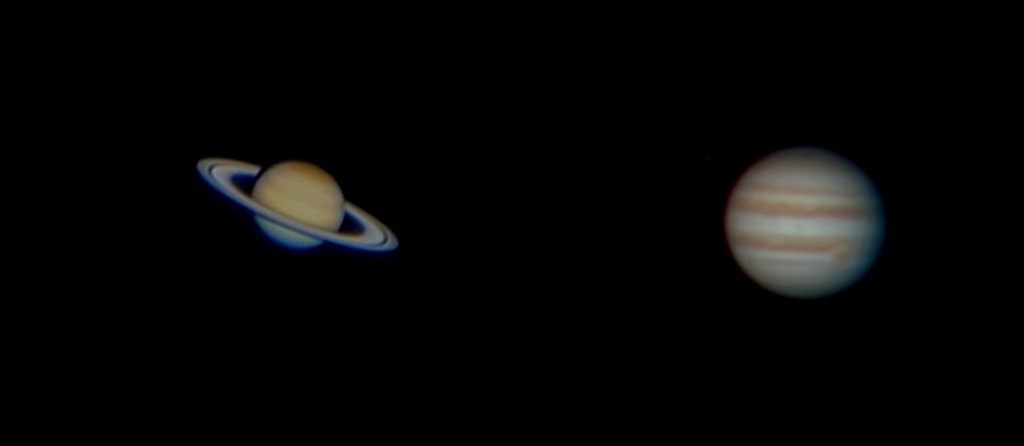
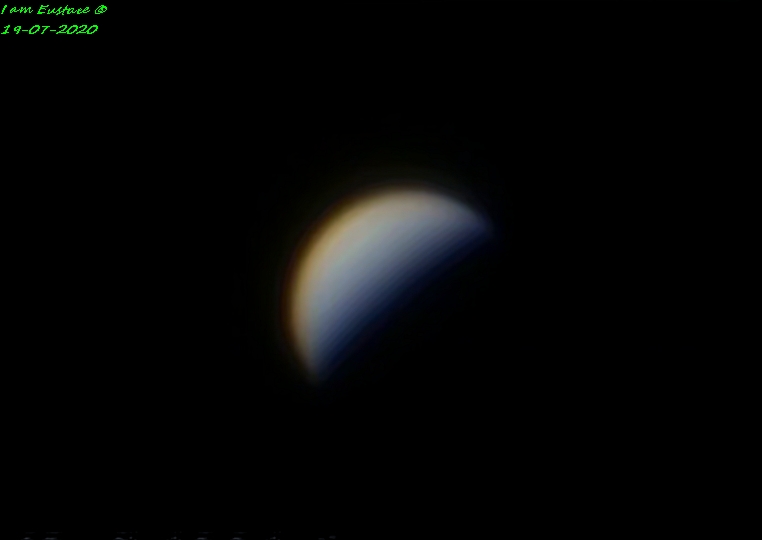
Balls of gas: The gas giants Jupiter and Saturn were imaged for the first time using a home-made DIY f/10.9 refractor optic and a Nikon D3200 (Top). The middle and bottom planetary images were taken using a webcam. They came out well I think
How I astromodified a DSLR camera?
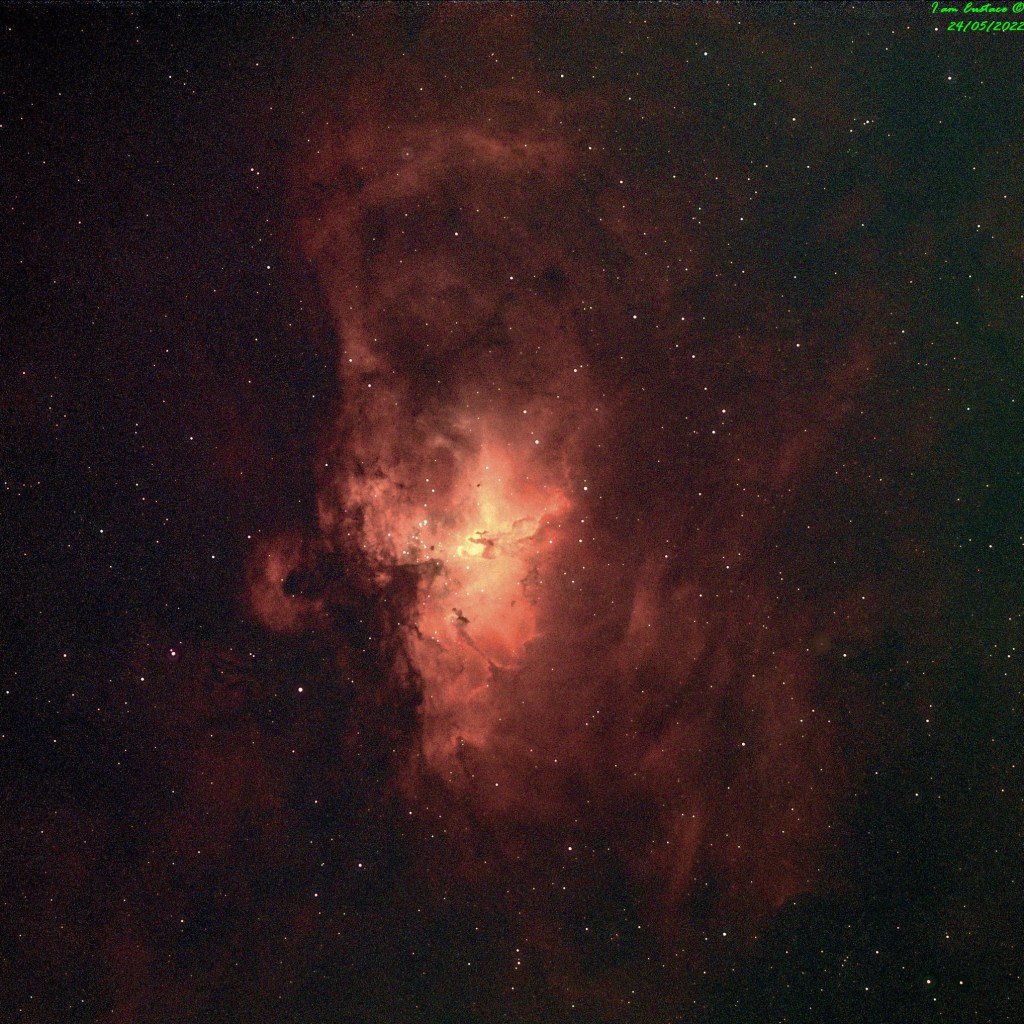
In May of 2022, I astromodified my Canon 450D DSLR camera to be able to capture more hydrogen alpha wavelengths.
About the mod:
Normal DSLR cameras you and I buy in the market come with an IR cutoff filter that will block light wavelengths in the deep-red end of the electromagnetic spectrum. The sensor in your camera however, is sensitive to these red wavelengths. While this is great for day-to-day photography, it is a big hindrance in astrophotography. Most of the nebulae in the sky emit deep-red wavelengths such as the Hydrogen alpha (656.2 nm) emission signal. By removing the IR filter in my Canon DSLR camera, I’ve made it more sensitive to such emission signals by several fold!
About the “test” image:
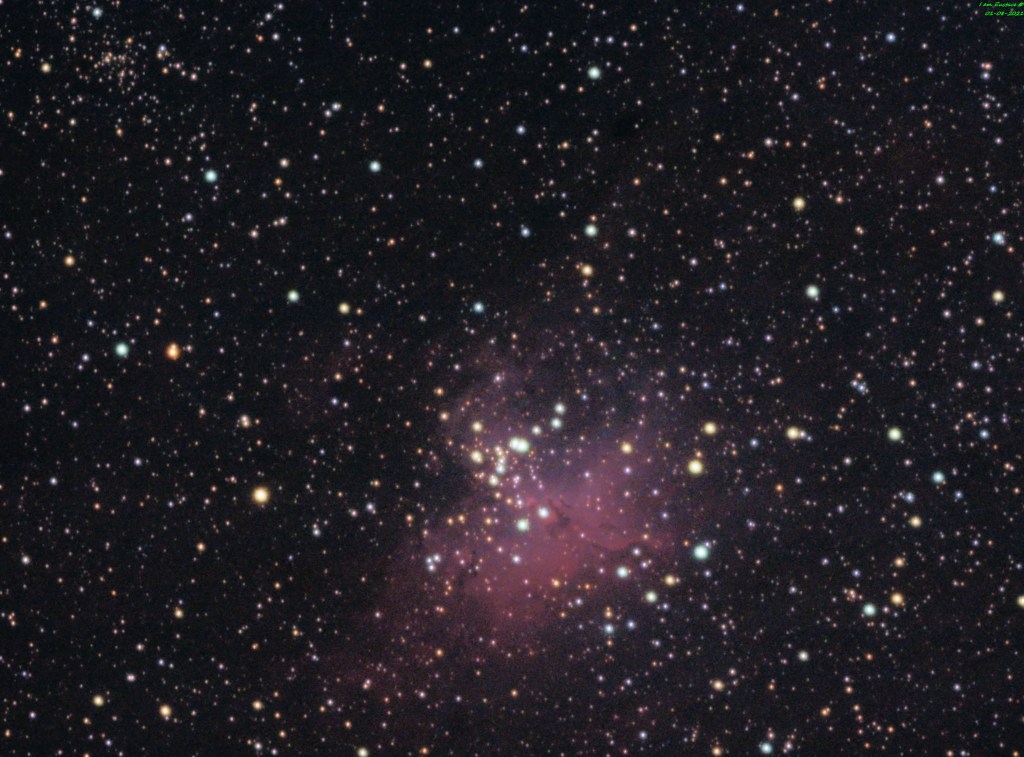
The test image is a region of the sky known as the “Eagle” nebula. It is predominantly a Hydrogen alpha emission region of our galaxy, the Milky-Way.
Photography details:
Optic – Explore Scientific ED80 Apo Triplet telescope
Camera – Canon 450D “Astromodded” DSLR
Mount – Celestron Advanced-VX
Camera settings – ISO-800, Exposure – 5 min subs, WB- daylight
Calibration frames – none
Exposure: 2 hours in 5 min subs
Software – Deep sky stacker (DSS) for stacking, PS6 for editing and Theremino for spectra acquisition
Dates – 21st and 22nd of May 2022, early morning hours
Location and Sky – Central Hills, Sri Lanka, Bortle scale-3/4, Very good atmospheric seeing
*The image is cropped to showcase the nebula in the central portion
Spectra were recorded using a 200 grooves/mm diffraction grating and Theremino software.
How sensitive can today’s cameras be for astrophotography?
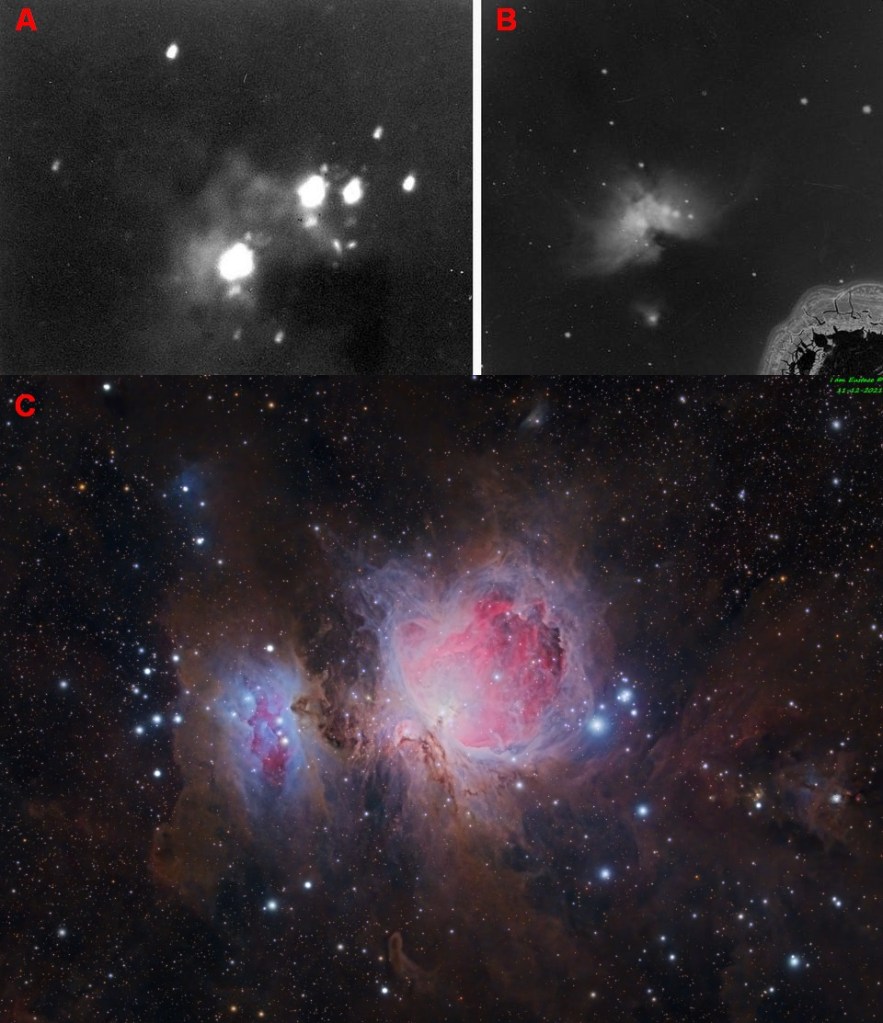
Today’s cameras are extremely sensitive and great images of dim astronomical objects can be made using these modern digital cameras as sensors. This can be demonstrated in the three image panels below:
The three panels in the image are of the same astronomical object – the Orion Nebula. The only difference is that they were imaged at very different times.
A – was taken by the American astronomer Henry Draper in the year of 1880. This is widely regarded as the very first photograph of a deep-space astronomical object. He used photographic plate, an eleven-inch aperture telescope and 51 minutes of exposure for his image.
B – Was taken by Henry Draper again in 1882 using slightly better equipment and technology
C – Was taken by myself in December 2021 using a 80mm telescope, other amateur equipment and vastly improved DSLR camera technology available to anyone in the world today. I’ve put 9.5 hours of exposure data into this image.
What more evidence do you need to prove that today’s technology is just so wonderful?
**Henry Draper’s photos were taken from Hastings Historical Society.
Miscellaneous astro-images
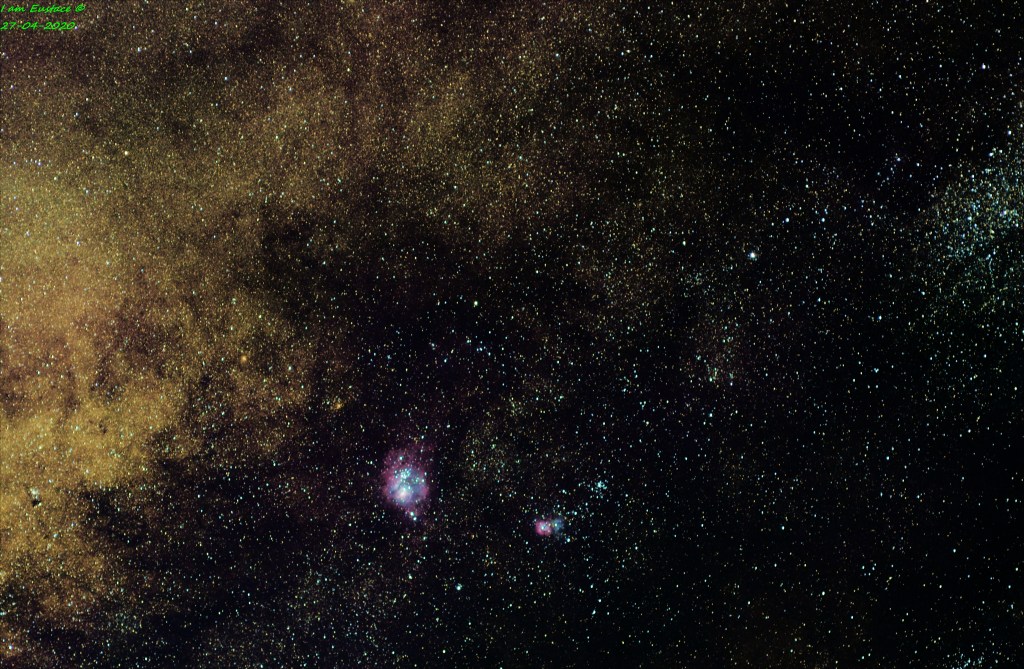
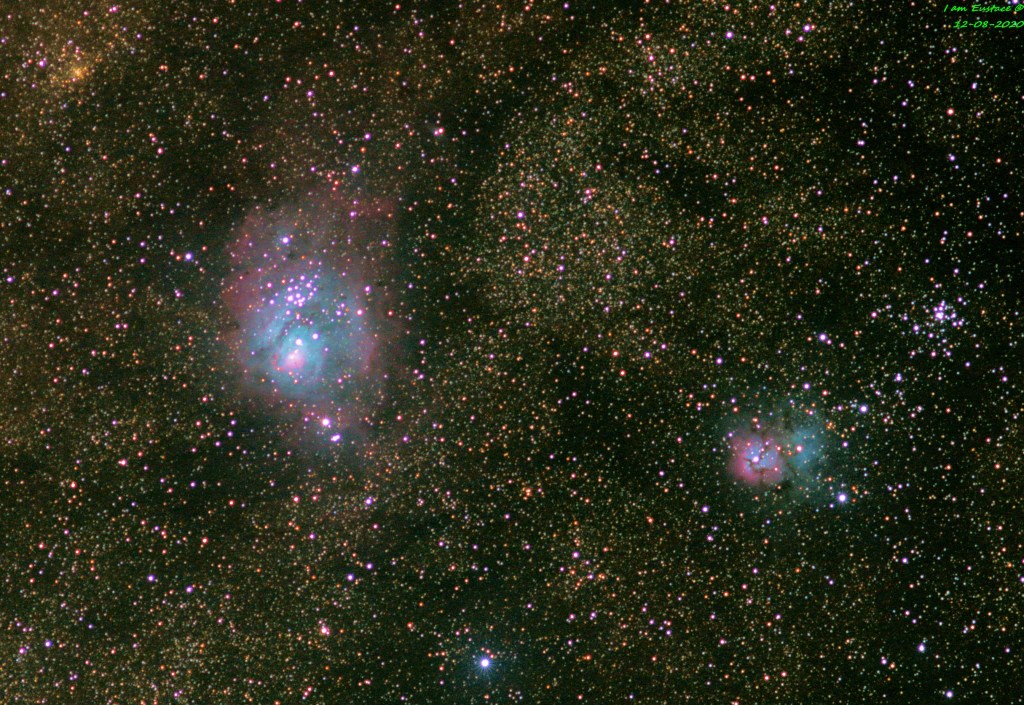
Lagoon & the sea: An area close to our galactic core imaged using a vintage Vivitar 200mm, f/3.5 lens caught the nebulosity of the two great nebulae of Lagoon and Trifid nebulae. This was just 15 min worth of cumulative exposure shot at f/5.6 in a partially moonlit night of September 2019. I was pleasantly surprised at the level of detail I managed to record in this image
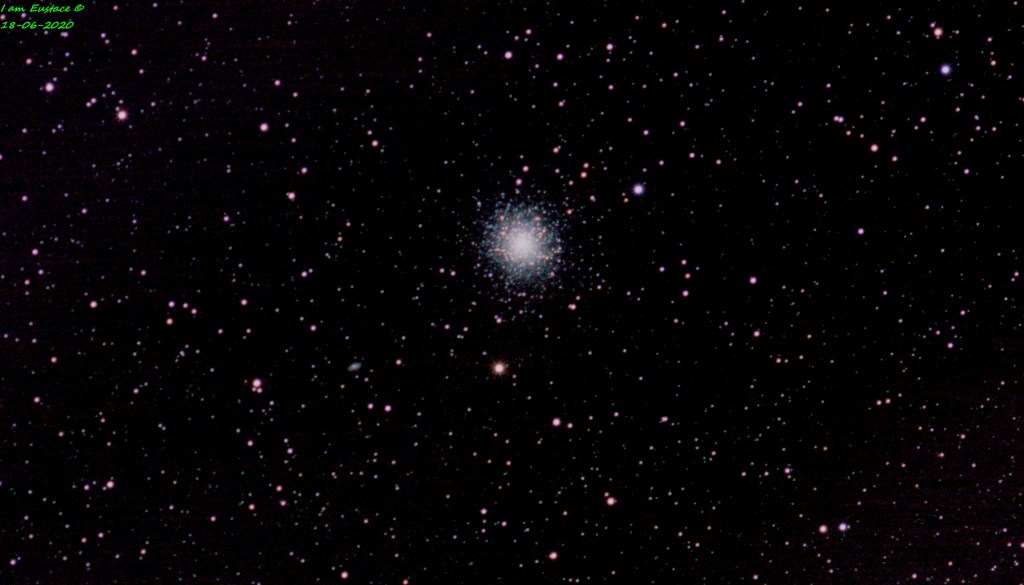
First- light for my AVX!!: The famous great globular star cluster in the constellation Hercules (Messier object 13). Messier 13 is one of the brightest and best known globular clusters in the Northern sky. It lies at a distance of 22,200 light years, or 6,800 parsecs, from Earth. The Hercules Globular Cluster has an estimated age of 11.65 billion years and contains about 300,000 stars. This cluster is home to some of the oldest known stars.
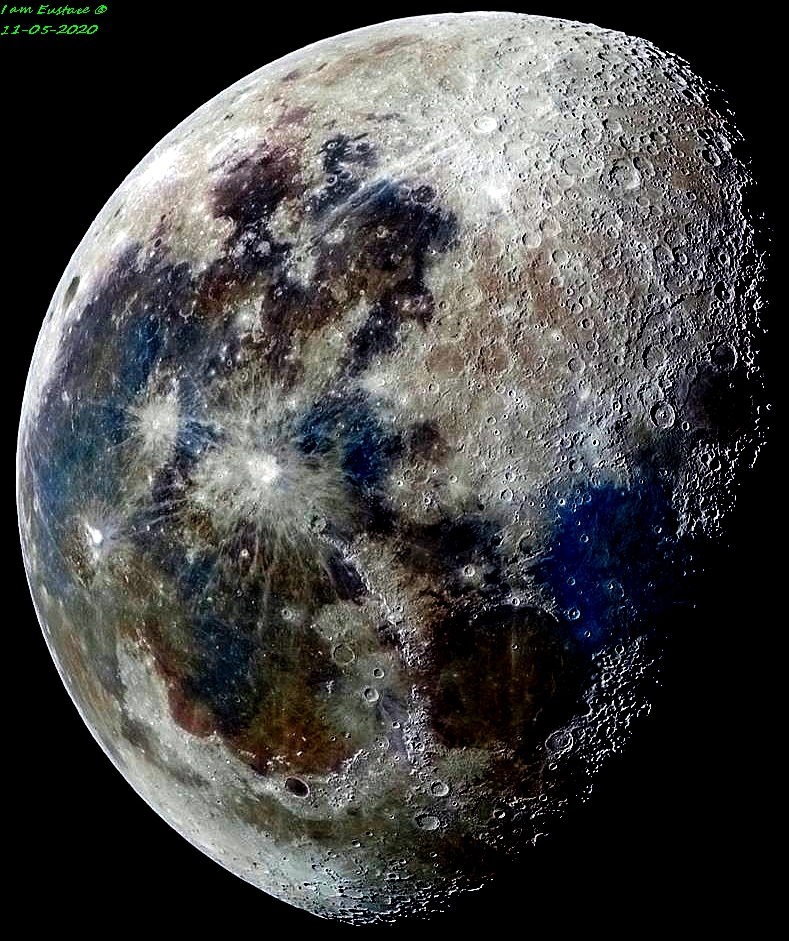
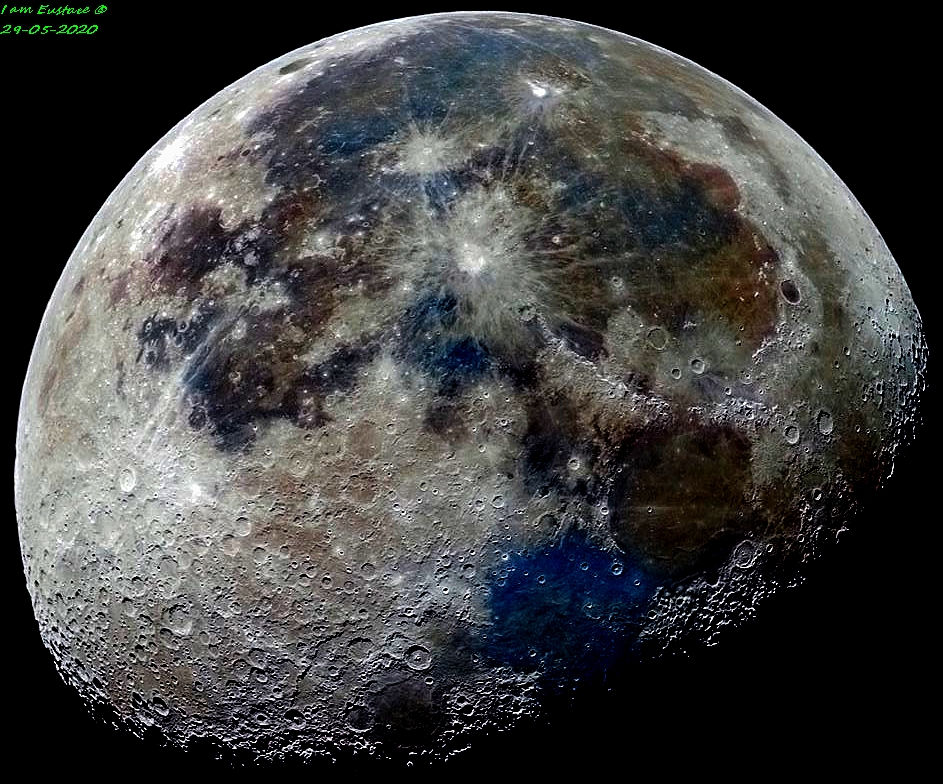
Potholed: Waning gibbous moon in the early hours of 12th May. A fair bit of detail and colour came into this shot.
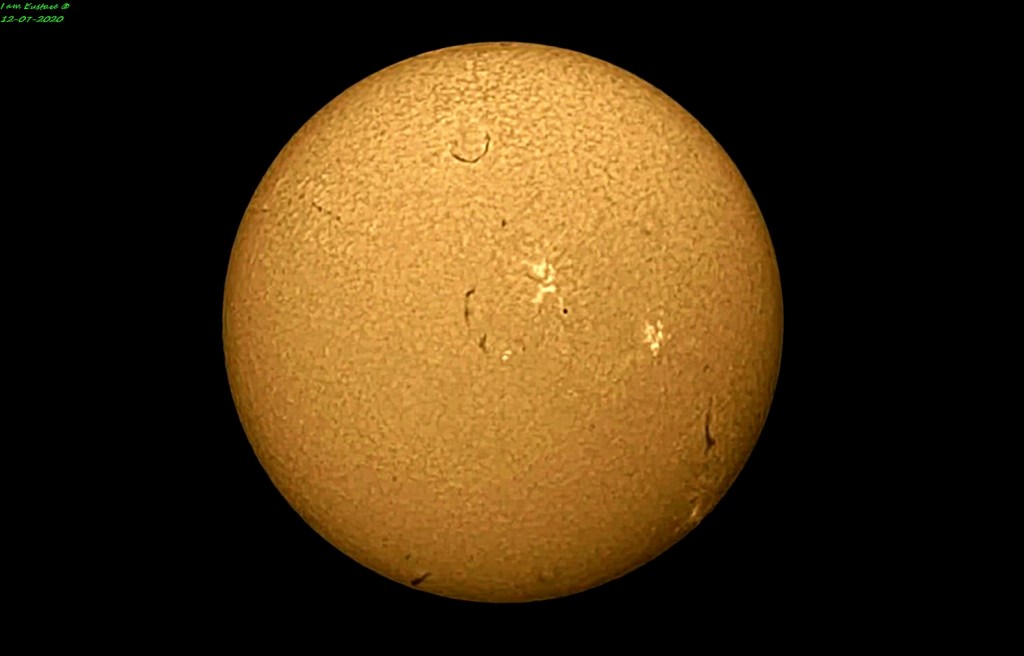
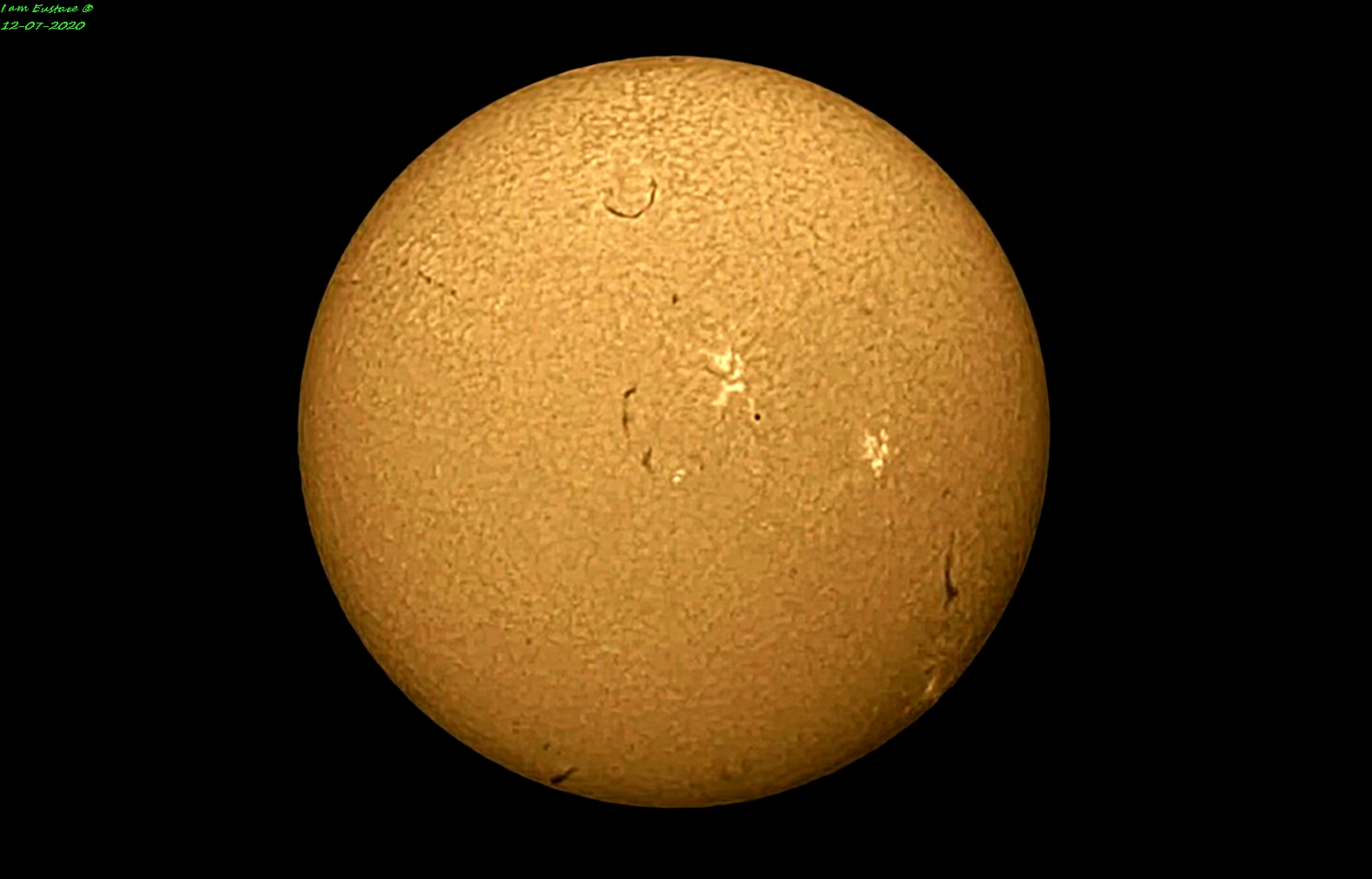
Good ol’ Sol in H-alpha narrowband: This was the first time I tried narrowband astrophotography. Our own sun photographed in the Hydrogen Alpha wavelength (656.28 nm) shows all of its fiery brilliance. H-alpha wavelength isolates the ionized Hydrogen gas content of any given astronomical object. In this case, our own sun. This was imaged several weeks ago using my 1000 mm DIY refractor telescope riding my home-made tracking mount. I had a NDX400 filter affixed at the front of the telescope to markedly reduce luminosity and a 1.25 inch Hydrogen alpha filter in front of the camera chip to isolate the H-Alpha emission line. A Philips TouCam with the IR filter removed coupled to a focal reducer was used to record the raw footage.
Software: SharpCap -> PIPP -> Autostakkert! -> Registax -> GIMP 2.10
The biggest fan of my work
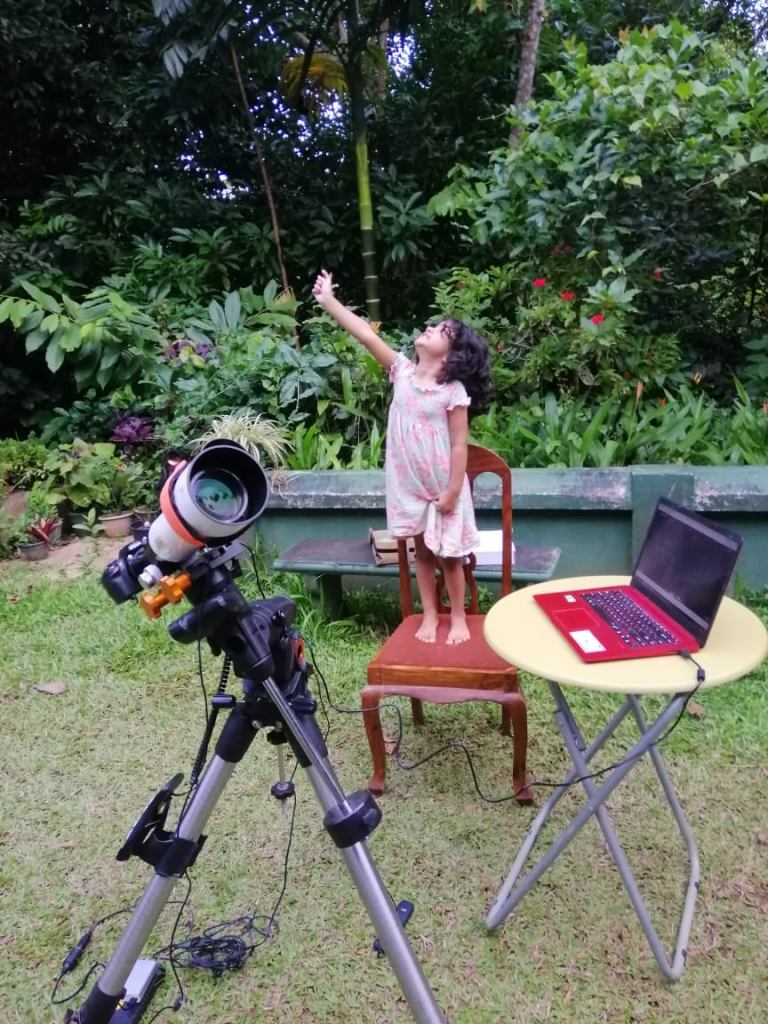
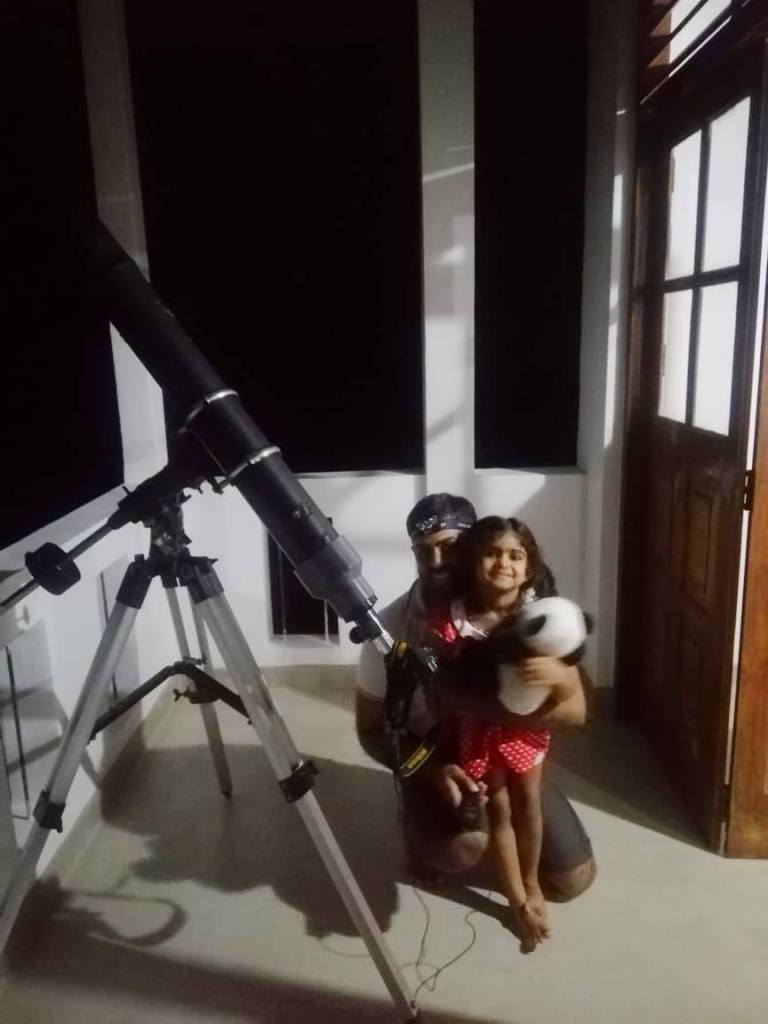
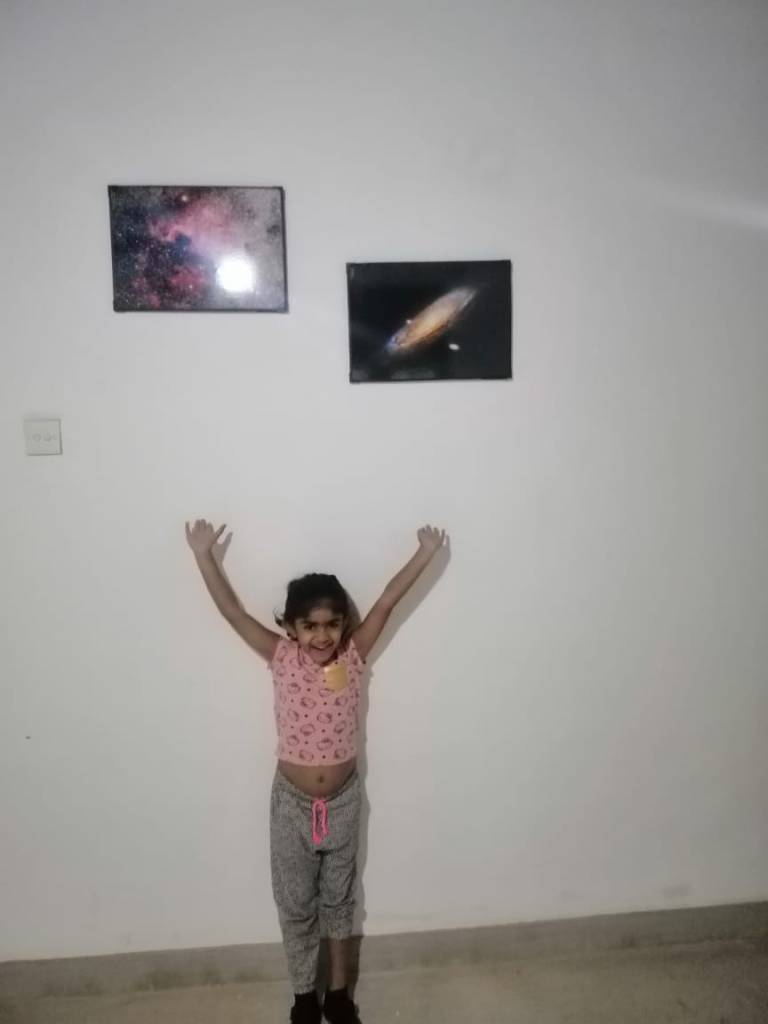
Is undoubtedly my little daughter! I’m so glad she’s fond of my work. Hopefully I can instill the curiosity in her to learn about these fascinating objects when she grows up!
My astro gear
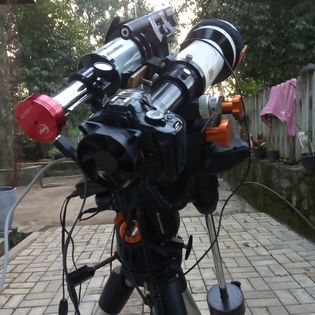
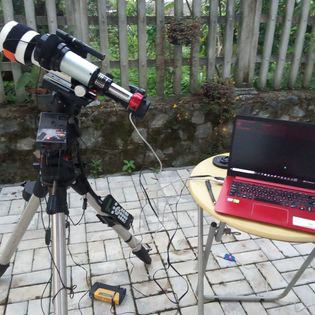
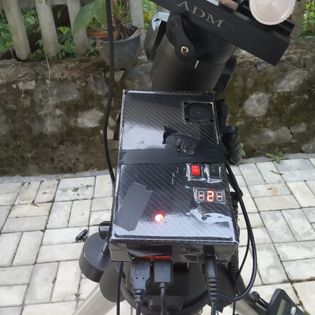
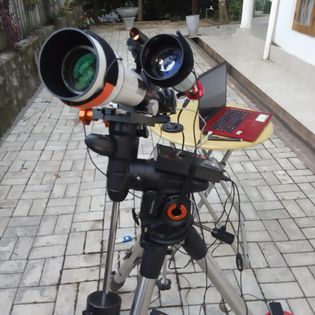
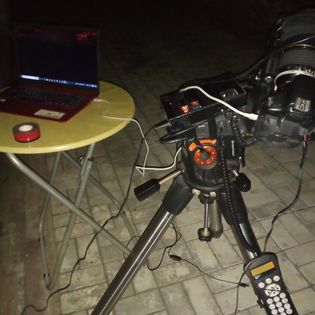
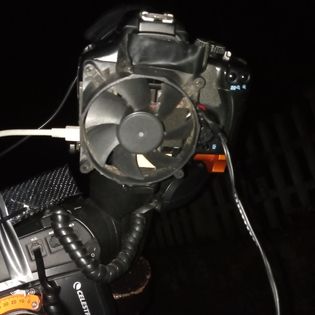
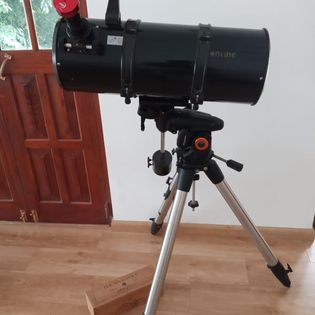
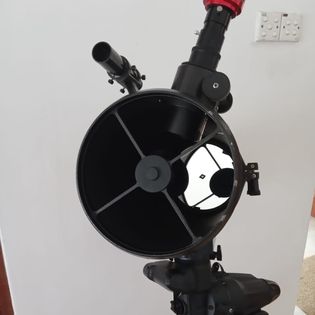
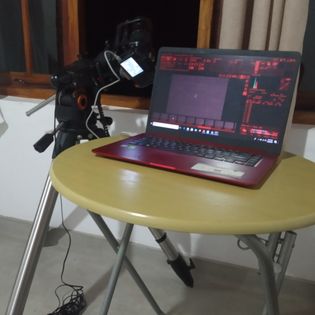
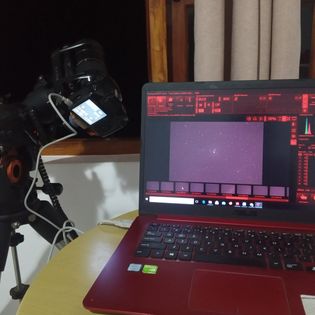
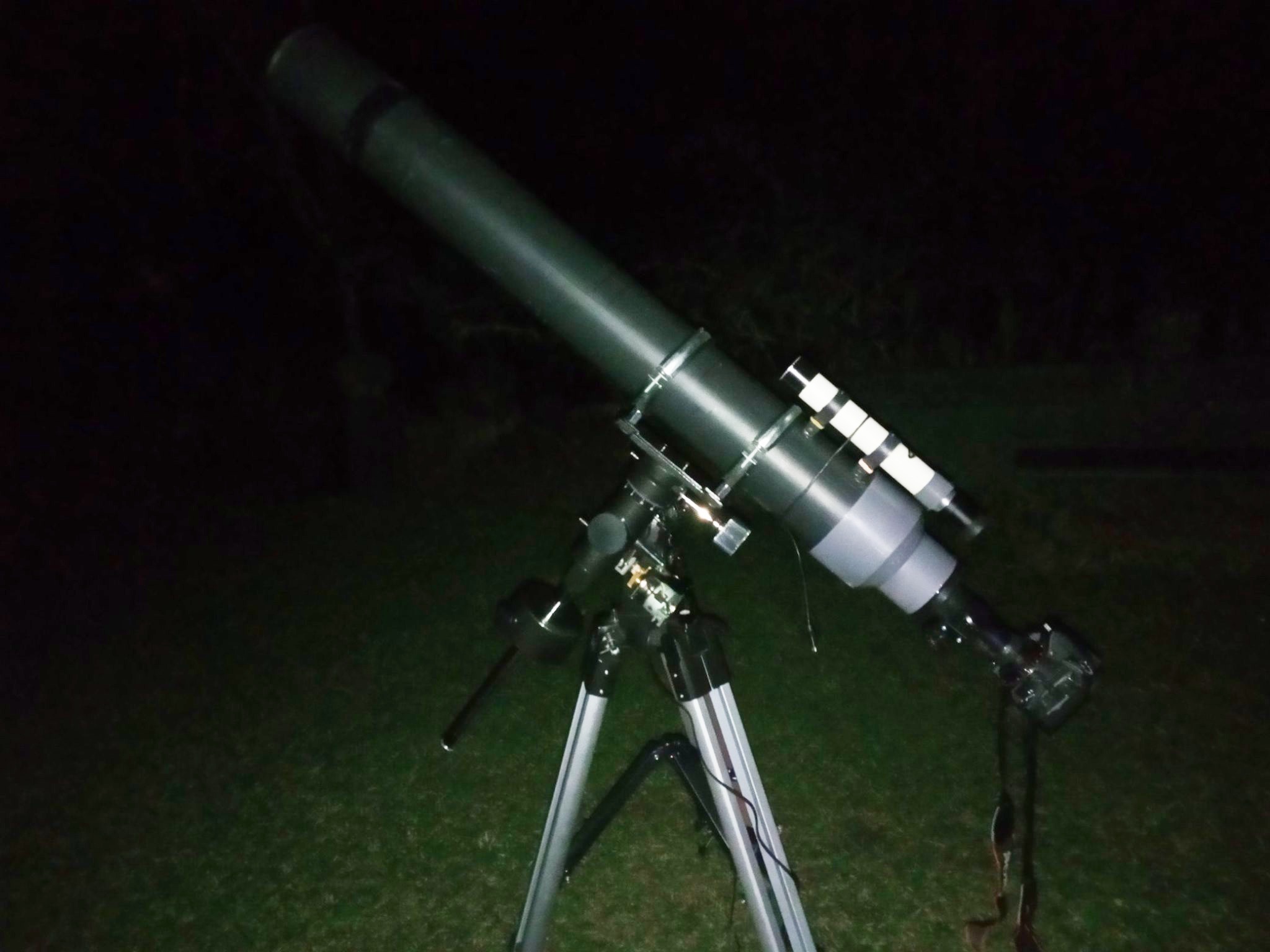
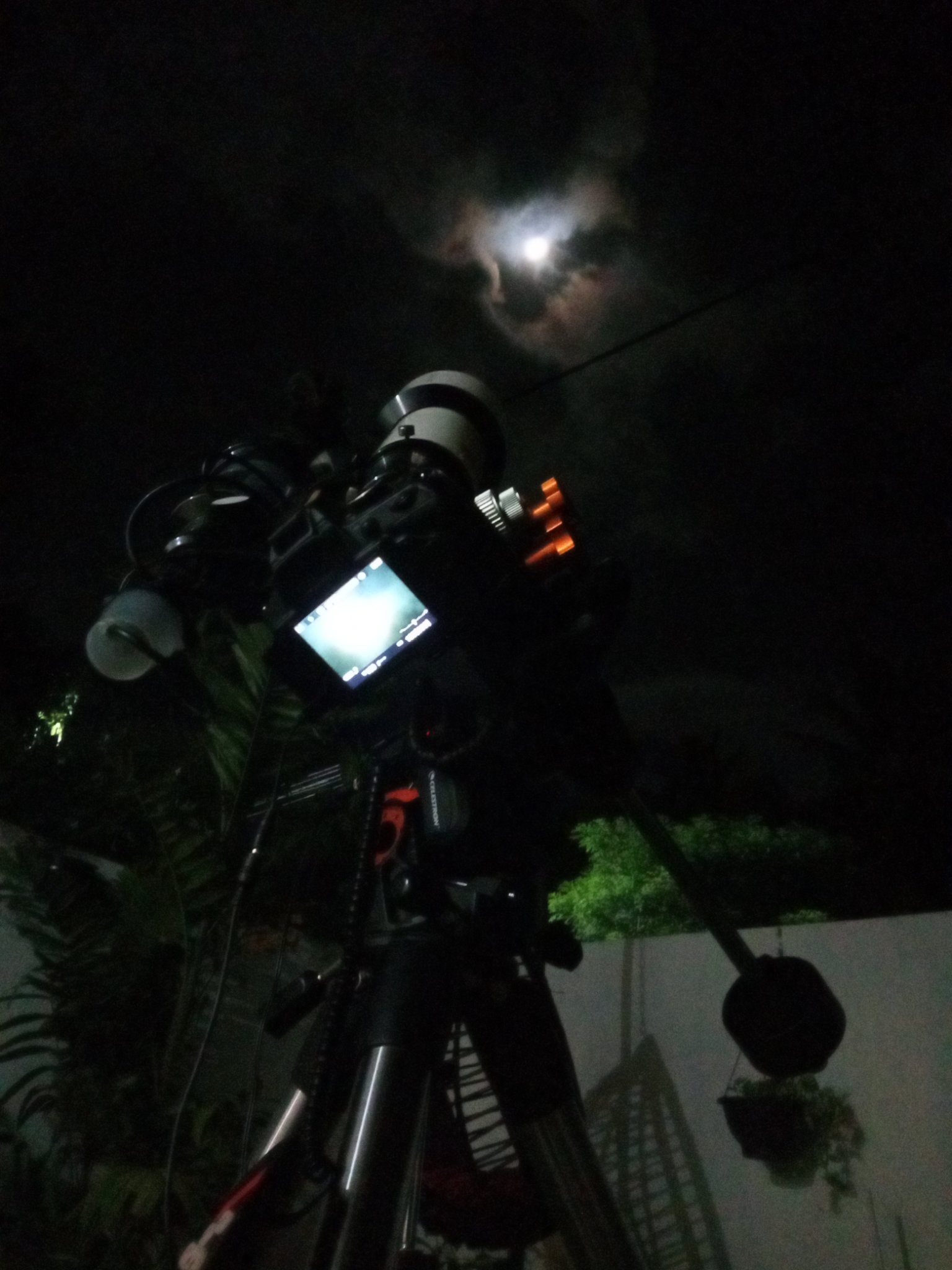
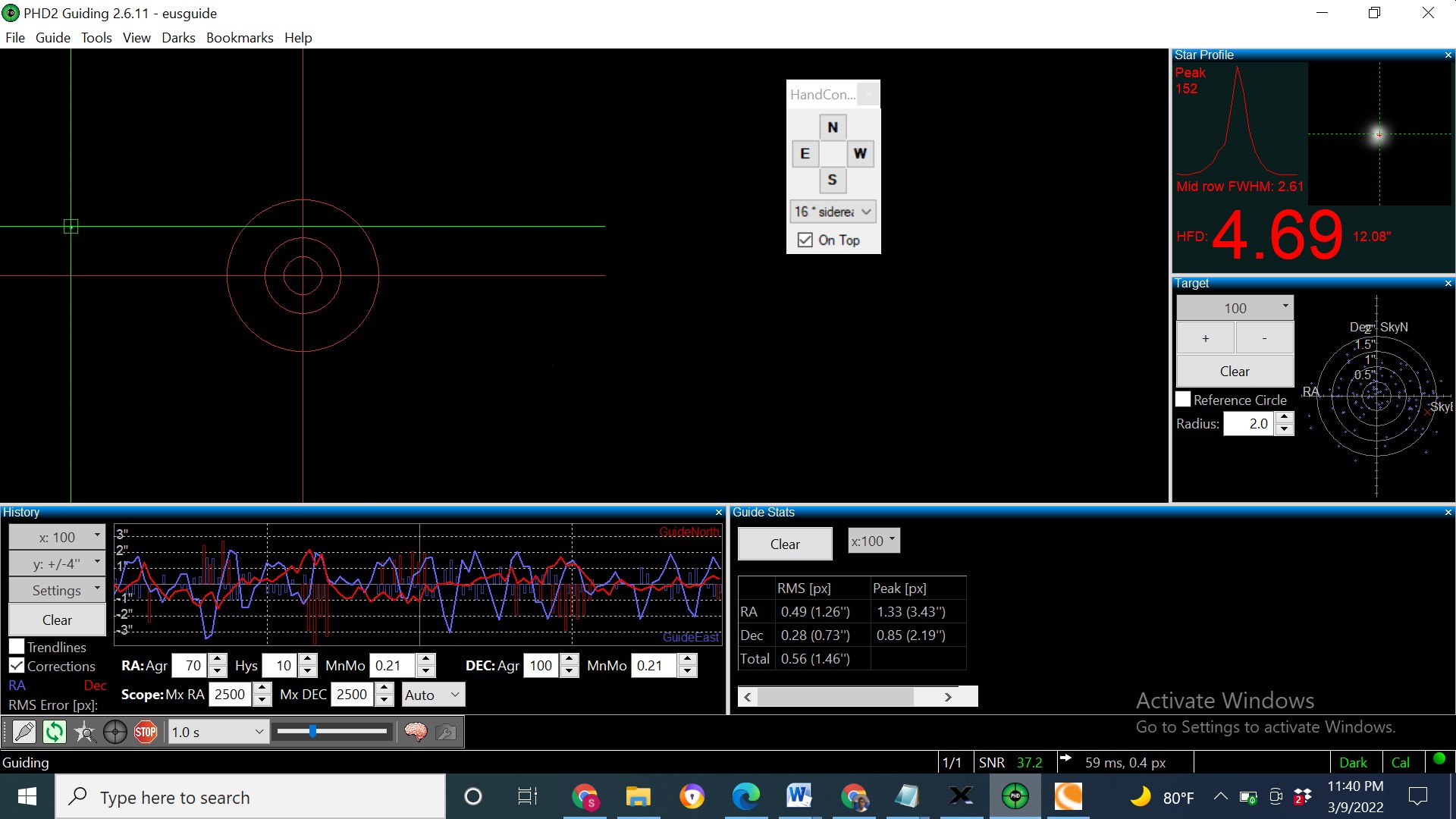
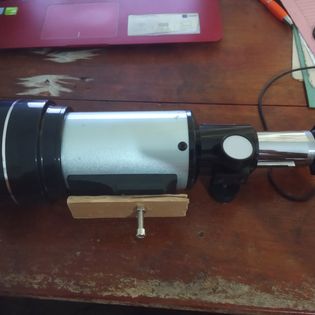
The stock gear of mine are too many to list. But primarily, I use a 180mm ED vintage lens for widefield work, and ED-80 triplet apo for deep-space nebulae and galaxy imaging and a 203mm Newtonian reflector and a 93mm DIY refractor instrument for Lunar and planetary imaging. I also use several freeware and paid software to control my equipment and to process my astronomical data into stunning images you see. I almost exclusively use second-hand and refurbished gear for my astrophotography. Below are some of these;
 A Night of Many Worlds